FREEHealthy 30-Minute Meals
(Instant Download)
Sign Up for instant access to your free cookbook plus our most popular quick and healthy recipes!
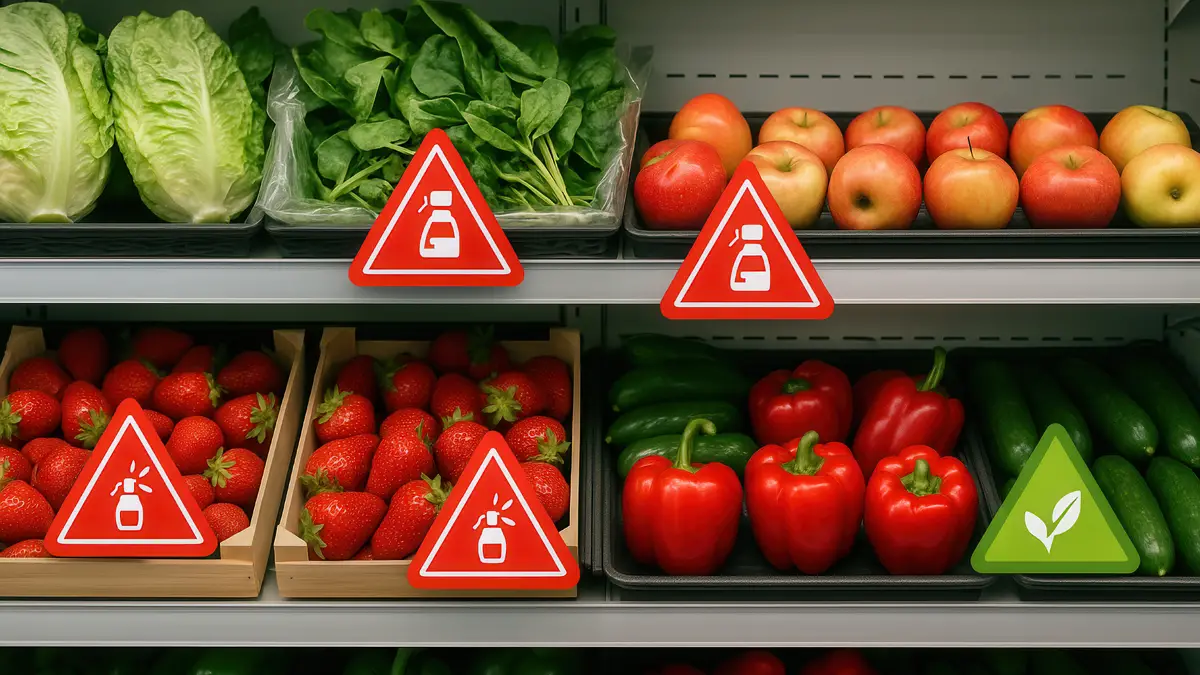
Walk through the produce section of any supermarket and you'll find organic fruits and vegetables sitting next to conventional ones, usually with a higher price tag attached. That price difference may be worth the splurge when you consider that some produce tends to carry more pesticide residue than others when grown using conventional methods.
If your grocery budget doesn't stretch far enough to buy everything organic, your money is best used when you spend it on the items that typically carry the most residue. Here's how to know which produce is worth the upgrade and which items are fine when conventionally grown. Our dietitians also share a few simple tips for cutting down on pesticide residue no matter what's in your cart.
Every year, the Environmental Working Group (EWG) digs through pesticide residue testing data collected by the U.S. Department of Agriculture (USDA) and turns it into an easy-to-use resource called the Shopper's Guide to Pesticides in Produce™. From that guide comes two lists home cooks have leaned on for years: the Dirty Dozen™ and the Clean Fifteen™.
The rankings get refreshed annually as fresh USDA testing data rolls in, and starting in 2025, EWG sharpened its approach even further. Instead of just counting how many pesticides show up and in what amounts, the updated methodology also factors in how toxic specific pesticides are, so it's not just about quantity but also about risk.
These conventionally grown fruits and vegetables tested highest for pesticide residue this year, making them smart candidates to buy organic when you can:
Green beans and bell and hot peppers didn't officially make the Dirty Dozen cut, but EWG flagged them too. They scored high for overall pesticide toxicity even though the number of residues detected was lower.
On the flip side, these conventionally grown picks consistently test with minimal pesticide residue, so buying organic versions is much less of a priority:
If your grocery budget is tight, these are the items where conventional versions make the most sense, freeing up more room in your budget for organic versions of produce that may otherwise have high levels of pesticide residue.
Nutrition experts don't fully agree on the answer to this question. EWG takes a cautious stance and recommends going organic for Dirty Dozen items whenever it's feasible. The USDA and the Environmental Protection Agency (EPA), on the other hand, maintain that the pesticide residues typically found on conventional produce fall well within established safety thresholds, even for the ones with the most residue found.
Researchers are still working through exactly how much low-level, long-term pesticide exposure matters for human health. Until there's more clarity, it comes down to your own comfort level and budget.
Whether your cart is filled with organic or conventional produce, these tips help cut down on pesticide residue, as well as dirt and bacteria:
Wait to rinse strawberries, blueberries, and blackberries until right before you plan to eat them rather than after you bring them home. Washing them too early traps moisture and speeds up spoilage.
Choosing organic for high-residue produce is a reasonable way to reduce your pesticide exposure if it fits your budget, but most nutrition experts agree that eating plenty of fruits and vegetables, whether organic or not, is far better for your health than avoiding produce out of pesticide concerns.
It's an annual ranking from the Environmental Working Group that highlights the 12 conventionally grown fruits and vegetables with the highest levels of pesticide residue, based on USDA testing data.
The Clean Fifteen is the opposite of the Dirty Dozen. It's a list of 15 conventionally grown fruits and vegetables that consistently test with the lowest pesticide residue, making buying organic versions less of a priority.
Most health experts agree that eating a variety of fruits and vegetables is far more important for your health than whether they're organic or conventionally grown. If you’re going to spend the money on organic produce, consider buying items on the Dirty Dozen list, since those have the most pesticide residues when grown conventionally.
Washing reduces residue but doesn't eliminate it completely. Rinsing under cool running water for at least 30 seconds while gently scrubbing is the most effective way to clean produce and is better than a quick dunk in a bowl of water.

(Instant Download)
Sign Up for instant access to your free cookbook plus our most popular quick and healthy recipes!