FREEHealthy 30-Minute Meals
(Instant Download)
Sign Up for instant access to your free cookbook plus our most popular quick and healthy recipes!
A vegan diet can be healthy, filling, and satisfying, but it takes some planning. Understanding vegan diet guidelines and knowing which foods to include, what to limit, how to create healthy vegan recipes, and the best way to build balanced meals makes a difference in how healthy this eating plan is.
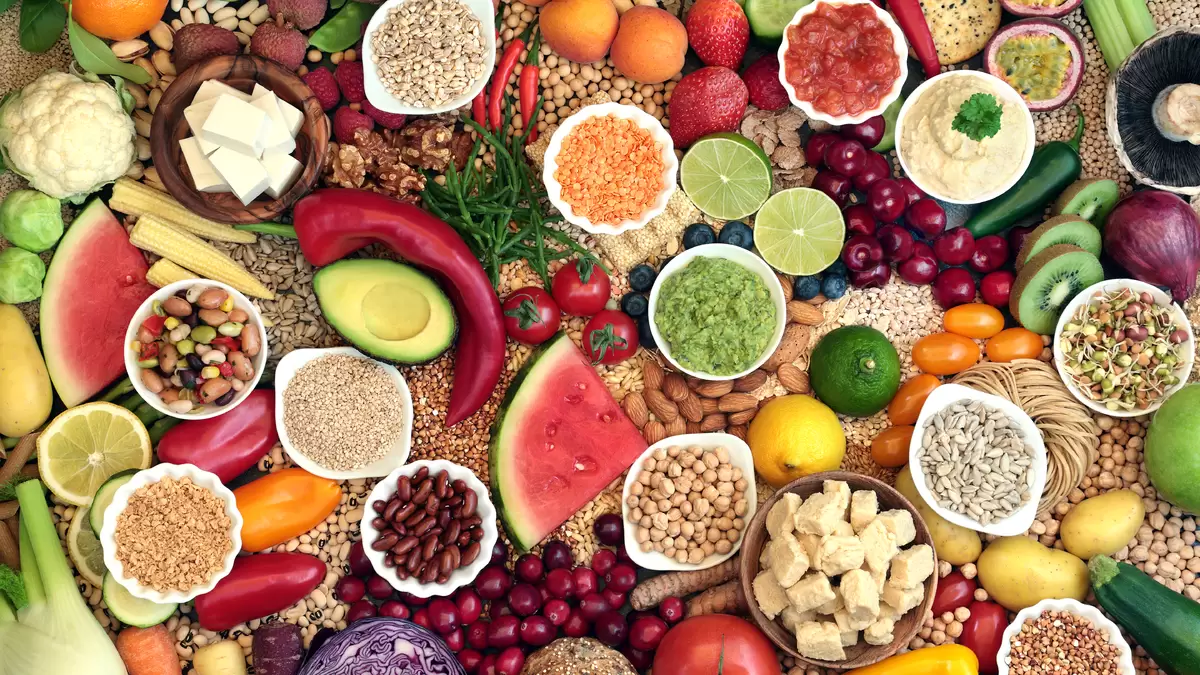
A vegan diet is a way of eating that includes only plant-based foods. That means no meat, poultry, fish, dairy, eggs, or foods made with animal ingredients. Instead, meals focus on vegetables, fruits, whole grains, beans, lentils, nuts, seeds, and plant-based oils.
Many people choose a vegan diet for health reasons, environmental concerns, or personal values. No matter the reason, following smart vegan dietary guidelines helps ensure you get the nutrients your body needs.
At its core, a vegan diet centers on whole, minimally processed plant foods. These include:
According to the Academy of Nutrition and Dietetics, well-planned vegan eating patterns can support good health. That means you’ll need to make sure you’re getting enough protein, vitamin B12, iron, calcium, vitamin D, iodine, and omega-3 fats.
Most of these nutrients are easy to get from plants when you eat a wide variety of foods. For example:
Not all vegan recipes are automatically healthy. For example, cookies made with vegan butter and sugar are still cookies. The vegan recipes you’ll find on our site are made strictly with plant-based foods and also adhere to healthy eating principles to help you get the nutrients you need.
Here are some practical tips from our team of dietitians for keeping your vegan diet healthier:
Plant-based eating patterns rich in whole foods are linked with lower risks of heart disease and type 2 diabetes. However, a vegan diet filled with refined grains, sugary drinks, and fried foods won’t offer the same benefits as one built around whole plant-based foods.
A well-planned diet that follows vegan diet guidelines can support heart health, help manage weight, and provide steady energy throughout the day. To keep it healthy, fill your plate with colorful vegetables, hearty whole grains, and plant-based protein. Include fortified foods for nutrients like B12 and vitamin D. And keep highly processed foods as occasional choices rather than everyday staples.
Looking for healthy vegan recipes the whole family will enjoy? Check out our collection of fully plant-based recipes:
(Instant Download)
Sign Up for instant access to your free cookbook plus our most popular quick and healthy recipes!