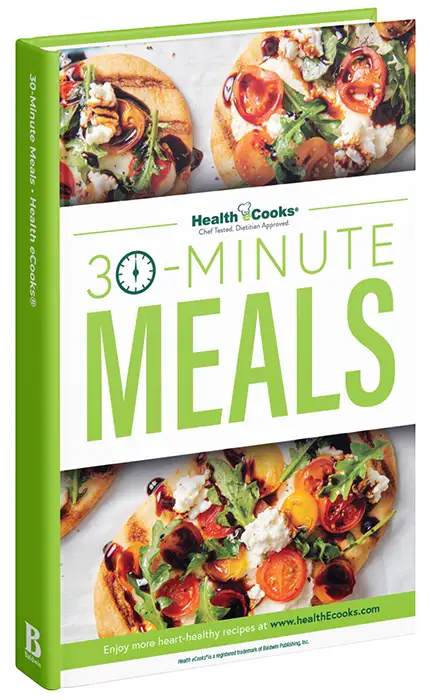
FREEHealthy 30-Minute Meals
(Instant Download)
Sign Up for instant access to your free cookbook plus our most popular quick and healthy recipes!
Have you ever finished cooking a big meal and wondered what to do with the leftovers? It can be tempting to slide a hot pot or casserole straight into the refrigerator so you can enjoy it again at another time, but that's not the safest way to cool food.
Knowing how to cool food down quickly is an important part of food safety. Cooling leftovers the right way helps keep bacteria from growing while also protecting the other foods in your refrigerator. And it only takes a few simple steps to keep food safer, as you'll see in this short video from Health eCooks’ Certified Food Safety Director Mike McCombe, CEC, CCE.
When you place a steaming hot dish directly into the refrigerator, it raises the temperature inside. That can temporarily warm nearby foods, making them less safe and forcing your refrigerator to work harder to cool everything back down.
Instead, let your food cool slightly before refrigerating it. The goal is to remove some of the heat without leaving the food sitting out for too long.
Watch the video above from Mike McCombe, a chef and certified food safety educator, or follow these easy steps to cool leftovers safely:
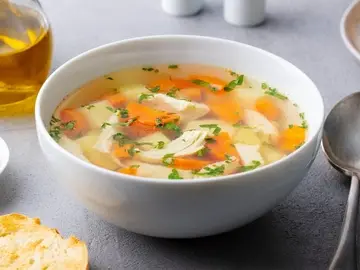
For hot liquids like soup, the best way to cool food quickly and safely is to put the pot of soup into an ice bath. Fill a large bowl with ice and water and place the pot in the ice water (make sure the water doesn’t reach the top of the soup pot). Then take a ladle and stir the soup. By doing this, you should be able to cool the soup enough to put it in the refrigerator in about five minutes.
These simple steps can help protect your leftovers, keep your refrigerator at a safe temperature, and reduce the risk of foodborne illness.
If you're cooling a large amount of food, dividing it into several smaller containers can help it cool more quickly. Shallow containers allow heat to escape faster than one deep container.
No matter what you're storing, don't leave cooked food sitting at room temperature for extended periods. Once it's had a chance to release some of its heat, move it to the refrigerator as quickly as possible to keep it fresh and safe.
Here are some of the most common questions readers have about how to cool food safely.
A good rule of thumb is to let hot food sit at room temperature for 15 to 20 minutes. This allows some of the heat to escape so it won't warm up the inside of your refrigerator. Once the container feels cool to the touch, refrigerate it promptly.
Warm food is fine to refrigerate after it has cooled slightly. You don't want to wait until it's completely cold, as leaving food out at room temperature for too long can increase the risk of bacteria growing.
A very hot dish can temporarily raise the temperature inside your refrigerator. That can warm nearby foods and make your refrigerator work harder to cool everything back down. Letting food cool briefly first helps protect your leftovers and the other foods in your fridge.
The best way to cool food down quickly is to place it on a cooling rack so air can circulate around it. Remove the lid to let heat and steam escape and let it sit for 15 to 20 minutes. Then refrigerate it promptly once the container feels cool to the touch. If you're cooling a large batch of food, dividing it into smaller, shallow containers helps it cool faster.
Yes, but it's best to wait until the container has cooled a bit. Before refrigerating, cover the container with plastic wrap and poke a few small holes in the top to allow any remaining heat to escape as the food continues cooling.
Foods like soup can be cooled quickly by placing the pot into an ice bath. Fill a large bowl partially with ice cubes and water and place the soup pot in, making sure the water doesn’t reach the top. Using a ladle, continuously stir the soup for about five minutes until it’s cool enough to put in the refrigerator.
If you have a lot of food leftover, like a big pot of chili or a large casserole, divide it into smaller, shallow containers. Smaller portions release heat faster than one large container, helping the food cool more quickly and evenly before and after it's placed in the refrigerator.
(Instant Download)
Sign Up for instant access to your free cookbook plus our most popular quick and healthy recipes!