FREEHealthy 30-Minute Meals
(Instant Download)
Sign Up for instant access to your free cookbook plus our most popular quick and healthy recipes!

As a dietitian, I talk about vitamin D with my patients all the time. Some are curious about how much they're getting, some are wondering about supplements, and others want to know how vitamin D supports their health. I enjoy helping them sort out the best sources, what their blood test results mean, and, if needed, which supplement to take. Vitamin D gets a lot of attention, especially once the days get shorter, so let's look at why it's important and how to make sure you're getting enough this winter.
Vitamin D is a fat-soluble vitamin that helps keep you healthy in several ways. It helps your body build strong bones, and it supports your immune system, muscles, and nerves. You can get vitamin D from sunlight, food, and supplements. It comes in two main forms, vitamin D2 and vitamin D3, and you'll find both in foods and supplements.
Most people need a mix of sunlight, certain foods, and sometimes a supplement to keep their vitamin D at a healthy level. In winter, many of us get little to no vitamin D from the sun. The days are shorter, we spend less time outdoors, and the sun sits lower in the sky, especially the farther north you live. That's why food and supplements matter more during the colder months. Here's a closer look at each source.
Your body makes vitamin D when your skin is exposed to sunlight, which is why it's often called the "sunshine vitamin." How much you make depends on your skin tone, your age, where you live, cloud cover, the time of day, and the season.
Even plenty of sunshine doesn't guarantee healthy levels. I had a client who spent a lot of time biking outdoors during the summer and still had low vitamin D. We added more foods with vitamin D to their meals and started a vitamin D supplement. After a few months, their levels were back to normal, and they told me they felt less tired and had more energy, which was a major win!
Only a handful of foods naturally have vitamin D, which can make it hard to get enough from food alone. The best sources include:
Even a healthy eating pattern can fall short. I recently worked with a client who ate a balanced diet that included many of the foods I mentioned and spent time outdoors, yet she was surprised to learn her vitamin D was low. Once we added a vitamin D supplement to her routine, her levels rose into the optimal range.
Looking for more ways to put these foods on your plate? Try our 10 Recipes for the Best Foods High in Vitamin D.
Many of my clients have felt overwhelmed by all the nutrition advice online, especially about supplements. It seems like a new brand pops up every week. Research shows that vitamin D3 raises vitamin D levels in the blood more than vitamin D2 does, and it keeps levels higher for longer. Before you choose a supplement, keep these things in mind:
Some studies link low vitamin D levels to a higher risk of depression. Researchers are investigating how vitamin D may affect the production of chemical messengers in the brain that help regulate mood and sleep. So far, though, clinical trials haven't shown that vitamin D supplements can treat or prevent depression. The results are mixed, and more research is needed to understand the connection.
If you'd like to eat with your mood in mind, our article on 10 Good Mood Foods for Depression is a great place to start.
Because vitamin D is fat-soluble, your body absorbs it best when you take it with a meal or snack that has some fat. Your body can still absorb some vitamin D without fat, but pairing it with a meal gives you a boost. Good sources of healthy fats include fatty fish, nuts, avocado, olives and olive oil, and seeds like chia and flax.
Each of these dishes was developed by our team of chefs and dietitians in the Health eCooks Test Kitchen. The first 4 have foods that naturally contain vitamin D, while the last 2 provide healthy fats that help boost vitamin D absorption. Which recipe will you try first?
Recipes with foods that have vitamin D:

Salmon is one of the best food sources of vitamin D you can find. Depending on the type, a 3-ounce serving of cooked salmon can cover most of an adult's daily needs. Here, the fillet is seared until the skin is crisp, then finished in a sweet and tangy honey-lime glaze made with olive oil and served over tender onions and turnips. The healthy fat that helps you absorb vitamin D is built right in.
Per serving: 396 calories, 24 g protein, 28 g fat, 345 mg sodium

Taco night is an easy way to work more fatty fish into your week. The salmon gets a smoky coffee and cumin rub, and each serving has about 6 ounces of fish, so you get a generous dose of vitamin D and omega-3 fats. A crunchy red cabbage slaw with a creamy jalapeño-lime dressing finishes them off.
Per serving: 500 calories, 37 g protein, 28 g fat, 493 mg sodium
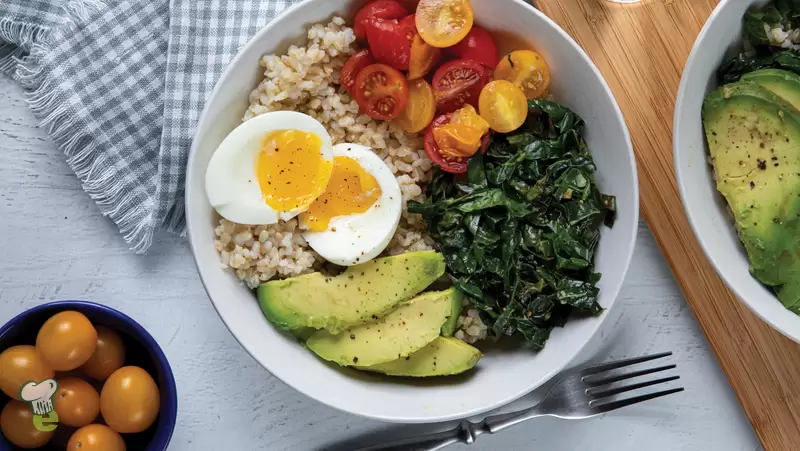
Egg yolks are one of the few foods with natural vitamin D, and this bowl puts a whole egg on top of garlicky kale, cherry tomatoes, and brown rice. Sliced avocado and a little olive oil add the healthy fats your body needs to absorb it. It works just as well for breakfast as it does for dinner.
Per serving: 410 calories, 13 g protein, 25 g fat, 11 g fiber, 232 mg sodium

Sardines are small, affordable, and one of the easiest ways to add vitamin D to a salad. Toss the canned sardines (listed as optional in the recipe, so be sure to add them!) with chickpeas, crisp romaine, tomatoes, cucumber, feta, and Kalamata olives. A lemon, olive oil, and herb dressing adds even more healthy fat.
Per serving: 210 calories, 13 g protein, 13 g fat, 8 g fiber, 290 mg sodium
Healthy-fat meals to take with your supplement:

If you take your vitamin D at dinner, this colorful bowl is a great match. Avocado, olive oil, and a sprinkle of cheese provide the fat that helps your body absorb your supplement, while lean ground chicken, black beans, and brown rice keep you full. A creamy roasted tomatillo sauce ties it all together.
Per serving: 465 calories, 38 g protein, 14 g fat, 12 g fiber, 136 mg sodium

Prefer to take your vitamin D in the morning? These creamy overnight oats get their healthy fats from almond butter, chia seeds, and sliced almonds. Make them with an almond milk that's fortified with vitamin D (many are, so check the label), and you'll add a little extra vitamin D to your breakfast, too.
Per serving: 336 calories, 14 g protein, 15 g fat, 8 g fiber, 74 mg sodium
Most adults up to age 70 need 600 IU of vitamin D per day, and adults over 70 need 800 IU. If your blood test shows low levels, your doctor may recommend a higher amount for a while. Just don't go above the 4,000 IU daily upper limit unless your doctor tells you to.
Unfortunately, no. Your body needs UVB rays from sunlight to make vitamin D, and UVB rays don't pass through glass. So even on a bright winter day, sitting by a sunny window won't raise your vitamin D.
You can take a vitamin D supplement at any time of day. What matters most is taking it regularly and with a meal. Try keeping the bottle in your kitchen so you'll see it at mealtime and remember to take it.
For most people, yes. Research shows vitamin D3 raises blood levels of vitamin D more than D2 does and keeps them up longer. Talk to your doctor about which form and dose are right for you.
Staying healthy in winter goes beyond vitamin D. For more ideas, check out How to Stay Healthy During Cold and Flu Season and our High Protein Winter Meals to Keep You Full Longer.
________________________
Sabrina Szalay, MS, RD, is a registered dietitian who helps patients make sense of their vitamin D intake, blood test results, and supplement choices. She is a co-author of a 2024 study abstract in Current Developments in Nutrition on vitamin D supplementation and gestational diabetes risk. Read the abstract.
Connect with Sabrina on LinkedIn.
(Instant Download)
Sign Up for instant access to your free cookbook plus our most popular quick and healthy recipes!