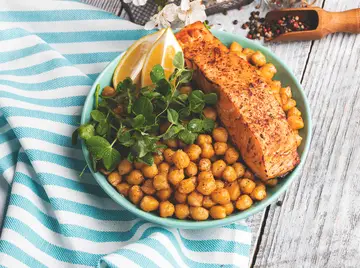
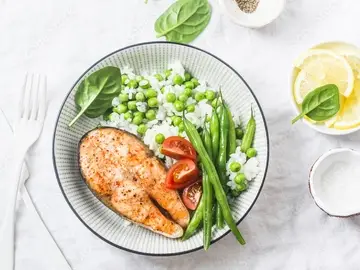
FREEHealthy 30-Minute Meals
(Instant Download)
Sign Up for instant access to your free cookbook plus our most popular quick and healthy recipes!
Standing at the fish counter can be overwhelming. There are countless fillets under the glass, many of them look similar, and the signs use words like "previously frozen" and "farm raised" without explaining what either one means when it comes to freshness or your health.
Learning how to buy fish comes down to a handful of checks that take about 30 seconds, and none of them require a trained eye. Once you know what to look at, you can walk up to any seafood case in any grocery store and pick something good for dinner.
Our Health eCooks chefs and registered dietitians eat a lot of fish, and we've spent years testing seafood recipes in our test kitchen. What follows is what we actually do at the store. Watch the video for some quick tips and keep reading for more details and some recipes to make with whatever you bring home.
Before you look at a single fillet, look at the case itself. A well-run seafood counter tells you most of what you need to know, and a neglected one tells you to shop somewhere else.
A good case has these things in common:
That last one matters more than you may think, because the person behind the counter knows which fish arrived today and which has been sitting for a few days. Most of them are happy to tell you if you ask. Try it the next time you're there and just say, "What came in freshest today?"
If the case looks neglected, the smell is strong, or nobody's around to help, buy from the freezer section instead. That isn't settling, for reasons you’ll soon see.
Once you've sized up the counter, you can check the individual piece you're considering. Five things tell you almost everything about freshness:
A whole fish gives you two more clues. The eyes should be clear, plump, and a little domed, never cloudy or sunken, and the gills underneath should be bright red or deep pink instead of brown or slimy.
If you only remember one thing from this section, make it the smell test. Your nose is a better judge of freshness than your eyes, and it works through the plastic wrap at the self-serve case too.
This is the question we get asked most, and the answer is more reassuring than people expect. Both can be a good choice, and the difference affects your wallet and your taste preference more than your health.
Wild caught fish is caught in the ocean, a lake, or a river, while farm raised fish is grown in managed pens or tanks. That's the whole distinction, and neither one is automatically better than the other.
Here’s what the difference is:
So why does farmed fish have a bad reputation? Some of it is earned, since crowded pens can mean more antibiotics and poorly managed farms can damage the surrounding water. But the industry has changed substantially over the past decade, and responsible farming is now common enough that a blanket rule about skipping farmed fish just doesn’t hold water anymore.
A simpler approach to choosing fish works better. Buy whichever one looks freshest and fits your budget that week. If you want to weigh the environmental side, look for a certification label on the package: the Marine Stewardship Council (MSC) blue label covers wild fisheries, and the Aquaculture Stewardship Council (ASC) label covers farms. Both mean an outside group audited the operation.
Our dietitians would rather you eat farmed salmon twice a week than wild salmon twice a year. Getting fish into your regular rotation is the part that helps your heart.
Most people treat the freezer case as a backup plan, but you may want to rethink that.
A lot of fish in the fresh case was frozen at some point, thawed at the store, and set out on ice. That's what "previously frozen" means on the sign, and by law the store has to disclose it. Fish sold that way has already been through a thaw cycle and is now sitting at counter temperature, losing quality by the hour.
Fish in the freezer case is often frozen within hours of being caught, sometimes right on the boat. It hasn't thawed or been handled, and the clock hasn't started. Nutritionally it's nearly identical to fresh, because freezing doesn't damage protein or omega-3 fats in any meaningful way.
That’s why we often encourage people to buy frozen. It's cheaper and keeps for months, so you can cook it any night you want, even when you don’t have time to go to the store.
Here are a few things worth knowing when you shop the freezer case:
If you do buy from the fresh case, ask whether it was previously frozen. This is important to know because previously frozen fish should be cooked within a day and shouldn't go back in the freezer.
Fatty fish, like salmon, sardines, herring, anchovies, and trout, have a nutritional edge and deliver the most omega-3 fatty acids. That’s why the American Heart Association recommends 2 servings of fish a week with an emphasis on those varieties.
The best fish to buy, though, is the one you'll actually eat. Below is how our dietitians approach the most common options at a grocery store.
Salmon is the easiest fish to recommend and the one most worth learning to shop for. It's forgiving to cook, rich in omega-3s, and mild enough for people who claim not to like seafood.
When you're picking a fillet, look for deep even color and visible white fat lines running through the flesh, which are a good sign. Sockeye runs a deep red with a fuller, more assertive flavor. Atlantic salmon, which is almost always farmed, is paler, fattier, and milder. Coho sits between the two.
Buy the thickest, most even cut you can find. A fillet that tapers badly will overcook at the thin end while the thick end is still raw. Skin-on is a bonus, since the skin holds the fish together in the pan and peels right off after cooking.
Cod suits more recipes than anything else at the counter. It's mild, flaky, affordable, and it takes on whatever you season it with, which makes it the right pick when you're feeding someone who's not a big fan of seafood.
Cod and haddock are close cousins, and you can substitute one for the other in nearly any recipe. Haddock is a little sweeter and finer-grained, while cod is a little firmer. Pollock is the budget-friendly member of the same family, and it's what most fish sticks are made from.
Look for fillets that are bright white and slightly translucent. White fish shows its age faster than salmon does, so any yellowing along the edges is a sign to pick a different piece.
Fresh tuna steaks should be deep red or dark pink and look almost glossy. Brown edges mean the fish has been exposed to air too long. Tuna is lean and cooks fast, so buy a thick steak and pull it off the heat early.
Canned tuna deserves a mention too, because it's one of the most affordable ways to get omega-3s. Light tuna is lower in mercury than albacore, which is worth knowing if you eat it often.
Tilapia gets criticized, sometimes unfairly. It's very lean, very mild, inexpensive, and almost always farmed. It has far less omega-3 than salmon, so it isn't the fish to lean on if heart health is your main reason for eating seafood. As a source of lean protein that cooks in minutes, though, it earns its place, and it's a reasonable starting point for a skeptical household.
Look for fillets that are pinkish white and evenly cut, and pass on anything gray.
Buying a whole fish costs less per pound, and it's the easiest way to judge freshness because nothing has been trimmed away. Check the eyes and the gills and look for skin that's shiny and firmly attached.
Ask the counter to scale, gut, and fillet it for you. They'll almost always do it at no charge, and you can take the bones home for stock if you want them. A 2-pound whole fish yields roughly 1 pound of fillet, so plan accordingly.
The American Heart Association defines a serving as 3 ounces of cooked fish, about the size of your palm. Fish loses a little weight as it cooks, so buy 4 to 6 ounces of raw fillet per person.
For a family dinner, that works out to:
You have more options than you might think, and the best one depends on what you're cooking.
Whichever you choose, shop for fish last. It should go from the cold case into your cart and into your refrigerator with as little time in between as possible.
Each of these dishes was developed by our team of chefs and dietitians to balance taste and nutrition, and every one of them works with fish you can find at a regular grocery store.
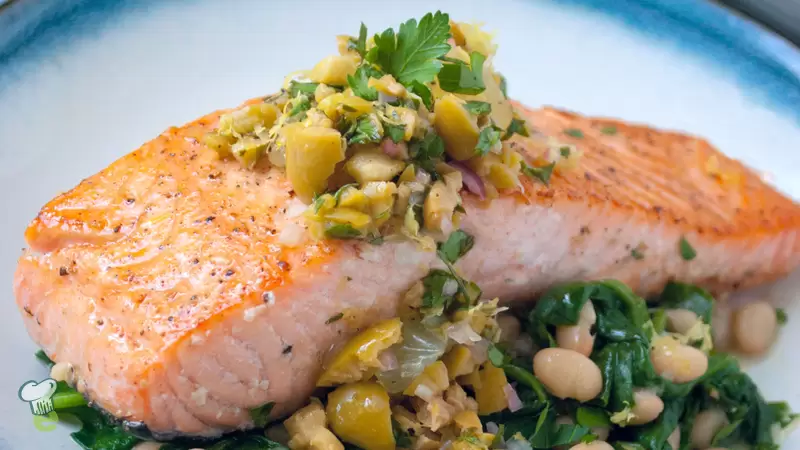
Total time: 30 minutes | Per serving: 381 calories, 33g protein, 8g fiber, 14g fat, 556mg sodium
This is the salmon dinner we recommend to people who think fish needs 20 ingredients to taste good. Seared salmon goes over spinach and white beans, and the beans do double duty by adding 8 grams of fiber and turning a piece of fish into a full meal. Bright, savory, and substantial enough that nobody asks what's for dessert.
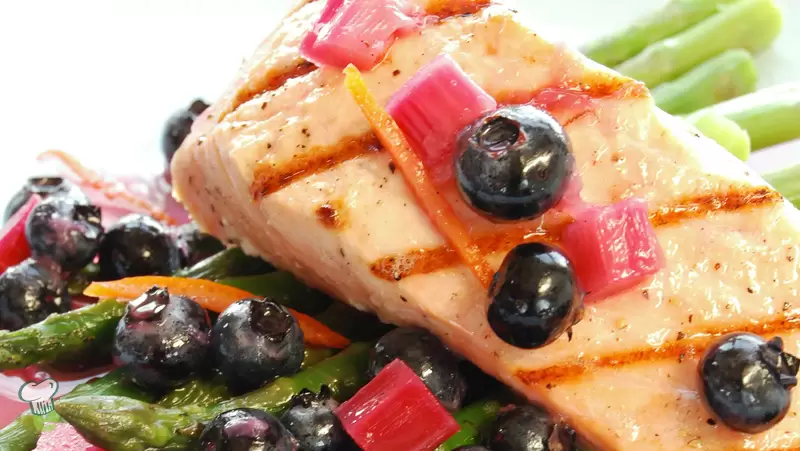
Total time: 30 minutes | Per serving: 269 calories, 35g protein, 6g fat, 191mg sodium
Tart fruit and rich salmon are a classic pairing, and the blueberry-rhubarb sauce is what makes this feel like a restaurant dish. The salmon comes out meaty and substantial with a good sear, and at 191 milligrams of sodium it's a strong pick for anyone watching their salt. Our test kitchen makes this one in early summer when rhubarb is in season.
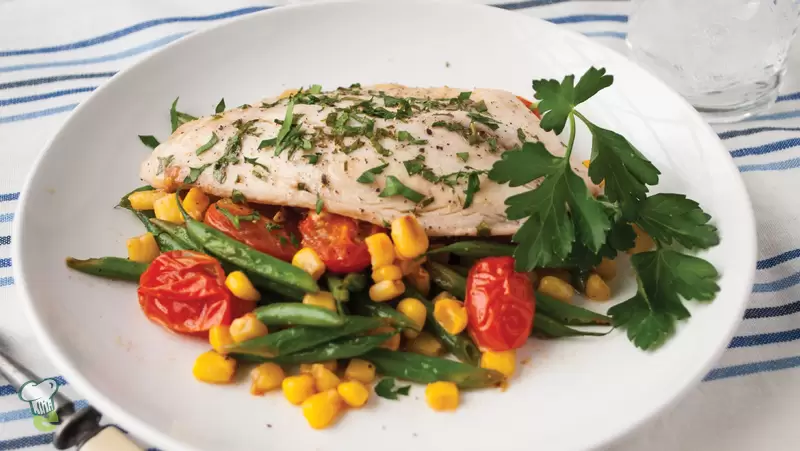
Total time: 30 minutes | Per serving: 270 calories, 34g protein, 3g fiber, 9g fat
Make this with whatever white fish looked best at the counter. Cod, haddock, and tilapia all work. The fish bakes on a bed of Mediterranean vegetables so the whole dinner comes out of one pan, and you get 34 grams of protein for 270 calories.
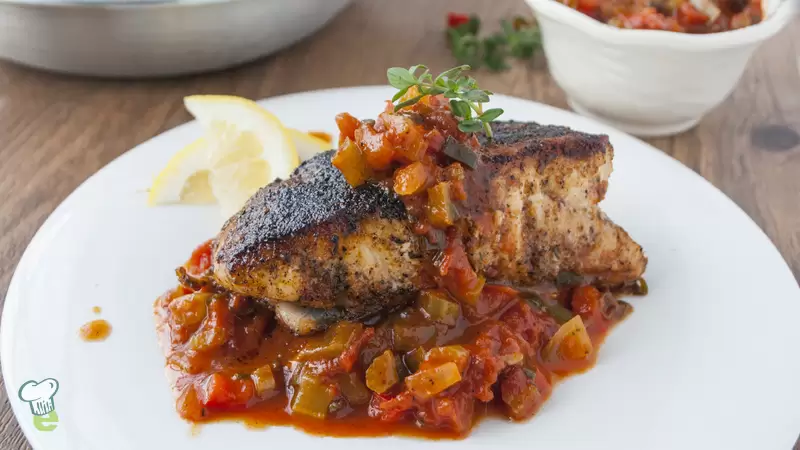
Total time: 45 minutes | Per serving: 177 calories, 23g protein, 8g fat, 103mg sodium
Snapper has sweet, firm flesh that takes beautifully to blackening spices, and the vegetable-packed Creole sauce on top adds a lot of flavor with very little sodium. At 103 milligrams per serving, this is one of the lowest-sodium seafood dinners on our site. If you spot snapper at the counter and you've never cooked it, give this recipe a try.

Total time: 45 minutes | Per serving: 143 calories, 20g protein, 3g fiber, 40mg sodium
Fresh tuna cooks in about the time it takes to set the table, and the garlic-lime marinade keeps it from drying out. A vibrant pineapple slaw is served alongside, adding crunch and a little sweetness to balance the savory fish. With 40 milligrams of sodium per serving, this is about as low as a full dinner gets.
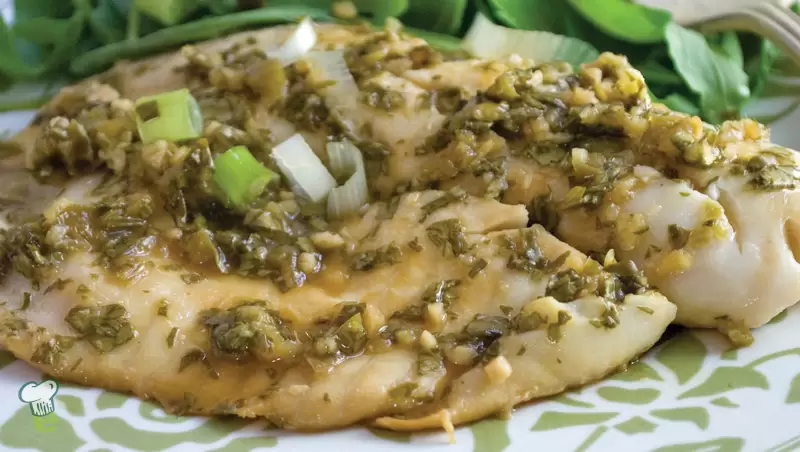
Total time: 30 minutes | Per serving: 268 calories, 48g protein, 2g fiber, 6g fat
Fresh ginger and citrus give mild tilapia the kind of flavor that makes people go back for more, and it delivers 48 grams of protein per serving, which is remarkable for a 268-calorie dinner. This is an easy dish to make and doesn’t require fancy ingredients.

Total time: 45 minutes | Per serving: 326 calories, 30g protein, 4g fiber, 383mg sodium
Crispy panko-crusted fish, a bright cabbage slaw, and whole wheat tortillas make this the recipe that converts people into fish lovers. Fresh cilantro and a little apple in the slaw add a burst of freshness. Any firm white fish works, so make these with the cod or haddock you brought home.
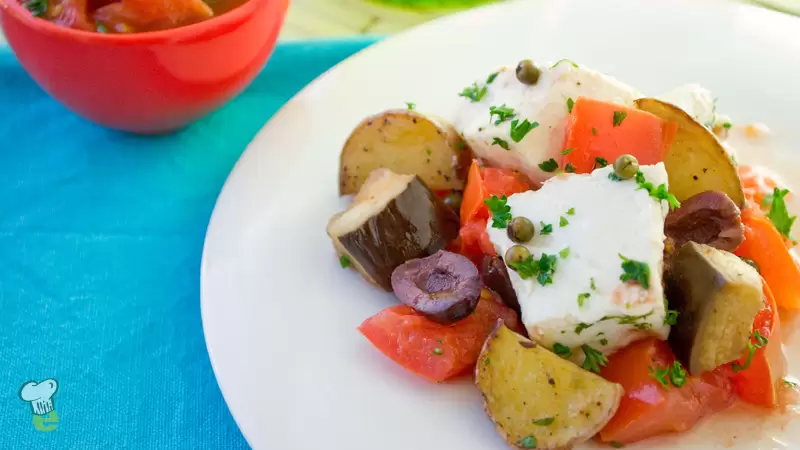
Total time: 75 minutes | Per serving: 272 calories, 16g protein, 6g fiber, 20mg cholesterol
Halibut is a splurge, but this recipe deserves it. Plum tomatoes, olives, and capers cook down into a briny sauce that keeps the fish moist while it cooks. Save this recipe for a weekend and make it when company is coming for dinner.
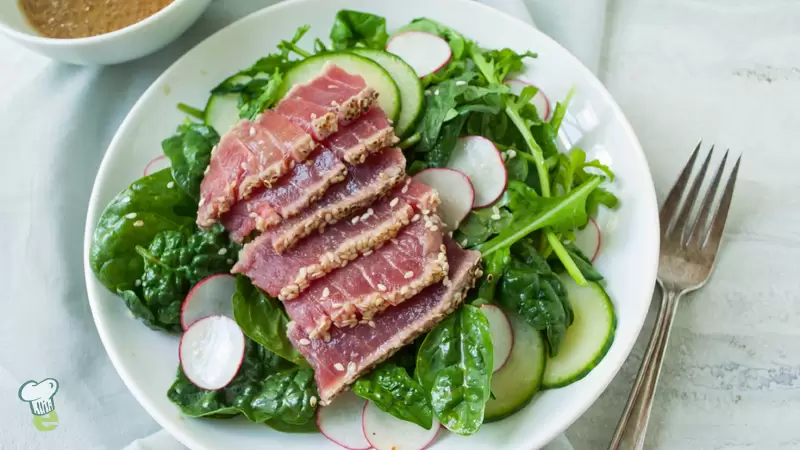
Total time: 30 minutes | Per serving: 294 calories, 36g protein, 14g fat, 400mg sodium
A seared sesame crust gives tuna a nutty, toasty edge, and serving it over greens turns a simple piece of fish into a full meal. At 36 grams of protein per serving, it's the most protein-dense dinner in this collection. Buy the thickest steak you can find and pull it off the heat while the center is still pink.
Want more options for the fish you bought? We have a full collection of heart healthy salmon recipes, a roundup of healthy tuna recipes if canned or fresh tuna is what's in your cart, and a set of low sodium fish recipes for anyone watching their salt.
Fish has a short window of freshness, so knowing how to store it is important.
Cooked fish is usually good for 3 to 4 days in the refrigerator, which makes it useful for lunches. Our guide on how to store leftovers safely covers the rest of the details.
Fresh fish looks moist and slightly translucent, holds together when you press it gently, and smells faintly clean and briny. The strong fishy odor people associate with seafood means the fish is past its prime. On a whole fish, clear plump eyes and bright red gills are the most reliable clues.
It is, and in some cases it's the better buy. Freezing doesn't meaningfully affect protein or omega-3 content, and much of the fish sold at the fresh counter was frozen and thawed anyway. Fish frozen shortly after being caught is often higher quality than fresh fish that's been sitting on ice for several days.
Salmon, sardines, trout, canned light tuna, cod, and tilapia are all low in mercury and safe to eat regularly. The FDA and EPA recommend avoiding or limiting these varieties with the highest mercury levels: king mackerel, marlin, orange roughy, shark, swordfish, bigeye tuna, and tilefish from the Gulf of Mexico. Anyone who is pregnant or managing a chronic health condition should talk with their health care provider about what's right for them.
They're different fish. Atlantic mackerel is one of the best omega-3 sources you can buy and is low in mercury. King mackerel is a larger, longer-lived fish that the FDA places on its avoid list. Check the label, because the packaging usually specifies which one you're getting.
Farmed salmon is a good source of protein and omega-3 fatty acids, and it often has as much omega-3 as wild salmon because of how the fish are fed. It tends to be fattier and milder in flavor, and it's usually less expensive and more consistently available. Our Health eCooks dietitians consider it a solid choice for regular meals.
They're closely related whitefish with a similar mild flavor, and you can substitute one for the other in almost any recipe. Haddock is slightly sweeter and finer in texture, while cod is a bit firmer and flakier. Cod is more widely available in most grocery stores.
Plan on 4 to 6 ounces of raw fillet per person, which cooks down to a 3-ounce serving. That's about 1.5 pounds for a family of 4. If you're buying whole fish, roughly double it, since about half the weight is bones and skin.
The American Heart Association recommends 2 servings of fish per week, ideally including fatty fish like salmon, sardines, herring, or trout. Our heart healthy diet guidelines explain how that fits into the rest of your week.
It means the fish was frozen after being caught and thawed at the store before going on display. Stores are required to disclose it. Previously frozen fish is perfectly good, but cook it within a day and don't refreeze it at home.
Every recipe on our site is developed and reviewed by our registered dietitians, so the nutrition numbers are ones you can trust.
Here are a few places to go next if you’re looking for inspiration:
(Instant Download)
Sign Up for instant access to your free cookbook plus our most popular quick and healthy recipes!