FREEHealthy 30-Minute Meals
(Instant Download)
Sign Up for instant access to your free cookbook plus our most popular quick and healthy recipes!
Have you ever pulled a roast chicken out of the oven and found the wings dark and crispy while the breast still needed more time? That's where trussing comes in. Trussing a chicken just means tying up a whole bird with kitchen twine so it holds a neat, compact shape while it roasts.
It sounds like a fancy restaurant trick, but it takes about 2 minutes and a piece of string. And if you're roasting a turkey for Thanksgiving, the same easy method works on your holiday bird too. In the video, one of the chefs from our Health eCooks Test Kitchen walks you through it step by step. Below, we'll break down each step, explain why it's worth doing, and share a few of our favorite heart healthy roast chicken and turkey recipes so you can put your new skill to work right away.
When a whole chicken goes into the oven untied, the legs and wings stick out from the body. Those thin parts heat up much faster than the thick breast meat, so they can dry out or even burn before the rest of the bird is done. A turkey has the same problem, and since it spends even longer in the oven, those wings and drumsticks have more time to dry out.
Tying the bird together fixes that. Here's what trussing does for you:
You only need 3 things, and you probably have 2 of them already:
Our chef is clear on this point in the video: use real butcher's twine. Regular sewing thread will burn and fall apart in the oven, and anything made of nylon or plastic can melt. You can find butcher's twine in the baking or kitchen tools aisle of most grocery stores.
There are a lot of ways to truss a chicken, and some of them involve a lot of looping and knotting. The method our chef uses is one of the simplest out there. It only needs 2 basic knots, so it's perfect if you've never done this before.
Place the whole chicken on a clean cutting board with the breast side up and the legs pointing toward you. Tuck the wing tips back behind the bird if they're flopping around.
Slide the middle of your twine under the legs, near the ends of the drumsticks. Bring both ends of the twine up and around the legs, then pull them together and tie a simple knot. You want the legs snug against each other, not squeezed so tight that the twine cuts into the skin.
Carefully turn the chicken over so it's breast side down, with the legs still facing you. Keep hold of the 2 loose ends of twine as you flip.
Run each end of the twine along the sides of the bird, pulling it over the wings so they press in close to the body. Bring both ends together over the back of the chicken and tie another simple knot.
Snip off the extra twine with kitchen scissors. Then turn the chicken back over (unless your recipe tells you to start it breast side down) and it's ready for the oven. That's it!
Once you've tied the bird, wash your hands well with soap and warm water before you touch anything else. Raw poultry can spread bacteria to counters, towels, and spice jars, so clean your cutting board and scissors with hot, soapy water too.
Good news if you're hosting Thanksgiving this year! You can use the exact same 5-step method on a turkey. As our chef says in the video, the steps don't change at all. You'll just need a longer piece of twine to reach around a bigger bird.
A few turkey tips to keep in mind:
For more help getting the bird ready, our guide on how to prepare a turkey for roasting covers choosing a turkey, seasoning it, and knowing when it's done.
Trussing gets you most of the way to a juicy roast bird. These tips will help with the rest:
Now that you know how to truss a bird, it's time to roast one! Each of these recipes was developed by our team of chefs and dietitians to balance taste and nutrition, and 2 of them include the same trussing steps you just learned.
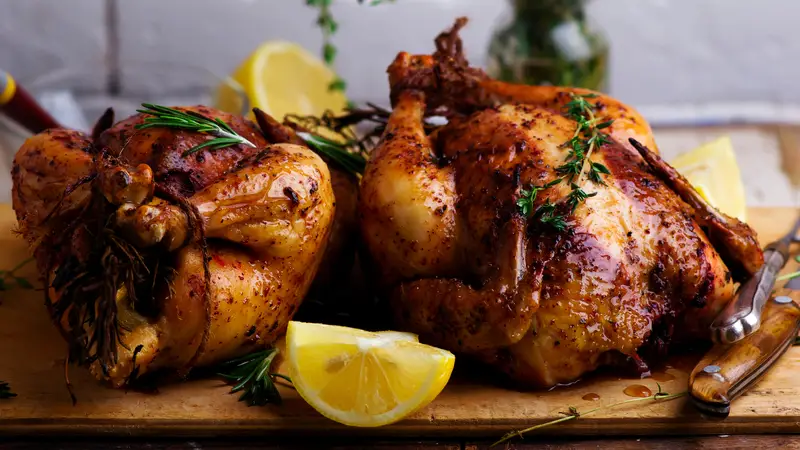
Per serving: 189 calories, 35 grams protein, 84 milligrams sodium
This recipe walks you through the same trussing steps from our chefs, so it's the perfect place to start. The chicken soaks overnight in a reduced fat buttermilk marinade with garlic, rosemary, thyme, and a little honey, which keeps the meat tender and juicy. A Dijon mustard and paprika rub then gives the skin a golden, savory crust, all with just 84 milligrams of sodium per serving.
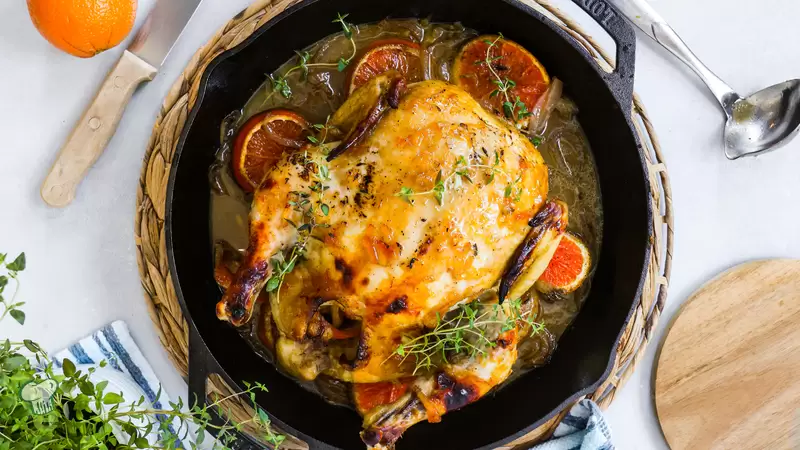
Per serving: 265 calories, 38 grams protein, 120 milligrams sodium
Fresh orange slices go right inside the cavity and into the pan, so trussing really pays off here by keeping all that citrus tucked in. A brush of orange juice, ginger, garlic, and thyme builds a bright, zesty flavor, and a sugar free orange marmalade glaze at the end turns the skin sticky and sweet. With 38 grams of protein per serving, it's a hearty dinner that feels special enough for company.
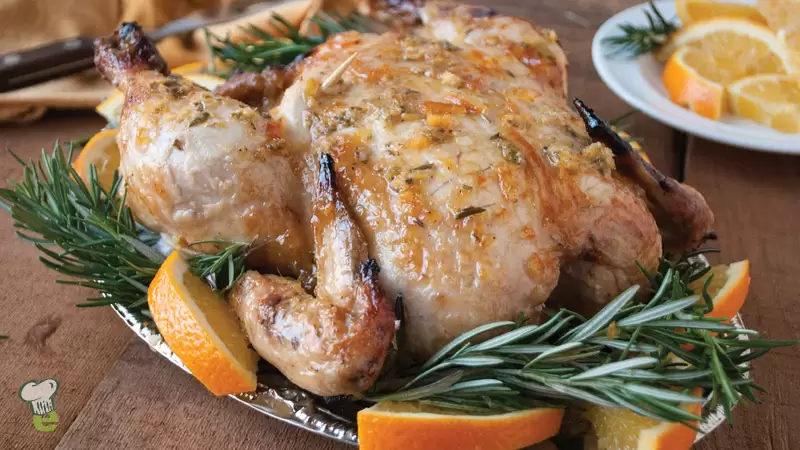
Per serving: 228 calories, 24 grams protein, 292 milligrams sodium
Sherry vinegar and fresh ginger give this roast chicken a tangy, sweet-and-savory kick that pairs beautifully with rosemary. The bird starts breast side down so the juices run into the white meat, then gets flipped and glazed with orange marmalade for the last hour. Serve it with the roasted onions from the pan for an easy side.
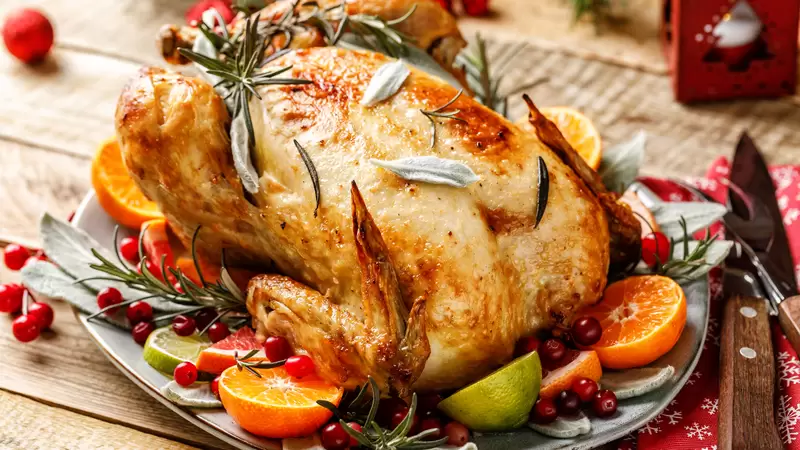
Per serving: 169 calories, 30 grams protein, 498 milligrams sodium
Ready to try your trussing skills on a bigger bird? This holiday turkey is stuffed with orange, lemon, onion, garlic, thyme, and sage, then trussed with the same easy method from the video. It roasts with reduced-sodium chicken stock in the pan for basting, so the meat stays moist from the breast to the drumsticks. It's a beautiful centerpiece for Thanksgiving or Christmas dinner.
No, you don't have to, and your chicken will still be safe to eat if you skip it. Trussing just helps the bird cook more evenly and keeps the wings and legs from drying out or burning. If you've ever had a roast chicken with crispy black wing tips, trussing is the easy fix.
If you're out of butcher's twine, tuck the wing tips behind the chicken's back so they stay put. For the legs, cut a small slit in the loose skin on each side of the cavity and tuck the ends of the drumsticks through. It's not quite as snug as twine, but it works in a pinch. You can also use a small strip of aluminum foil to wrap the ends of the drumsticks together.
No. As our chef explains in the video, regular thread will burn and fall apart in the oven. String made with nylon, plastic, or dyes can melt or leave things in your food that you don't want there. Stick with 100% cotton butcher's twine that's labeled as oven-safe.
Season it first. Rub your herbs, spices, or marinade all over the bird and fill the cavity with any aromatics, then truss it. It's much harder to get seasoning into the nooks around the legs and wings once they're tied down.
Yes. Once the bird has rested, snip the twine with kitchen scissors and pull it away before you start carving. It should slide right off.
It's a great idea! A turkey is a big bird, and its wings and drumsticks can dry out long before the breast and thighs are done. Trussing keeps everything tucked in close so your holiday turkey roasts more evenly and comes out of the oven looking golden and picture-perfect. Just remember to fully thaw the turkey first, add any aromatics to the cavity before you tie it, and check that the thickest part of the thigh reaches 165°F. For a tried-and-true holiday recipe, try our Healthy Oven Roasted Turkey.
(Instant Download)
Sign Up for instant access to your free cookbook plus our most popular quick and healthy recipes!