FREEHealthy 30-Minute Meals
(Instant Download)
Sign Up for instant access to your free cookbook plus our most popular quick and healthy recipes!
If you’ve been following nutrition news lately, you’ve probably seen headlines about the new 2025-2030 dietary guidelines for Americans. Some stories highlight protein, while others talk about fat making a comeback and a redesigned food pyramid. With all the buzz, it may leave you feeling confused about what’s actually changing when it comes to dietary recommendations and what’s staying the same.
Here’s an easy-to-understand overview of the 2025–2030 Dietary Guidelines for Americans, along with tips to help you apply them in your everyday meal planning using simple, healthy recipes from Health eCooks.
Not really. Like past versions, the new dietary guidelines still encourage eating:
They continue to recommend limiting foods high in added sugar, sodium, and refined carbohydrates. And they still encourage balanced, nutrient-dense eating patterns.
What’s different this time is the stronger focus on minimizing highly processed foods. Instead of concentrating on exact serving amounts for different macronutrients, the updated guidance simply emphasizes choosing “real food” more often. This includes meals built from recognizable ingredients rather than packaged convenience items.
TIP: If you’re looking for practical ways to follow this advice, explore our collection of heart-healthy recipes that focus on whole ingredients with less sodium and more balanced nutrition. They allow you to build healthy meals by cooking at home using quality ingredients and align closely with the new dietary recommendations.
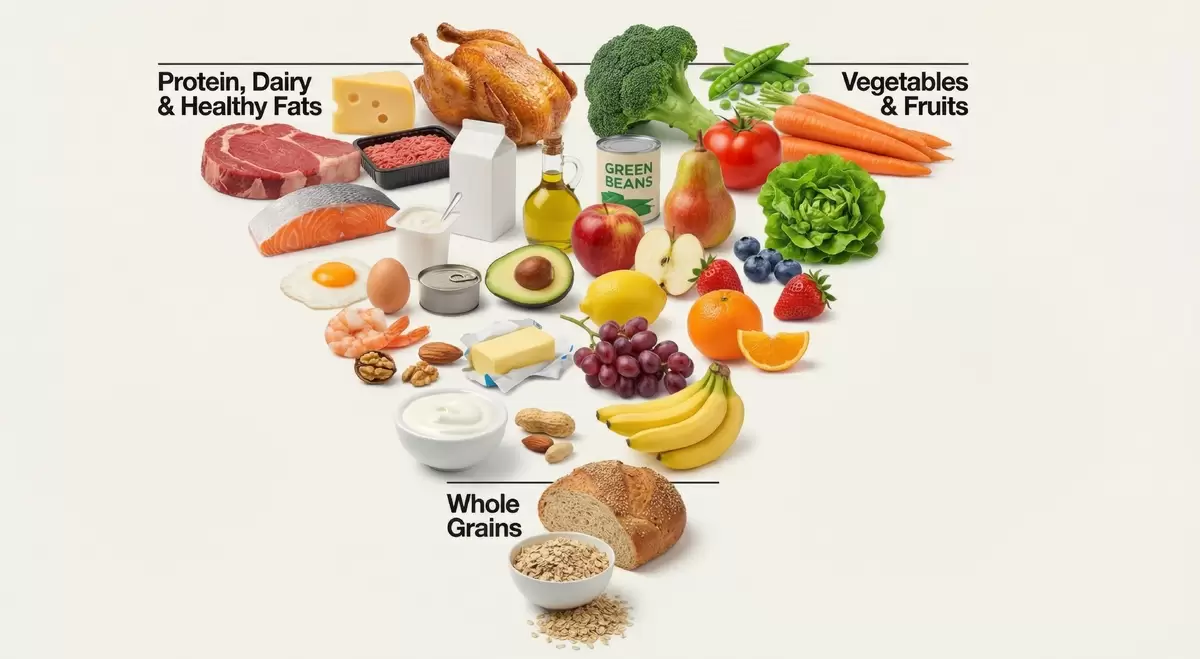
One of the biggest changes in the 2025–2030 update is the introduction of a redesigned food pyramid. Instead of the familiar MyPlate icon, the new graphic looks a little different.
Protein foods, healthy fats, dairy, vegetables, and fruits are highlighted at the top of the upside-down-looking pyramid as the key components of a healthy diet. Whole grains and other carbohydrate-based foods are still included, but they’re less dominant than in previous guides and are shown lower on the pyramid. There’s also an emphasis on avoiding highly processed foods.
The pyramid reflects a shift toward food quality over strict macronutrient counting. It’s less about focusing on what percentage of food should come from each food group and is more about the importance of building meals from minimally processed ingredients.
TIP: If you need inspiration for balanced meals that prioritize lean proteins, along with vegetables, healthy fats, and other whole foods, browse through our high protein recipes. They make it easier to build meals that match the updated visual guidance while keeping you full and satisfied.
Not quite. The dietary guidelines for Americans 2025 2030 emphasize high-quality protein from sources like:
Healthy fats from whole foods are included as part of a balanced eating pattern, but experts still recommend keeping saturated fat under 10% of total daily calories.
While protein intake ranges may be slightly higher than in past recommendations, you should still pay attention to how much saturated fat is in your diet. The guidelines suggest that reducing or eliminating processed foods is the best way to lower saturated fat intake, but you should still not go overboard with foods like butter, fatty meats, and full fat dairy.
Fiber from vegetables, fruits, and whole grains also remains important for heart and digestive health.
TIP: If you’re trying to increase protein in your diet while eating healthier foods that don’t contain too much saturated fat, check out these blogs for some delicious meal ideas:
The updated guidelines take a stronger stance on added sugars than ever before. For young children, no added sugar is recommended. For adults, it is suggested that added sugar be eliminated or kept extremely low. Sugar-sweetened beverages are clearly discouraged. This shift reflects a growing concern about the connection between sugar and obesity, diabetes, and long-term heart health.
TIP: If you’re working to reduce added sugar, check out our diabetic-friendly recipes. They feature lower-sugar meals, snacks, and desserts that can help you enjoy foods with less sugar and refined carbohydrates without feeling deprived.
The core message of the dietary guidelines hasn’t changed much. They still encourage people to eat whole foods, limit processed ones, and focus on balanced meals. What’s different is the way the information is presented.
The stronger emphasis on protein and full-fat foods has raised questions among some people, especially as it relates to saturated fat and heart disease risk. At the same time, many dietitians applaud the push to reduce highly processed foods and added sugar.
The bottom line is that the 2025-2030 dietary guidelines for Americans still support a balanced, whole-food eating pattern. If you focus on cooking more at home, using fresh ingredients, and limiting ultra-processed foods, you’re already aligned with the recommendations.
TIP: Health eCooks makes it easier to follow these dietary guidelines by offering flavorful recipes developed by a team of chefs and registered dietitians that support heart health, balanced nutrition, and real-food cooking. From quick and easy breakfasts and lunches you can enjoy on the go to family-friendly dinner recipes, as well as better-for-you snacks and healthy desserts, we offer loads of ideas for enjoying delicious food that focuses on real ingredients and healthier cooking techniques so you can make healthy eating a reality.
(Instant Download)
Sign Up for instant access to your free cookbook plus our most popular quick and healthy recipes!