FREEHealthy 30-Minute Meals
(Instant Download)
Sign Up for instant access to your free cookbook plus our most popular quick and healthy recipes!
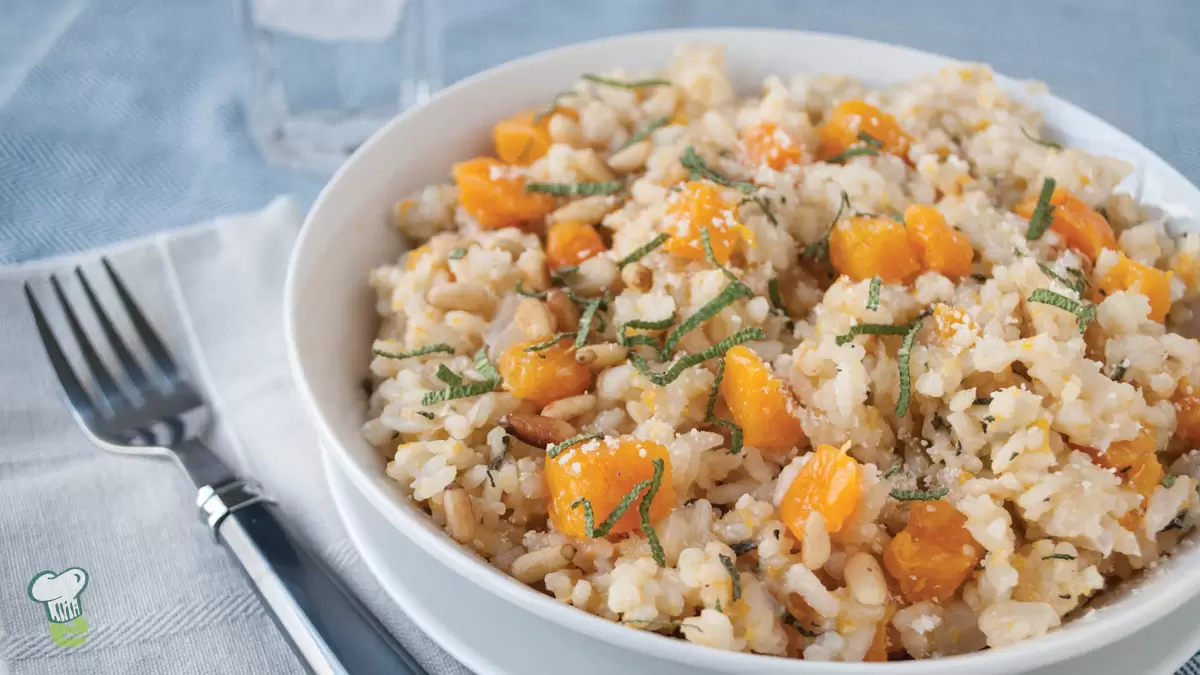
Try this simply sweet butternut squash risotto recipe as an entrée or sophisticated side dish. Use vegetable broth instead of chicken broth for a vegetarian (and heart-healthy) option. This recipe achieves its rich, creamy texture from the starches in Arborio rice, not from dairy.
For even more meatless meal inspiration, browse our full collection of vegetarian dinner recipes designed to be both nutritious and satisfying. You can also round out your plate with our wide variety of healthy side dishes that work perfectly for any occasion.
This risotto recipe is designed for a heart-healthy diet by replacing traditional high-fat ingredients with smarter choices. Instead of butter and heavy cream, it uses heart-healthy olive oil for sautéing and relies on the natural creaminess of the butternut squash and Arborio rice. Flavor is built from fresh herbs like sage and garlic, allowing for the use of low-sodium broth without losing taste.
(Instant Download)
Sign Up for instant access to your free cookbook plus our most popular quick and healthy recipes!
Traditional risotto made with large amounts of butter, cream, and cheese can be high in saturated fat and cholesterol. However, this heart-healthy version is an excellent choice as it uses olive oil and contains no dairy, making it low in saturated fat and free of dietary cholesterol.
Arborio rice is essential for a creamy texture, and it can be part of a healthy diet. While brown rice contains more fiber, it won't produce the classic risotto consistency. The key to a healthy risotto lies in the other ingredients, such as using low-sodium broth and avoiding high-fat additions.
To make risotto healthier, use a heart-healthy fat like olive oil, opt for low-sodium broth, and load it with vegetables like butternut squash for added nutrients and fiber. Avoid adding cream, butter, and excessive cheese.
It is not recommended. Arborio rice has a high starch content that is released during cooking, which creates risotto's signature creamy texture. Using standard long-grain rice will result in a much thinner, less creamy dish.
If you enjoyed this creamy butternut squash risotto, you'll love these other heart-healthy fall recipes. Discover cozy, nutritious dishes that make the most of seasonal ingredients like acorn squash, lentils, and flavorful herbs.
Looking for more plant-based inspiration for your weekly menu? Explore this collection of satisfying vegan and vegetarian main courses, from hearty bean burgers to flavorful chickpea curries.
Recipe yields 8 servings
In a saucepan, bring broth to a simmer. Reduce heat to low.
In a deep skillet, heat olive oil over medium heat until hot. Add the onion and sauté until softened, about 2 to 3 minutes. Add the garlic and sage and sauté for another 2 minutes. Add squash and cook for 1 minute, stirring. Add rice and stir until it is opaque, about 3 minutes. Add 1 cup of the simmering broth and stir until broth is absorbed.
Reduce heat to low. Continue to add broth, about 1/4 cup at a time, until the rice kernels are al dente (just tender), about 20 to 25 minutes.
If additional liquid is needed to cook rice, add water in 1/4-cup intervals until rice is cooked. Add pepper to taste. Serve immediately, sprinkled with pine nuts and parsley or sage.
For Butternut Squash: You can use frozen butternut squash cubes to save time. Add them directly to the pan from frozen, adding a few extra minutes to the sauté time.
For Fresh Sage: If you don't have fresh sage, you can use 1 teaspoon of dried sage.
For Arborio Rice: Carnaroli rice is another excellent option for risotto and can be used as a 1-to-1 substitute.
For Pine Nuts: For a different nutty crunch, try toasted pumpkin seeds (pepitas) or chopped walnuts as a garnish.