FREEHealthy 30-Minute Meals
(Instant Download)
Sign Up for instant access to your free cookbook plus our most popular quick and healthy recipes!
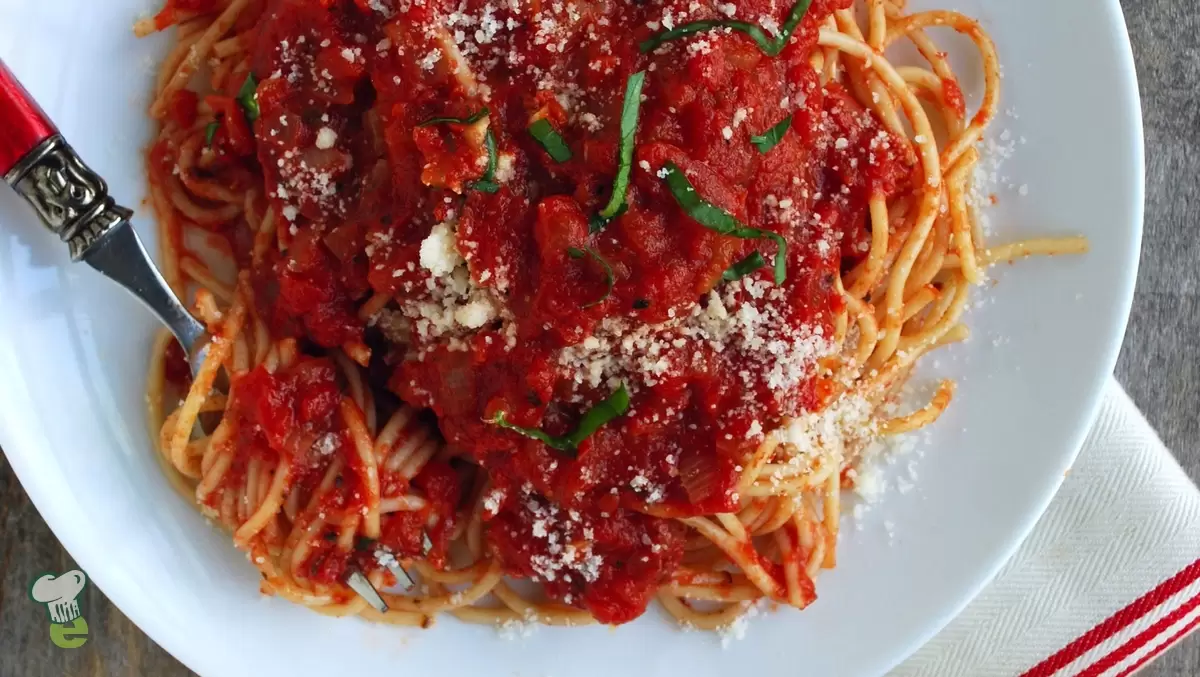
Most spaghetti nights come down to a box of pasta and a jar of sauce, which leaves the plate low in protein and high in sodium. This healthy spaghetti recipe changes both. Barilla Protein+ spaghetti, made with protein from lentils, chickpeas, and peas, gives each 2-cup serving 17 grams of protein and 11 grams of fiber without any meat, and a quick homemade marinara keeps sodium to 154 mg.
The sauce is the simple kind of spaghetti with marinara sauce you can make from pantry staples. Onion and garlic soften in a little olive oil, a can of no-salt-added crushed tomatoes simmers until it thickens, and fresh parsley goes in at the end so it tastes bright. Cooking the pasta in unsalted water and tossing it with a splash of the starchy cooking water helps the sauce cling to every strand, so the whole pot needs only ¼ teaspoon of salt.
For more ways to keep pasta on the menu, browse our collection of heart healthy pasta recipes.
This recipe started as a family favorite from our food editor, who developed it when her father was put on a cardiac diet. The updated version keeps that easy tomato sauce and swaps in a high protein spaghetti, so every serving now has 17 grams of protein and 11 grams of fiber. That makes it filling enough to serve as a main dish. There’s no added sugar in the sauce, saturated fat stays at 1 gram, and 2 tablespoons of Parmesan spread across 4 servings add a savory finish without much fat or sodium. It follows our heart healthy diet guidelines, and our dietitians approved it for vegetarian, diabetic, GLP-1, high fiber, and high protein diets as well.
Yes! It's easy to make spaghetti heart healthy by making a homemade Marinara sauce with a few simple and natural ingredients and tossing it over multigrain, high fiber spaghetti noodles. This homemade healthy spaghetti recipe is a family favorite developed by our food editor when her father was put on a cardiac diet. Many of her healthy Italian recipes start with a heart healthy spaghetti sauce or this healthy Italian red sauce recipe.
Make your spaghetti dinner healthier with our healthy marinara sauce that uses only few ingredients and is an easy 30 minute heart healthy dinner. This low cholesterol spaghetti sauce has less salt than most jarred sauces and contains no added sugar. It’s also full of flavor with no preservatives and can easily be made ahead of time.
This healthy spaghetti recipe is lower in fat, sodium and sugar than traditional pasta recipes. It’s made from heart healthy vegetables, like tomatoes that contain lycopene, and contains only a small amount of salt and no added sugar. Instead, it uses fresh garlic, onion and herbs to make it taste great. There’s also only a small amount of olive oil in the low fat pasta sauce. Multigrain spaghetti is higher in fiber than spaghetti made from white flour, and more fiber is better for heart health and blood sugar control. The result is a healthier spaghetti recipe you can feel good about serving to your whole family.
Want to round out your heart healthy spaghetti entrée to make it a full meal? Add one of these delicious salads to start the meal off right.
If you are looking for a healthy substitute for pasta, whether you want to lower the carbs or calories in a dish, there are several swaps you can use that won’t sacrifice taste. Use zucchini noodles (zoodles) in place of spaghetti, like we did in this Zucchini Noodles with Creamy Avocado Pesto recipe. Spaghetti squash is also a delicious and nutritious pasta substitute. You can see for yourself by trying this delectable Shrimp Spaghetti Squash dish. Using these vegetable pasta substitutes is also a good option if you need a gluten free pasta recipe, or you can simply use gluten free pasta instead of traditional pasta.
Here’s what each 2-cup serving of this heart healthy spaghetti delivers:
(Instant Download)
Sign Up for instant access to your free cookbook plus our most popular quick and healthy recipes!
Spaghetti can absolutely be part of a healthy diet. The type of pasta, the sauce, and the portion size make the biggest difference. Pairing a protein- and fiber-rich pasta with a homemade tomato sauce, as this recipe does, turns a plate of spaghetti into a balanced meal with 17 grams of protein and 11 grams of fiber.
Start with the pasta. Protein or legume-based spaghetti adds protein and fiber, and whole wheat spaghetti adds fiber. A homemade marinara made with no-salt-added tomatoes keeps sodium and added sugar in check, and stirring in vegetables like spinach, zucchini, or mushrooms adds volume and nutrients. For even more protein, serve it with lean turkey meatballs or sautéed shrimp.
The easiest way is to change the pasta. Barilla Protein+ spaghetti is made with lentils, chickpeas, and peas, which is how this recipe reaches 17 grams of protein per serving without any meat. Stirring a can of rinsed white beans or some cooked lentils into the sauce will add a few more grams of protein and fiber.
Pastas made entirely from legumes, such as chickpea, lentil, or edamame pasta, usually have the most protein per serving. Blended pastas like Barilla Protein+ combine wheat with legume flours, so they have more protein than regular spaghetti while keeping the classic taste and texture that makes them a good fit for picky eaters and kids.
This version is approved for GLP-1 diets because each serving has 17 grams of protein and 11 grams of fiber, a combination that helps you feel satisfied. Appetites are often smaller on medications like Ozempic, Wegovy, Mounjaro, or Zepbound, so feel free to split a serving and save the rest for the next day. You’ll find more ideas in our collection of GLP-1 pasta recipes.
Our dietitians approved this recipe for diabetic diets. Each serving has 67 grams of carbohydrates, so it works best as the main carbohydrate in your meal, and the 11 grams of fiber and 17 grams of protein help slow how quickly those carbs are absorbed. Pairing it with a green salad is a good idea, and if you’re managing a chronic health condition, check with your care team about your carbohydrate goals.
If protein pasta won you over, these dinners use the same idea to make pasta night more filling:
These recipes give the same weeknight favorite a different spin, whether you want more vegetables, a hearty meat sauce, or a low carb swap:
Jarred marinara is convenient, but even a popular premium brand can add a lot of sodium before the pasta ever hits the plate. Here’s how a full 2-cup serving of our spaghetti with marinara sauce compares with just ½ cup of Rao’s Homemade Marinara, based on the nutrition facts on Rao’s website:
Making your own sauce takes about 20 minutes of simmering, and it lets you decide exactly how much salt goes in. If you’d like a batch of sauce to keep on hand, try our Low Sodium Marinara Sauce with Canned Stewed Tomatoes or our Low Sodium Spaghetti Sauce with Fresh Roma Tomatoes.
A short ingredient list means every item has a job to do:
Once you have the basic recipe down, it’s easy to change things up. Keep in mind that the nutrition information will change with these additions:

Recipe yields 4 servings
In a large, deep skillet or saucepan, heat oil over medium-high heat until hot. Add onion, salt, and pepper and sauté for 4 to 5 minutes, or until onion is softened. Add garlic and sauté for 30 seconds, or until fragrant. Add tomatoes and bring to a boil. Reduce heat and simmer until sauce thickens, about 15 to 20 minutes, stirring occasionally. Remove from heat and stir in parsley.
Meanwhile, cook pasta according to package directions until just tender, without adding salt to the water. Reserve ½ cup pasta water, then drain pasta in a colander and return it to the pot. Add ¼ cup marinara sauce to pasta and toss to coat, adding a splash of pasta water if needed.
Transfer pasta to bowls and top with remaining sauce, cheese, and additional parsley, if desired.
The marinara is flexible, so you can make it on your own schedule:
A few simple habits keep this spaghetti tasting just as good the next day:
With protein and fiber already covered, all this dish needs is something green. A crisp Heart Healthy Caesar Salad with No-Egg Dressing or Heart Healthy Spinach Salad rounds out the meal, and Heart Healthy Garlic Roasted Broccoli is a good choice when you’d like a warm vegetable instead. In the summer, a Heart Healthy Tomato, Basil and Avocado Salad makes a fresh, colorful starter.
Any chickpea or lentil spaghetti works and may add even more protein. Whole wheat spaghetti is fine too, though the protein will drop by a few grams per serving. For a lower carb plate, serve the sauce over zucchini noodles like the ones in our Heart Healthy Zucchini Noodles with Creamy Avocado Pesto or over roasted spaghetti squash, as in our Heart Healthy Shrimp Spaghetti Squash.
No-salt-added tomato purée or no-salt-added whole peeled tomatoes crushed by hand both work. Check the label before you buy, because regular canned tomatoes will raise the sodium significantly.
Fresh basil is a classic swap. If you only have dried herbs, use 1 teaspoon of dried parsley or ½ teaspoon of dried oregano and add it with the tomatoes so it has time to soften in the sauce.
Pecorino Romano has a sharper flavor and more sodium, so use a little less. For a dairy-free version, sprinkle each bowl with nutritional yeast.
Use your favorite gluten-free spaghetti. A chickpea or lentil variety keeps the protein high.
Pasta night comes around often, so here are a few more collections to keep it interesting: