FREEHealthy 30-Minute Meals
(Instant Download)
Sign Up for instant access to your free cookbook plus our most popular quick and healthy recipes!
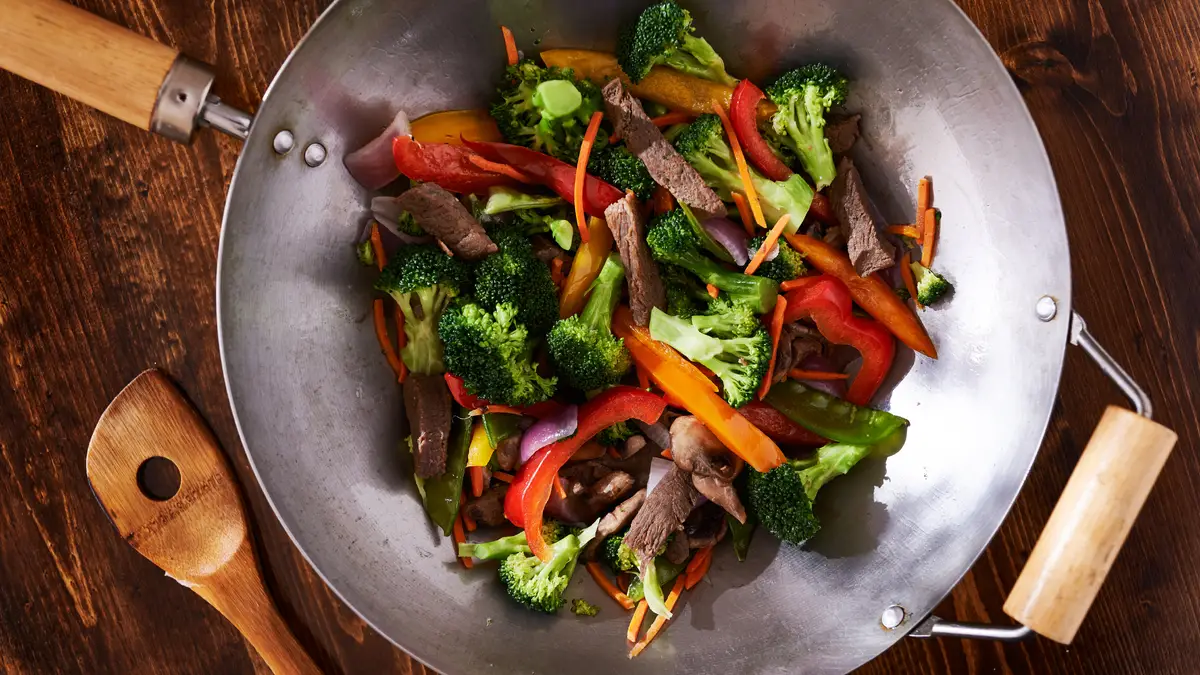
A stir fry is close to the ideal weeknight dinner when you're taking a GLP-1 medication. It cooks up fast and is made in one pan, but what really makes it a winner is the makeup of ingredients it includes. Usually about a third of the dish is meat and the other two thirds is vegetables, a proportion that’s exactly what you want on your plate if you’re trying to lose weight.
When your appetite shrinks, the problem isn't just that you eat less. It's that whatever you do eat has to work harder. A dinner that's mostly pasta or rice fills you up without giving you much of what you actually need, but a stir fry is a different story. The thin slices of beef, chicken, or shrimp are dense with protein, the vegetables give you volume and nutrients without many calories, and the sauce makes the whole thing taste like something you'd order out.
There's a practical bonus to stir fries as well. They’re easy to adjust so if you can only manage a small plate, serve with less rice so you have enough room for more meat and veggies. If you're hungrier than usual, add the rice back or throw in some extra vegetables. Nothing about the recipe has to change for the portion to change, which is more than you can say for most dinners.
Six of the 9 recipes shared below have at least 28 grams of protein per serving, and the highest two reach 37 grams (if you're still sorting out how much protein you should be aiming for, our GLP-1 diet guidelines can help). All of these recipes were developed in the Health eCooks Test Kitchen, where our chefs develop recipes with an eye towards taste and ease of preparation while our registered dietitians ensure that what you’re eating is as nutritious as it is delicious.
Seven of the recipes are on the table in 30 minutes or less, and the full nutrition stats are listed with every recipe. We’ve ordered the recipes by protein, with the highest first.
These recipes are quite diverse, ranging from a Mediterranean version with no soy sauce in it to a soba noodle stir fry with 11 grams of fiber. Every one was built to balance taste and nutrition, and all give you a little something different so your meals don’t get boring.
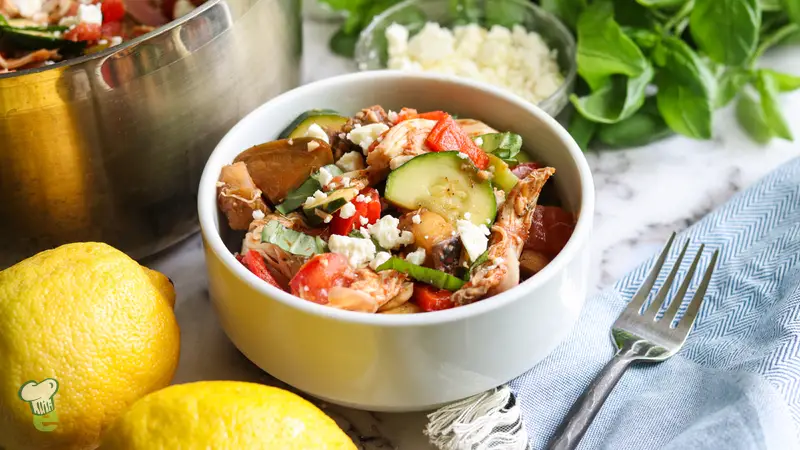
Total time: 30 minutes | 311 calories, 37g protein, 8g fiber per serving
This is the best all-around dish nutritionally for a GLP-1 diet, and it's the least like what you're probably picturing a stir fry to be. There's no soy sauce, ginger, or rice. Instead, it includes eggplant, zucchini, red onion, bell pepper, and plum tomatoes cooked fast and hot, with shredded chicken breast, rosemary, lemon zest, and a handful of fresh basil. You get 37 grams of protein and 8 grams of fiber for 311 calories. If you serve it over brown rice or quinoa, you can up the fiber content even more.
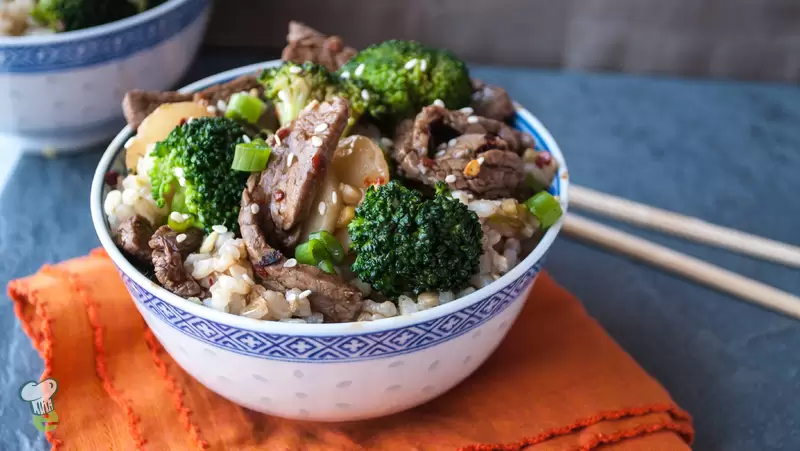
Total time: 45 minutes | 434 calories, 37g protein, 3g fiber per serving
This is the takeout dish everybody knows, in a healthier version. Flank steak gets sliced thin across the grain, then stir fried with broccoli, water chestnuts, scallions, ginger, and garlic. The sauce uses low-sodium soy, a spoonful of hoisin, and a splash of dry sherry, and it thickens with cornstarch into something glossy that coats everything. At 37 grams of protein, it ties for the highest here, but it's also the highest in calories at 434, mostly because the brown rice is counted in the serving.
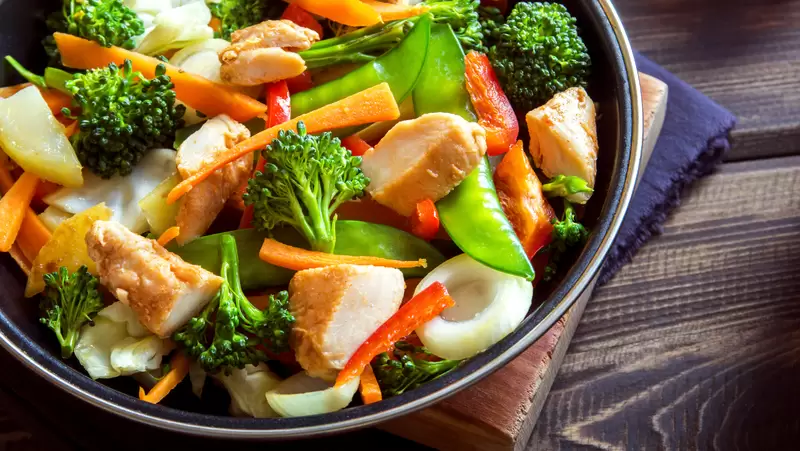
Total time: 30 minutes | 399 calories, 33g protein, 3g fiber per serving
This is an unusual take on a stir fry and worth trying for that reason. It's closer to a barbecue fried rice than a classic dish. Chilled cooked rice goes into a hot pan with pulled chicken breast, carrots, broccoli, snow peas, and chopped cooked egg whites, then gets finished with mirin and low-sodium barbecue sauce. The egg whites are a clever addition, pushing the protein to 33 grams without adding many calories.

Total time: 25 minutes | 252 calories, 28g protein, 3g fiber per serving
For a weeknight meal, this is probably the most useful recipe on the list. It's among the fastest at 25 minutes, and at 252 calories, it's the lightest of the chicken dishes here while still giving you 28 grams of protein. The vegetables are familiar ones that hold up well to high heat, like sugar snap peas, carrots, and bell peppers. The sauce is a straightforward mix of low-sodium soy, rice vinegar, honey, sesame oil, fresh ginger, and garlic, thickened with a little cornstarch. Sesame seeds and sliced green onion are sprinkled on at the end.
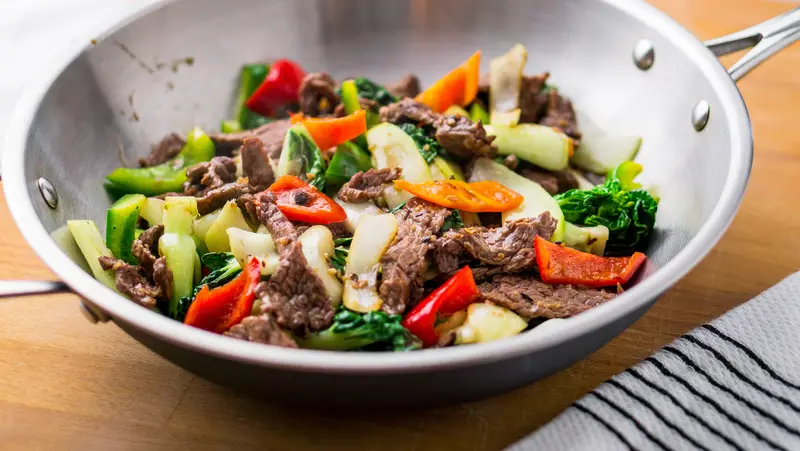
Total time: 25 minutes | 278 calories, 28g protein, 2g fiber per serving
Think of this as the beef version of the chicken stir fry above. It uses the same sauce of soy, rice vinegar, honey, ginger, and sesame oil, and the same 25-minute method, but swaps in lean sirloin sliced into thin strips, with zucchini, red bell pepper, and onion wedges instead of the snap peas and carrots. Dusting the beef with cornstarch before it hits the pan is what gives it that velvety texture you get in a restaurant. A serving has 28 grams of protein for 278 calories. Fiber is low (only 2 grams), so this is a good candidate for serving over brown or wild rice or quinoa.

Total time: 30 minutes | 414 calories, 28g protein, 4g fiber per serving
Shrimp is the fastest protein you can stir fry, because it goes from raw to done in about 3 minutes, which also means it's the easiest one to ruin. Pull it off the heat the moment it turns opaque and curls. In this recipe, a pound of large shrimp cooks with snow peas, red bell pepper, water chestnuts, fresh ginger, garlic, and a pinch of red pepper flakes, served over brown rice with sesame seeds scattered over the top. You get 28 grams of protein per serving, and the snow peas and water chestnuts keep it crunchy.
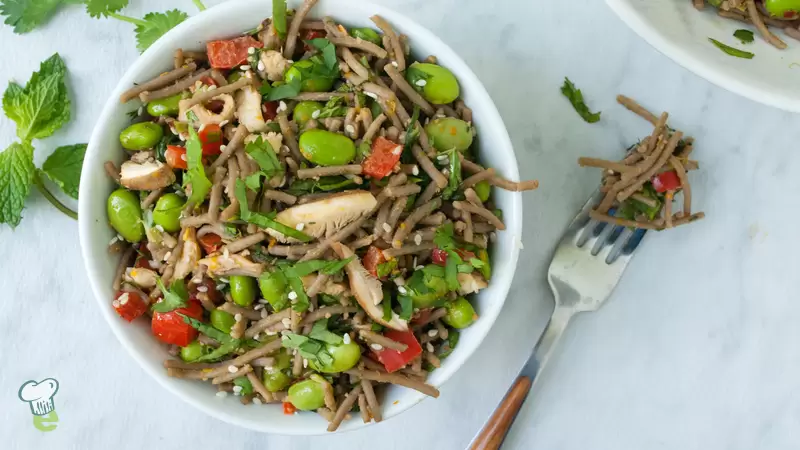
Total time: 30 minutes | 398 calories, 21g protein, 11g fiber per serving
Here's the fiber winner in the stir fry category. A serving has 11 grams, nearly three times what most of the other recipes manage, and three things get it there. Soba noodles are made from buckwheat instead of refined wheat, a cup of shelled edamame adds fiber and protein, and baby bok choy adds more fiber. The sauce is a peanut butter and orange juice base with lime, rice vinegar, tamari, and plenty of zest, finished with fresh cilantro and mint. It delivers 21 grams of protein, which is respectable for a meatless dish, and if you like eating less meat, it's worth browsing our other vegetarian GLP-1 recipes too.
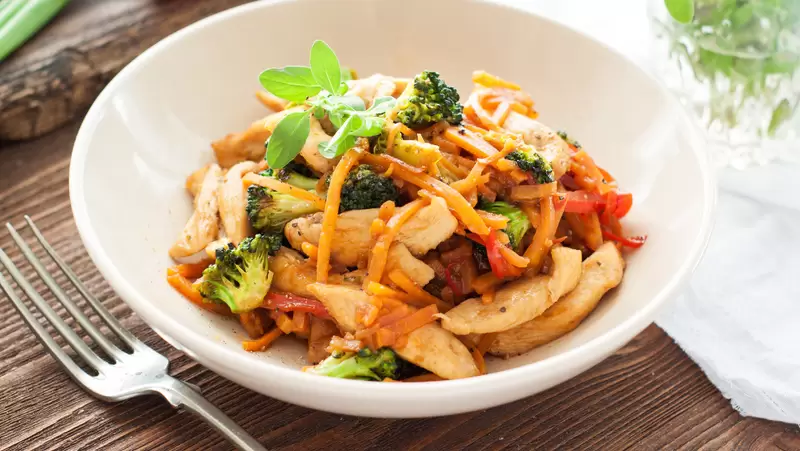
Total time: 30 minutes | 274 calories, 18g protein, 3g fiber per serving
Most stir fry sauces lean on soy sauce as their base, but this one builds a sauce from unsalted chicken broth, fresh lime juice, grated ginger, garlic, and honey, with barely any soy at all. The result tastes noticeably lighter and brighter than traditional sesame and soy versions, which makes it a good one to have in reserve for nights when something rich doesn't appeal. Chicken breast, broccoli, and red and yellow pepper go over brown rice, yielding 3 grams of fiber in the dish.

Total time: 45 minutes | 191 calories, 15g protein, 2g fiber per serving
At 191 calories, this is the lightest dish on the list, which makes it a useful one to have on hand for evenings when you don’t feel like eating much. Pork tenderloin gets sliced into strips and marinated in soy, honey, ginger, and red pepper flakes, then cooked quickly with snow peas and carrot sticks in a sauce made from orange juice and orange zest. The citrus with the ginger makes it taste brighter than most pork dishes and a serving has 15 grams of protein, so you may want to pair it with another protein-rich food if you’re trying to hit a higher target.
Stir frying is one of the few cooking methods where technique matters as much as the ingredients. The difference between a good stir fry and a soggy pan of vegetables comes down to these things:
If your appetite is smaller than usual, here are a few tips to keep in mind:
A stir fry is close to a complete meal on its own, but if you want something alongside it, our GLP-1 side dishes are ones to consider. And if speed is important to you when pulling together a weeknight dinner, our 30 minute GLP-1 meals shouldn’t be missed.
Here are some of the questions people often have about eating stir fries on a GLP-1 diet.
Stir fry suits these medications about as well as any dinner can. You're eating mostly vegetables with a dense portion of lean protein, which gives you a satisfying volume of food without many calories and helps you meet your protein goals. It's also quick, which is important, because cooking tends to lose its appeal when you're not especially hungry. For more information about how to put together meals while you're losing weight on medications like Ozempic, Wegovy, Mounjaro, and Zepbound, read our GLP-1 diet guidelines.
A wok helps because the sloped sides make tossing easier and the shape concentrates heat at the bottom, but every recipe here works in a large skillet. What actually matters is surface area and heat. A wide pan that gets hot enough will outperform a small wok on a weak burner. Cast iron and carbon steel both hold heat well, but nonstick pans aren’t ideal, since most nonstick coatings aren't meant for high heat.
You can but just keep in mind that frozen vegetables hold a lot of water, so they steam instead of searing unless you make a few changes to your cooking technique. Don't thaw them first. Add them straight from the freezer to a very hot pan, in smaller batches than you think you need, and give them a minute undisturbed before you start tossing. They won't stay as crisp as fresh, but the nutrition is comparable.
The simplest route is to increase the meat and leave everything else alone, since the vegetables and sauce aren't contributing much protein. Beyond that, edamame works well stirred in near the end and adds fiber at the same time. Scrambled egg or chopped cooked egg whites fold in easily, which is what the BBQ chicken recipe in this list uses. Cubed extra-firm tofu browns nicely if you press the water out first. And if you want more high protein ideas that go beyond stir fries, our GLP-1 chicken recipes and GLP-1 salmon and seafood recipes are worth a look.
Most people do fine with stir fries, but a few things help if you're finding meals uncomfortable. Cook the vegetables a little longer than the recipe says, since very crisp raw-ish vegetables are harder on a slow stomach than tender ones. Go lighter on the chili flakes and richer sauces at first. And eat slowly, which is generally the most useful advice for any meal on these medications. If something consistently doesn't agree with you, avoid it or mention it to your doctor or a registered dietitian.
Stir fries are some of the easiest and fastest meals you can make, but you’ll also find plenty of other quick and easy meals on our site that work well with an eating pattern that’s compatible with GLP-1s, such as:
Every recipe we publish is reviewed by one of our registered dietitians, but talk with your healthcare provider or a registered dietitian about the eating plan that's right for you while you're taking a GLP-1 medication.
(Instant Download)
Sign Up for instant access to your free cookbook plus our most popular quick and healthy recipes!