FREEHealthy 30-Minute Meals
(Instant Download)
Sign Up for instant access to your free cookbook plus our most popular quick and healthy recipes!

Making a batch of shredded chicken at the start of the week means you can have tacos one night, a salad the next, and soup after that, without having to cook each time. It freezes well, reheats easily, and stretches much further than a whole chicken breast on a plate.
The slow cooker is the easiest way to make shredded chicken. Season the chicken, go about your day, and come back a few hours later to meat that pulls apart with a fork. But there are four other methods worth knowing about too, and a couple of them are much faster if you didn’t plan ahead.
Canned chicken and store-bought rotisserie chicken are both useful for making a quick dinner, and there’s nothing wrong with either one on a busy night. But they can have a lot of sodium. Most rotisserie chickens are brined or injected with a salt solution before roasting, and canned chicken is packed in salted liquid, so the sodium content can climb quickly once you add sauce, cheese, or seasoning. Cooking chicken yourself puts control over sodium in your hands, which makes a difference if you’re watching your blood pressure or following a low sodium diet.
Cost is another good reason to make a batch of shredded chicken at home. Boneless skinless chicken breast is one of the leanest and most affordable proteins in the store, and 2 pounds can be stretched into four or five different meals without it tasting like you’re eating the same thing over and over. Our chicken meal prep guide goes deeper on how to build a week of meals around this versatile and inexpensive protein.
Boneless skinless chicken breasts are a popular choice for making shredded chicken. They’re lean, shred well, and take on whatever seasoning you add. The downside is that they have very little fat, so the chicken goes from tender to dry quickly if you cook it too long.
Boneless skinless thighs are a better pick for shredding if you don’t like dry chicken. They have more fat and connective tissue so they stay moist through a longer cook and they’re far more forgiving if you lose track of time. They may be cheaper, too. You can use them anywhere a recipe calls for shredded chicken breast. In saucy dishes like tacos, chili, or enchiladas, you probably won’t even notice the difference.
When it comes to quantity, you’ll find that 1 pound of raw boneless skinless chicken gives you roughly 2 to 3 cups of shredded meat, depending on how loosely you pack it. Cooking 2 pounds is a good size for most families and fits comfortably in a 6-quart slow cooker.
Use this method when you have a few hours and don’t want to think about dinner in the meantime. It also gives you the most tender result, because low steady heat breaks down connective tissue in a way that fast cooking doesn’t.
Here’s the process:
If you’d rather see how this is done than read about it, watch our test kitchen video at the top of the page on how to slow cook shredded chicken. It runs through the whole process, including what the chicken should look like when it’s ready to shred.
A word of caution on timing. Plenty of slow cooker recipes call for 6 to 8 hours on low, which works for a tough cut of meat like pork shoulder. Chicken breast will likely be dry and chalky by hour 6. If you need it to sit longer than 4 hours, use thighs, or set the cooker to switch to warm.
The slow cooker isn’t always the right answer, especially on a weeknight when dinner needs to be ready in half an hour. These four methods all work, and each one suits a different situation.
Poaching is the fastest method that starts with raw chicken, and it’s done in about 20 minutes. Put the chicken in a saucepan, add water or low sodium broth to cover it by an inch, and drop in a bay leaf, a few peppercorns, and a smashed garlic clove. Bring it up to a bare simmer, lower the heat until the surface barely moves, and cover the pan. Breasts take 15 to 20 minutes, thighs a little longer.
Keeping the liquid at a bare simmer is important. A hard boil tightens the muscle fibers and produces stringy meat, which is why boiled chicken has such a bad reputation. Save the poaching liquid, too. It’s a light broth you can use to moisten the chicken later or to start a soup.
Baking adds a little flavor, since the surface browns slightly. Heat the oven to 375°F, put the chicken in a baking dish with a splash of broth, cover the dish tightly with foil, and bake for 20 to 30 minutes, until it reaches 165°F. The foil traps steam and keeps the chicken from drying out, so don’t skip it. This is a good method to use when the oven is already on for something else.
Add 1 cup of liquid to the pot, set the chicken on the trivet or straight into the liquid, and cook on high pressure for 10 to 12 minutes for fresh breasts. Let the pressure release naturally for 5 to 10 minutes before you open it, because a quick release toughens the meat.
The real advantage when using a pressure cooker is that you can start with frozen chicken. Most methods require you to thaw the chicken first, but a pressure cooker takes chicken from the freezer to shreddable in about 15 minutes, which makes it the one to reach for when you didn’t take anything out for dinner.
No cooking involved, which makes this the fastest option by a wide margin. A 3-pound rotisserie chicken gives you about 4 cups of shredded meat, and pulling it apart while it’s still warm takes 5 minutes. Remove the skin first to cut the saturated fat, and keep the sodium in mind if you’re serving it with something salty. For a low sodium diet, one of the other methods gives you far more control over how much salt is in your meal.
However you cooked it, shred the chicken while it’s still warm. Warm meat separates along the grain easily and cold meat is stubborn, so let refrigerated chicken come to room temperature or warm it gently first.
Here are four methods for shredding chicken, from the most controlled to the fastest:
The mixer methods work well as long as you don’t overdo it. Check at 15 seconds and then run it longer only if you need to, because you can always shred more but you can’t undo it when you’ve overshred the chicken and turned it into mush.
Dry shredded chicken usually comes down to two things, and both are fixable.
The first is overcooking. Chicken breast has almost no fat to protect it, and every minute past 165°F pushes out more moisture. We encourage you to use a thermometer instead of guessing and pull the chicken as soon as it hits the proper temperature. An instant-read thermometer is inexpensive, and it may be the most useful tool you can buy for cooking chicken well.
The second is draining. Shredding roughly triples the surface area, so the meat dries out quickly once it’s out of any liquid. Leave it in the cooking liquid, or toss it with a few spoonfuls of broth once it’s shredded. In a saucy dish you may not notice how dry it can become, but in a sandwich or a salad, you will.
If you’re working with breast meat, a teaspoon of olive oil tossed in with the seasoning helps as well. A little fat coats the strands and keeps them from clumping together in the refrigerator.
You can season the chicken before cooking, after shredding, or both, and each method does something different.
Aromatics and rubs that go in before cooking, like garlic, onion, bay leaf, and smoked paprika, flavor the meat from the inside and leave you with a good neutral base. Seasoning added after shredding sits on the surface where you taste it right away, so that’s where a bright finish belongs: lime juice, fresh cilantro, a spoonful of salsa, or a splash of hot sauce.
If you want one batch to cover several different meals, cook it plain or close to it and season each portion as you go. A batch heavily seasoned for tacos is great in tacos but won’t work in chicken salad.
One note on salt. Most commercial taco and fajita seasoning packets contain a few hundred milligrams of sodium per serving. Salt-free blends do the same job, and when you build flavor with garlic, cumin, oregano, citrus, and vinegar, a small pinch of salt at the end is enough to add all the taste you need. Our dietitians write more about that trade-off in our low sodium chicken recipes collection.
Cooked shredded chicken keeps for 3 to 4 days in an airtight container in the refrigerator. Get it in there within 2 hours of cooking, or within 1 hour if the kitchen is above 90°F, and spread it out in a shallow container so it chills all the way through instead of staying warm in the middle. Our guide to cooling food down safely explains the reasoning, and our complete guide to storing leftovers covers the rest.
For the freezer, portion the chicken into the amounts you’ll use, press the air out, and freeze it flat with a few spoonfuls of cooking liquid, which protects it from freezer burn and gives you much better texture later. It holds up well for about 4 months. Thaw it overnight in the refrigerator.
Once there’s a container of shredded chicken in the refrigerator, dinner is mostly an assembly job. Each of these dishes was developed by our team of chefs and dietitians to balance taste and nutrition, and each one uses shredded chicken a different way. We’ve included one of our most popular recipes for shredded chicken if you want it seasoned for tacos and other Mexican favorites.
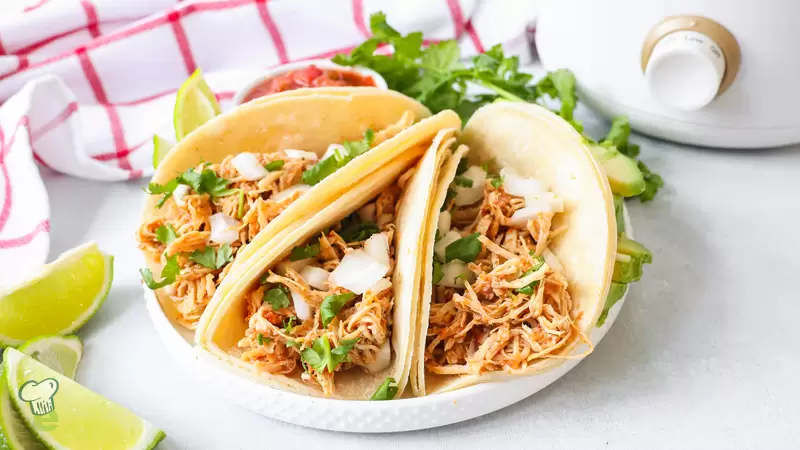
17 grams protein · 100 mg sodium · 112 calories · 3 hours 5 minutes · Serves 6
This is the slow cooker method written out as a full recipe, with the seasoning included. At 100 mg of sodium per serving, it meets the low sodium standard on its own, which leaves room for you to add salsa, cheese, and other toppings without going overboard on salt. Double the recipe if you want to use half for tacos and the other half to enjoy later in the week (it’s great in bowls, salads, and wraps).
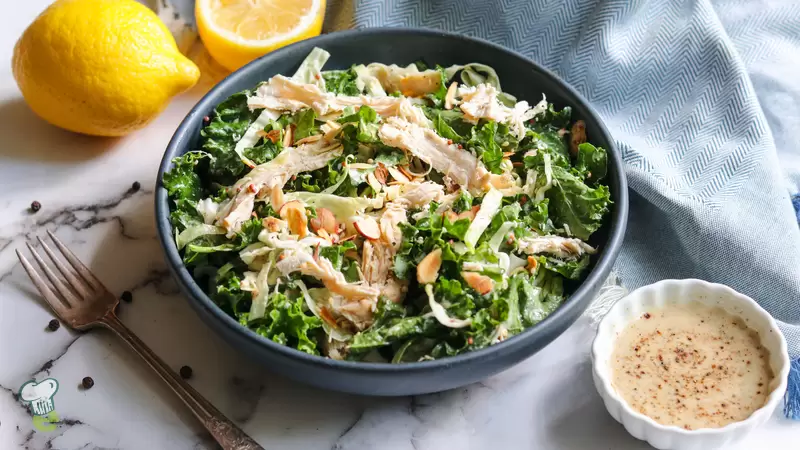
25 grams protein · 100 mg sodium · 266 calories · 15 minutes · Serves 4
Cold shredded chicken works well in salads, and this version has enough crunch, along with some tang in the dressing to keep it interesting. It’s a high protein meal and it comes together quickly when you already have shredded chicken in the fridge. If you’re making it ahead for lunches, keep the dressing separate until you’re ready to eat.

19 grams protein · 309 mg sodium · 248 calories · 20 minutes · Serves 4
Nachos are often one of the things people give up when they’re trying to eat healthy, but with this recipe, there’s no need to skip this fan favorite. Building them on a sheet pan with shredded chicken, beans, and a measured amount of cheese keeps the sodium reasonable and turns them into a flavorful and nutritious meal (you can swap in shredded turkey, or use black beans alone if you’re feeding a vegetarian).

22 grams protein · 297 mg sodium · 306 calories · 45 minutes · Serves 12
Shredded chicken suits saucy dishes, because the strands catch and hold sauce in a way a sliced breast doesn’t. This mole is rich and a little sweet from the chocolate and it serves 12, so it’s a good dish to make when you’re feeding a crowd or want a batch of leftovers.
Chicken thighs shred beautifully, and many cooks prefer them. They have more fat and connective tissue than breast meat, so they stay moist through a long cook and they’re much harder to overcook. Thighs also take well to being cooked past 165°F, to around 185°F, which is the point where the connective tissue softens and the meat falls apart on its own. The extra fat does add some calories and saturated fat compared with breast meat, so if you’re watching either one closely, chicken breasts are the leaner pick.
Add moisture before you add heat. Put the chicken in a pan or a microwave-safe dish, add a tablespoon or two of broth or water for every cup of chicken, cover it, and warm it gently over low heat or in the microwave at 50% power. Stop as soon as it’s hot all the way through. Reheating shredded chicken uncovered at full power is what produces a dry, rubbery texture, because there’s no moisture left to protect it.
Cooked shredded chicken keeps for 3 to 4 days in an airtight container in the refrigerator, the same as any other cooked chicken. For longer storage, freeze it with a little of its cooking liquid, where it holds up well for about 4 months.
Chicken is safe to eat at an internal temperature of 165°F. For shredding, breast meat pulls apart most easily around 175°F and thighs shred best closer to 185°F, once the connective tissue has broken down. The trade-off with breast meat is that every degree past 165°F costs you some moisture, so if you’re cooking it longer, do so in some liquid and let it rest in the liquid afterward.
Once you have a system for cooking shredded chicken, all you need to do is to decide what to use it in. Here are a few ideas:
All of our recipes are developed and tested in the Health eCooks Recipe Test Kitchen and reviewed by our registered dietitians before they’re published.
(Instant Download)
Sign Up for instant access to your free cookbook plus our most popular quick and healthy recipes!