FREEHealthy 30-Minute Meals
(Instant Download)
Sign Up for instant access to your free cookbook plus our most popular quick and healthy recipes!
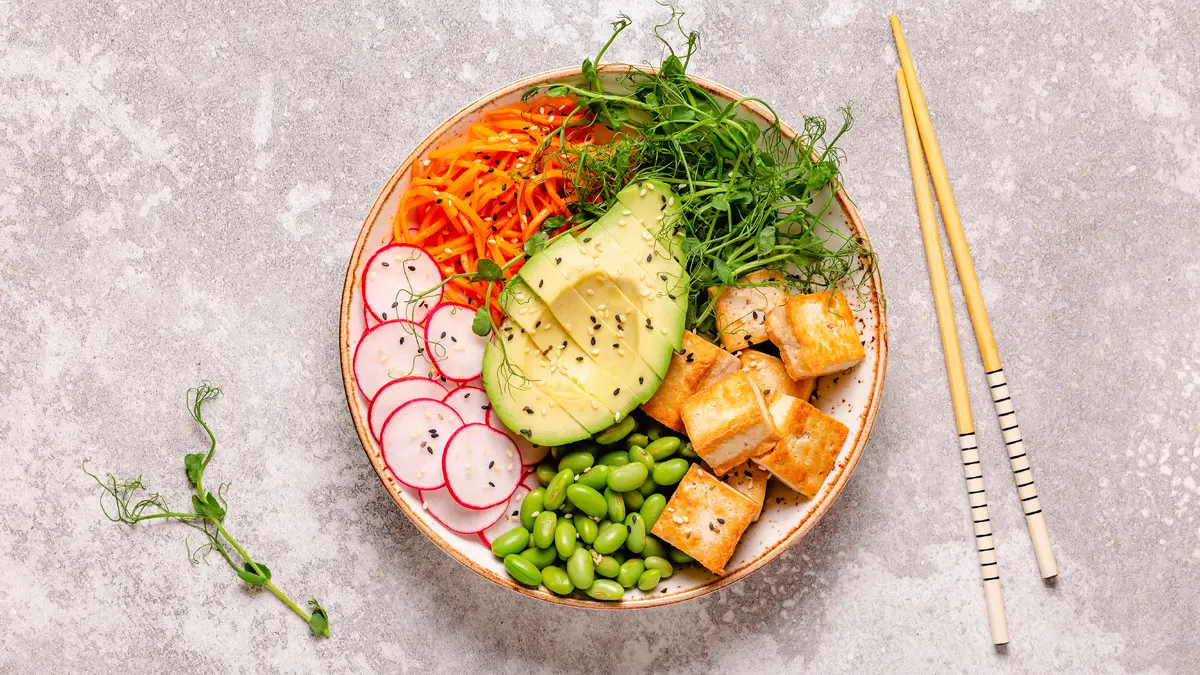
Soy might be the most misunderstood food in the grocery store. One week it's touted as a healthy source of plant protein, and the next, people believe it causes breast cancer. No wonder people stand in the aisle unsure of whether to put tofu or edamame in their cart.
The confusion traces back to the fact that soy contains natural plant compounds called isoflavones, and their structure looks a bit like estrogen. Since some breast cancers are fueled by estrogen, people often wonder whether eating soy could raise their risk.
Decades of research have answered that question, indicating that for most people, eating whole soy foods is not linked to a higher risk of breast cancer. Soy foods also happen to be genuinely good for you.
Soy foods are made from soybeans, a legume that's unusually rich in protein. The most common ones are:
These foods are high in protein and also contain fiber, unsaturated fats, vitamins, and minerals. They're popular with people eating more plant-based meals, but there's no reason they can't sit next to the chicken on anybody's plate.
The concern goes back to laboratory studies in mice and rats. When researchers gave rodents very large amounts of isoflavones, some studies showed effects on breast cancer cell growth.
Scientists later learned that rodents break down isoflavones differently than people do, so what happens in a mouse doesn't predict what happens in a woman eating a bowl of edamame. When researchers studied people, the results looked completely different.
Studies in people haven’t shown that soy foods raise breast cancer risk, and some have found the opposite. Women in East Asia, who eat soy regularly from childhood, tend to have lower rates of breast cancer than women in the United States, and researchers have looked hard at whether soy is part of the reason.
The evidence is also reassuring for breast cancer survivors. The American Cancer Society says soy foods are safe, and the American Institute for Cancer Research reports that population studies show no increased risk for survivors who eat soy. Some research has even linked eating soy after a breast cancer diagnosis with a lower chance of the cancer returning.
To understand why this may happen, it helps to understand how isoflavones behave. Rather than acting like a strong estrogen, they attach weakly to the same spots in the body, which may actually block stronger natural estrogens from doing so.
Once the myth about soy and breast cancer is out of the way, you’ll find that soy stands up well on its own merits.
One serving of soy has roughly 7 grams of protein and about 25 mg of isoflavones. That works out to about a third of a cup of tofu, half a cup of tempeh, half a cup of edamame, or a cup of soy milk.
People in East Asia typically eat one to two servings a day, throughout their lifetime. That's the pattern the research is built on, and it's a very normal amount of food. Two or even three servings of soy a day is considered a reasonable range for most adults.
Whole and minimally processed soy foods like edamame, tofu, tempeh, miso, and unsweetened soy milk are what the reassuring research is based on. Heavily processed products such as soy protein bars and some soy-based meat substitutes are different, often containing more additives than you'd expect.
Isoflavone supplements are a separate matter entirely. They deliver far more concentrated doses than food does, and the American Cancer Society doesn’t recommend them. Unless your healthcare provider has suggested one, food is the better way to get your soy.
Each of these recipes uses whole soy in the form the research supports. The recipes have been developed by the chefs and dietitians at Health eCooks to be delicious, nutritious, and easy to make.
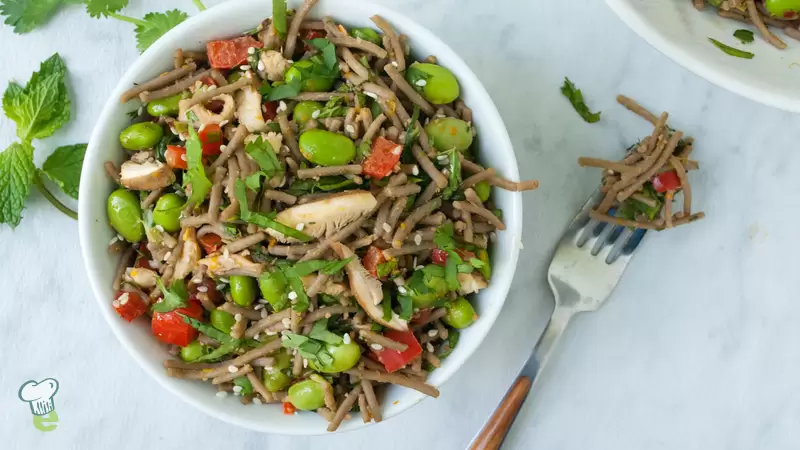
Shelled edamame goes into a stir-fry with soba noodles, vegetables, and a peanut and citrus sauce. One serving has 21 grams of protein and 11 grams of fiber, which is more fiber than most dinners deliver.
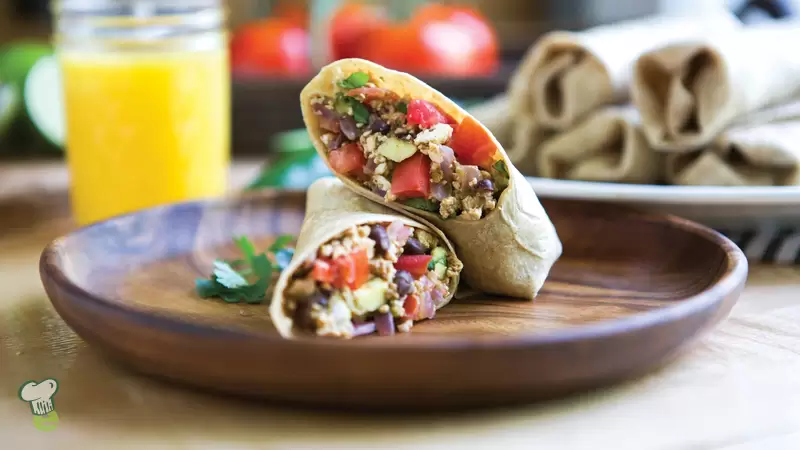
Crumbled extra-firm tofu takes the place of scrambled eggs, seasoned with chile powder, cumin, and garlic, then wrapped up with black beans. It has 10 grams of protein and 5 grams of fiber per burrito, and it's an easy way to find out whether you actually like tofu.
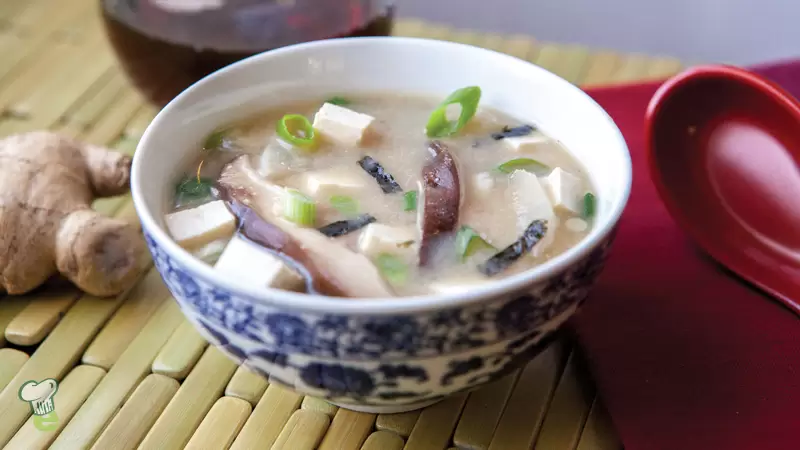
Miso is fermented soybean paste, and it makes a broth with real depth from almost nothing. Shiitake mushrooms, daikon, scallions, and cubes of tofu round it out at 71 calories a bowl.
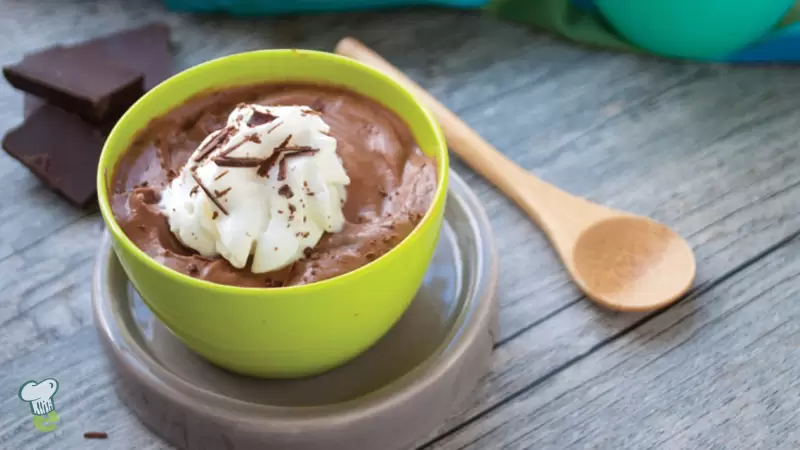
Silken tofu blended with bittersweet chocolate makes a mousse so smooth that nobody will guess what's in it. Each serving has 5 grams of protein and 168 calories. It's a good reminder that soy shows up in more places than just stir-fries.
Browse our full collection of soy and tofu recipes for more ideas, all developed and tested in the Health eCooks Test Kitchen.
Major cancer organizations say whole soy foods are safe for cancer survivors to eat. Some research has even linked soy intake after diagnosis with better outcomes. Supplements are the exception, so talk with your oncologist before taking any.
Soy isoflavones aren't the same as the estrogen your body makes. They attach weakly to the same receptors as the body’s natural estrogen and behave differently, which is why eating soy doesn't have the effect people assume it does.
Tofu is a complete protein, low in saturated fat, and free of cholesterol. Tofu set with calcium is also a good source of that mineral. It's a very nutritious food to build a meal around.
Research hasn’t shown that eating soy foods affects testosterone levels or fertility in men. The concern comes from a small number of case reports involving extremely high intakes, not from ordinary eating.
Nutritionally it's the closest plant milk to cow's milk, with a similar amount of protein. Choose unsweetened versions fortified with calcium and vitamin D.
There are a few situations that warrant a discussion with a healthcare provider before you start eating soy on a regular basis. Check with your doctor or a registered dietitian if you’re being treated for breast cancer, take thyroid medication (soy can interfere with how it's absorbed when taken at the same time), or are considering an isoflavone supplement rather than food. For nearly everyone else, soy is a nutritious, affordable, versatile food that has been safely eaten for centuries.
(Instant Download)
Sign Up for instant access to your free cookbook plus our most popular quick and healthy recipes!