FREEHealthy 30-Minute Meals
(Instant Download)
Sign Up for instant access to your free cookbook plus our most popular quick and healthy recipes!
There’s a lot to love about zucchini: it’s low-calorie, packed with Vitamin C, and in the summer, there’s an endless supply in gardens and farmers' markets. But if you’ve ever found your low-sodium dinners tasting bland, watery, or washed-out, the salt shaker isn't the problem.
You’re likely making the #1 culinary mistake with zucchini: a simple error that dilutes natural flavors and causes home cooks to over-salt their food.
To help you get the most out of your summer produce without compromising your heart health, our Health eCooks Registered Dietitians and Test Kitchen Chefs broke down why this happens,and the simple 10-minute prep hack that fixes it forever.
If you’ve ever tossed a mountain of chopped raw zucchini straight into a stir-fry, pasta bake, or casserole, you’ve likely noticed a disappointing trend: by the time dinner hits the table, the whole dish feels soggy and lacking in punch.
It’s tempting to reach for the salt shaker to revive the flavor, but it’s not a lack of salt causing the failure: it's excess trapped moisture.
Zucchini is roughly 95% water. When raw zucchini hits heat inside a closed casserole dish or a crowded skillet, it doesn't brown—it steams.
As those vegetable cell walls break down, they release a flood of trapped water directly into your sauce or grain base. This dilutes garlic, herbs, citrus, and natural aromatics. To compensate for the washed-out taste, cooks often add extra salt at the table, accidentally blowing past their daily sodium targets.
You don't need a heavy coat of salt to prep summer squash. Here is how professional chefs draw out excess moisture while concentrating zucchini's natural, slightly nutty sweetness before it ever touches your main dish:
1.Slice or Dice Uniformly: 2 minutes.
Cut your zucchini into consistent 1/4-inch slices or half-moons. Uniformity ensures maximum, even surface contact with the heat.
2.The Paper Towel Press: 5 minutes.
Spread the slices flat between two layers of paper towels (or a clean kitchen cloth). Press down gently with your hands to absorb surface moisture.
3.Dry-Sear in a Hot Skillet: 3 minutes.
Preheat an un-oiled stainless steel or cast-iron skillet over medium-high heat. Place the zucchini in a single layer without overcrowding the pan. Cook undisturbed for 90 seconds until light golden spots appear, flip, and repeat.
Why this works: Browning triggers the Maillard reaction, a natural chemical process between amino acids and natural sugars that creates deep, savory flavor compounds. By searing off the water upfront, you build rich umami flavors naturally, cutting down the need for added salt by up to 50%.
Once you’ve concentrated your zucchini’s natural flavor, layer on heart-healthy aromatics instead of salt:
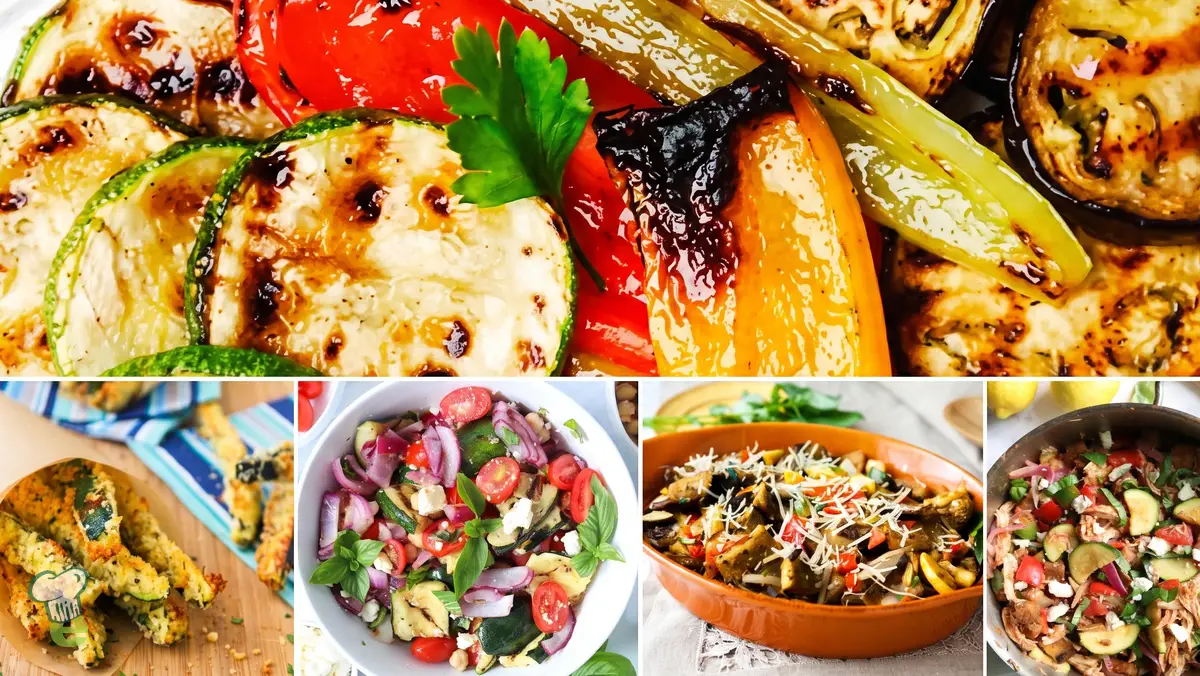
Now that you know how to eliminate excess water, put your skills to work with these dietitian-approved, heart-healthy recipes from Health eCooks:

Sodium Count: 16mg per serving
Where the Flavor Comes From: High-heat grilling naturally caramelizes the natural sugars in zucchini, yellow squash, eggplant, and asparagus, while a rich marinade made from aged balsamic vinegar, crushed fresh garlic, extra virgin olive oil, and bold black pepper creates deep, savory depth without needing salt.
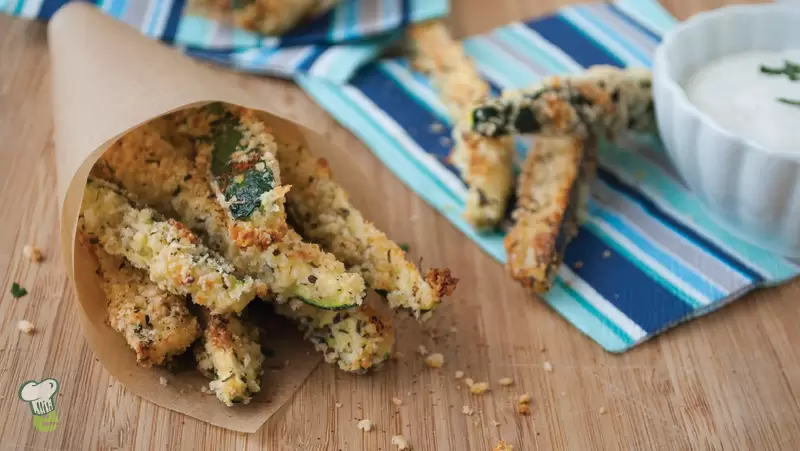
Sodium Count: 143mg per serving (at just 65 calories!)
Where the Flavor Comes From: Instead of relying on deep-frying or heavy salt, these oven-baked (or air-fried) sticks get their craveable crunch from a light Panko breadcrumb and aged Parmesan crust. A powerful blend of Italian aromatics—including oregano, thyme, basil, and garlic powder—delivers big, herbaceous flavor in every bite.
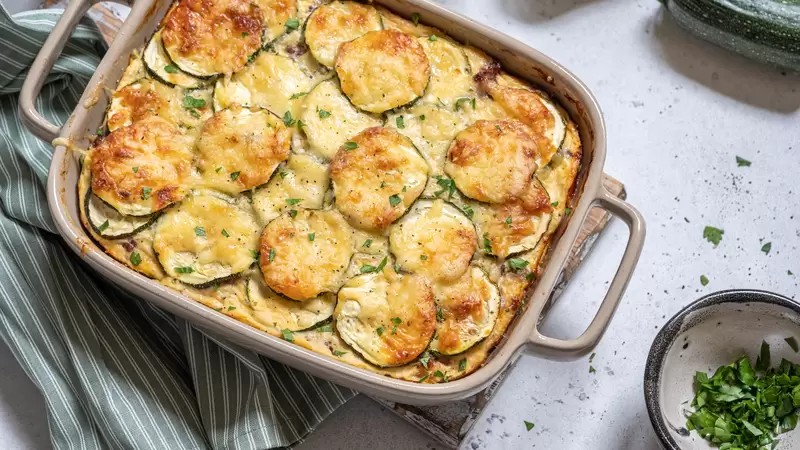
Sodium Count: 67mg per serving
Where the Flavor Comes From: Classic Southern squash casseroles are usually sodium bombs loaded with canned condensed soups and heavy butter. This version stays ultra-low sodium by briefly sautéing zucchini, yellow squash, and yellow onion with minced garlic to drain away excess moisture before baking. A savory coating of Italian seasoning, freshly cracked black pepper, unsweetened almond milk, and a light sprinkling of reduced-fat cheddar gives it a gooey, golden top with zero sogginess.
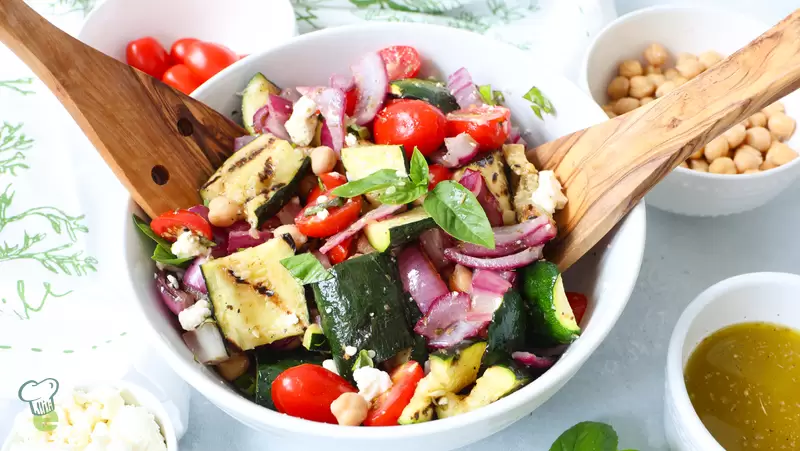
Sodium Count: 136mg per serving
Where the Flavor Comes From: Instead of relying on a high-sodium bottled dressing, this summer salad gets its punch from the smoky char of grilled zucchini, combined with fresh mint, oregano, lemon juice, and small, strategic pops of tangy feta cheese. Grilling caramelizes the squash's natural sugars, eliminating watery dilution and creating a satisfying, crisp-tender texture.
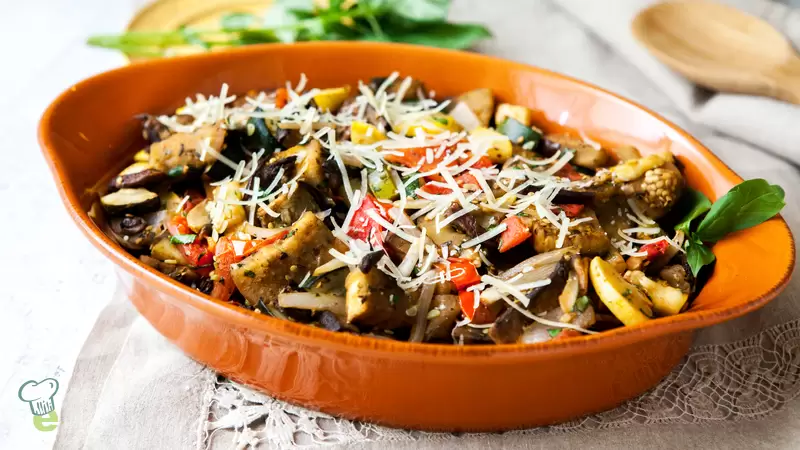
Sodium Count: 36mg per serving
Where the Flavor Comes From: Standard veggie bakes are notorious for becoming soggy, but this low-sodium casserole locks in flavor by roasting zucchini, eggplant, and portobello mushrooms uncovered at high heat. The secret to its savory depth is a natural pan-glaze made from simmered balsamic vinegar, garlic, fresh thyme, basil, and the natural juices of roasted tomatoes—topped with just a light dusting of aged Parmesan for maximum umami with almost zero sodium.
(Instant Download)
Sign Up for instant access to your free cookbook plus our most popular quick and healthy recipes!