FREEHealthy 30-Minute Meals
(Instant Download)
Sign Up for instant access to your free cookbook plus our most popular quick and healthy recipes!
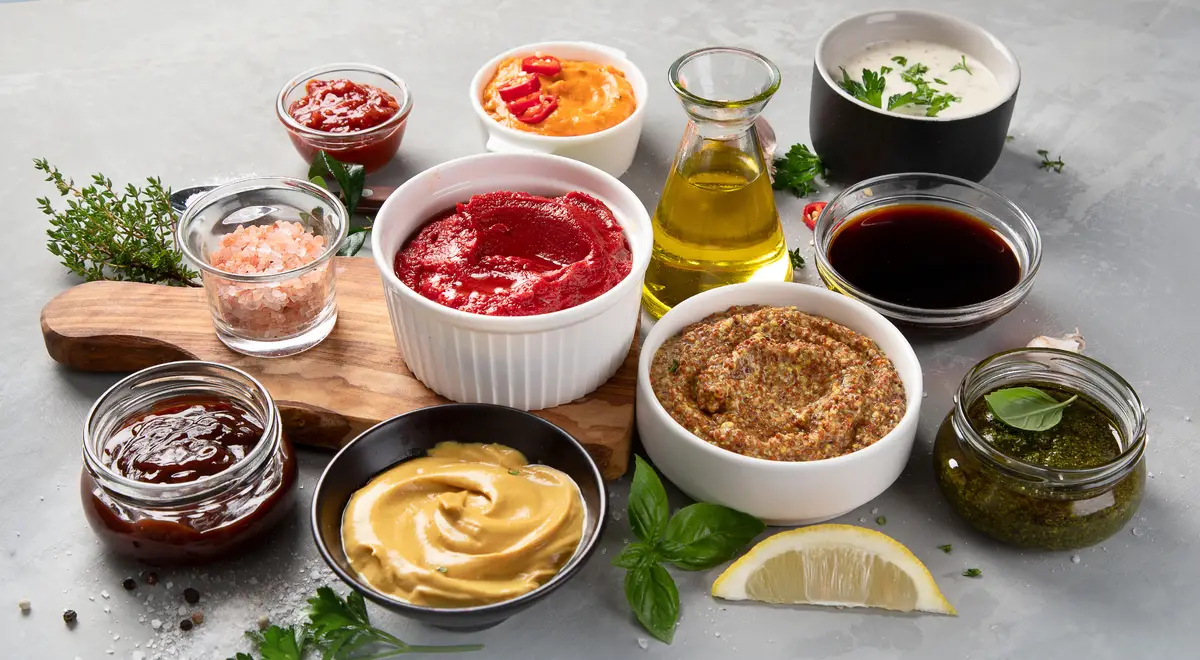
You can cook a perfectly low sodium dinner and then undo a lot of that work at the table. A tablespoon of soy sauce has about 880 mg of sodium, which is more than half of the 1,500 mg the American Heart Association considers ideal for most adults. Ketchup, ranch, salsa, and barbecue sauce all add up, too, especially when nobody measures.
The good news is that you don’t have to give up the sauces and spreads you love. In this guide, you’ll find the sodium counts for 30 popular condiments, the store-bought options that are worth buying, the ones with more sugar than you’d expect, and eight homemade swaps from our test kitchen. If you’re just getting started on a low sodium lifestyle, our Low Sodium Diet Guidelines, Tips and Recipes contains useful information for meeting your goals.
These numbers come from USDA FoodData Central, the government’s nutrition database. Serving sizes vary by condiment, so each one is listed with the amount most people actually use. Keep in mind that a low sodium food has 140 mg or less per serving, according to the FDA.
This group is comprised of the saltiest condiments in the fridge, so it’s where a little goes a long way:
Each of these may not look too bad on its own, but people often use two or three of them at once:
Creamy dips and bottled dressings are easy to underestimate because they don’t taste especially salty:
Hot sauce servings are tiny, but brands vary a lot, so the label is worth a look:
These usually get poured by the half or quarter cup, so the sodium adds up quickly:
Don’t feel like you have to start making all your own condiments if you’re limiting sodium. A few store-bought versions make a difference and they’re easy to find in most grocery stores:
One label to watch is “reduced sodium” or “less sodium.” That only means the product has at least 25% less sodium than the original. Reduced-sodium soy sauce still has about 511 mg per tablespoon, so it’s far from a low sodium food.
Sodium isn’t the only thing hiding in the condiment aisle. Many sauces use sugar to balance out the salt and vinegar and the American Heart Association recommends no more than 25 grams of added sugar a day for women and 36 grams for men. Here’s how some popular picks compare:
If you’re watching sugar as well as sodium, mustard, hot sauce, horseradish, vinegar, salsa, and pesto are all naturally low in sugar. A low sodium ketchup still has about 4 grams of sugar per tablespoon, so read the sugar line as well as the sodium line on the label.
Whether you’re fixing a sauce that came out too salty or trying to stretch a store-bought one further, these tricks from our test kitchen help:
For more ideas on cooking with less salt, our guide to spices low in sodium shows which herbs and spices have almost no sodium and how to use them in place of salt. You’ll also see where else sodium tends to hide in How Too Much Sodium Affects Your Health & Where It’s Hiding.
Homemade sauces let you decide exactly how much salt goes in and most of them take just a few minutes to make. Each of these was developed by our team of chefs and dietitians in the Health eCooks test kitchen to balance taste and nutrition. Once you get used to making a few of these at home, the bottled versions start to taste a lot saltier than you remember.
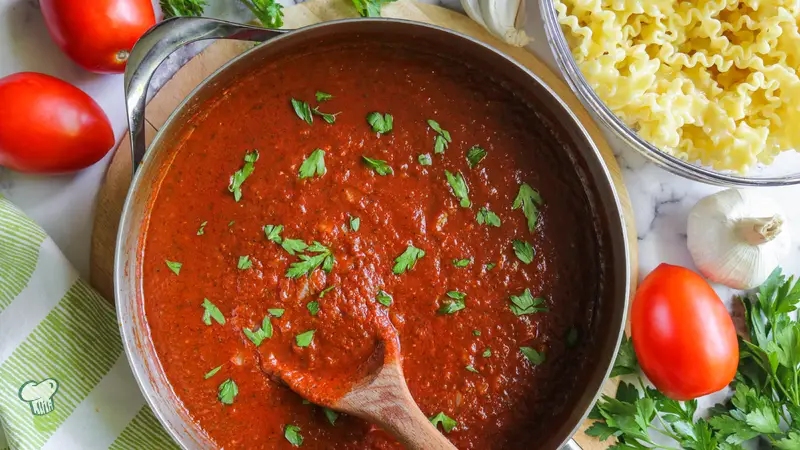
Total Time: 45 minutes | Sodium: 41 mg per serving | Makes 8 servings
Jarred marinara can have more than 500 mg of sodium in a 1/2-cup serving and this one has just 41 mg. No-salt-added stewed tomatoes and tomato paste make a thick, rich base, and a splash of white wine, fresh parsley, garlic, and oregano give it that slow-simmered flavor. Make a double batch and freeze half for an easy weeknight pasta night. If you have fresh Roma tomatoes on hand, our Low Sodium Spaghetti Sauce with Fresh Roma Tomatoes is another delicious option at 95 mg per serving.
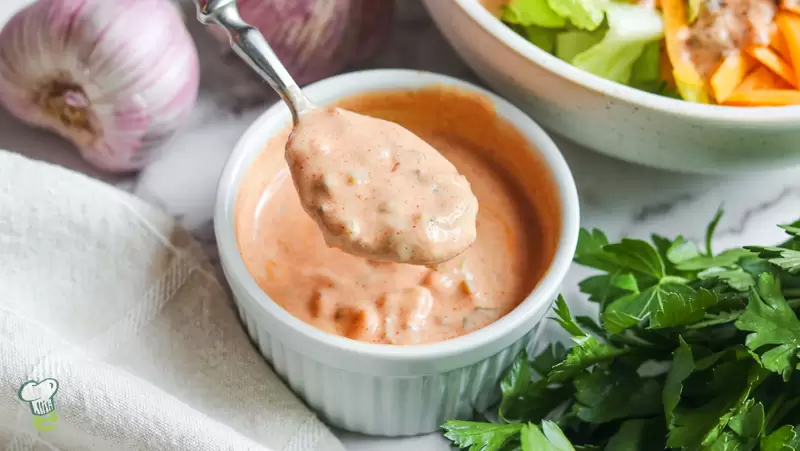
Total Time: 5 minutes | Sodium: 33 mg per serving | Makes 4 servings
This creamy, tangy sauce tastes just like the one on your favorite fast-food burger! Greek yogurt replaces the mayo, and a little reduced-sodium ketchup, relish, Dijon, and smoked paprika deliver that classic sweet and savory flavor. Thousand Island dressing has about 289 mg of sodium in 2 tablespoons, while a serving of this one has just 33 mg. Spoon it over a burger, use it as a dip for oven fries, or drizzle it on a burger bowl.
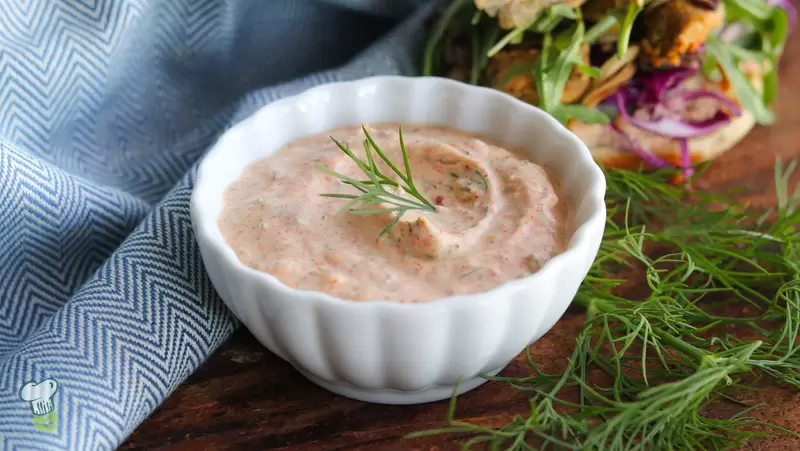
Total Time: 5 minutes | Sodium: 110 mg per serving | Makes 6 servings
Louisiana-style remoulade is a zestier, spicier take on tartar sauce. Greek yogurt, Dijon mustard, horseradish, smoked paprika, and a pinch of cayenne give it a creamy texture and a gentle kick. It’s perfect with crab cakes, baked fish, shrimp, and po’ boy sliders.

Total Time: 30 minutes | Sodium: 10 mg per serving | Makes 4 servings
Roasting the tomatillos and garlic gives this sauce a smoky, slightly sweet flavor you just can’t get from a jar. Blended with Greek yogurt, cilantro, parsley, jalapeño, and lime juice, it turns silky and bright and it has just 10 mg of sodium per serving. Jarred salsa verde has about 272 mg in 2 tablespoons. Drizzle it over tacos, taco bowls, or grilled chicken or use it as a creamy salad dressing.

Total Time: 5 minutes | Sodium: 52 mg per serving | Makes 8 servings
Fresh basil, garlic, lemon juice, and olive oil blend into a bright green pesto. A quarter cup of Pecorino Romano or Parmesan adds the salty, nutty flavor, so there’s no need for added salt. Shelf-stable jarred pesto has about 609 mg of sodium per 1/4 cup. Toss this one with pasta, spread it on sandwiches, or spoon it over grilled fish. (Curious about the nutrition? Our article Is Pesto Good for You? breaks it down.)

Total Time: 10 minutes | Sodium: 49 mg per serving | Makes 8 servings
Bottled ranch has about 270 mg of sodium in 2 tablespoons and this creamy version has just 49 mg per serving. Greek yogurt makes it thick and tangy and our homemade ranch seasoning, with dill, paprika, onion, and garlic, gives it that familiar herby flavor. Serve it with crunchy raw vegetables, drizzle it on a salad, or use it as a dip for baked chicken tenders.
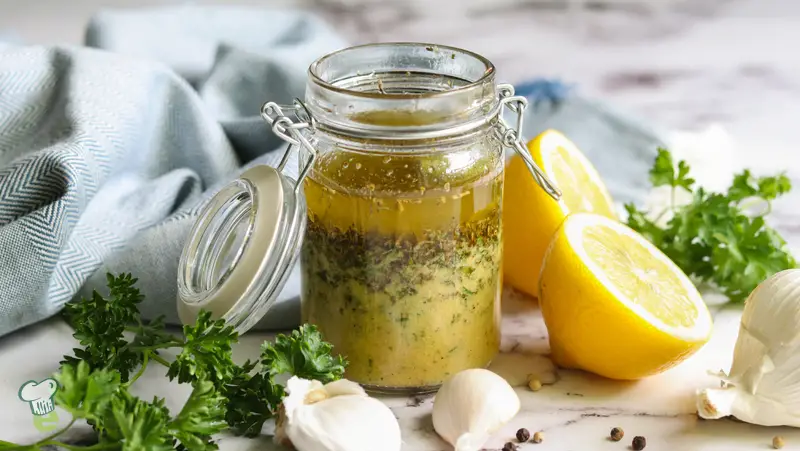
Total Time: 5 minutes | Sodium: 9 mg per serving | Makes 8 servings
This zesty vinaigrette is made with olive oil, white wine vinegar, fresh lemon juice, garlic, oregano, and thyme, plus a little nutritional yeast for a savory boost. It has just 9 mg of sodium per serving. It also makes a great marinade for chicken and vegetables. For more ideas, browse our 14 Low Sodium Salad Dressing Recipes.

Total Time: 1 hour | Sodium: 137 mg per serving | Makes 8 servings
With the holidays coming up, this one is worth bookmarking! Three pounds of sweet onions cook down slowly until they’re deep golden and jammy, then simmer with unsalted chicken broth, fresh thyme, and a splash of balsamic vinegar. The result is a rich, savory gravy that doesn’t need pan drippings and it’s gluten-free, too. Serve it over turkey, mashed potatoes, or pork chops.
Here are answers to the questions we hear most about condiments and sodium.
Mustard, prepared horseradish, vinegar, fresh citrus, homemade salsa, and vinegar-based hot sauces are some of the healthiest condiments because they’re low in sodium, sugar, and calories. Sauces made with Greek yogurt, like our Special Sauce and Healthy Ranch Dressing, are also good choices.
Regular ketchup has about 154 mg of sodium per tablespoon, which isn’t extreme on its own. The problem is that most people use two or three tablespoons at a time, which can add up to 300 to 460 mg. Low sodium ketchup has about 3 mg per tablespoon, so it’s an easy switch.
Low sodium ketchup is the simplest swap. You can also try fresh salsa, a spoonful of no-salt-added tomato paste thinned with a little vinegar and water, or our Special Sauce, which uses Greek yogurt and a small amount of reduced-sodium ketchup.
Reduced-sodium soy sauce has about 511 mg of sodium per tablespoon, according to the USDA. That’s much less than regular soy sauce, but it’s still well above the 140 mg FDA limit for a low sodium food. Use it in small amounts or stretch it with water, rice vinegar, or orange juice.
Mustard, hot sauce, horseradish, vinegar, and fresh lemon or lime juice have little to no sugar. Most homemade salsas and pestos are naturally low in sugar, too. Ketchup, barbecue sauce, teriyaki, and hoisin are the ones to watch out for if you’re trying to limit sugar.
The Dietary Guidelines for Americans recommend less than 2,300 mg a day for adults. The American Heart Association sets the same upper limit but suggests an ideal goal of 1,500 mg for most adults, especially those with high blood pressure. If you have a chronic health condition, ask your doctor or a registered dietitian what target is right for you. Our Low Sodium Diet Guidelines, Tips and Recipes walks through how to reach your goal, and every recipe in this guide is approved by Jane Schwartz, RDN, CLT, or one of our other Health eCooks registered dietitians.
If you’re working on cutting back on sodium, these articles and recipe collections will help:
(Instant Download)
Sign Up for instant access to your free cookbook plus our most popular quick and healthy recipes!