FREEHealthy 30-Minute Meals
(Instant Download)
Sign Up for instant access to your free cookbook plus our most popular quick and healthy recipes!
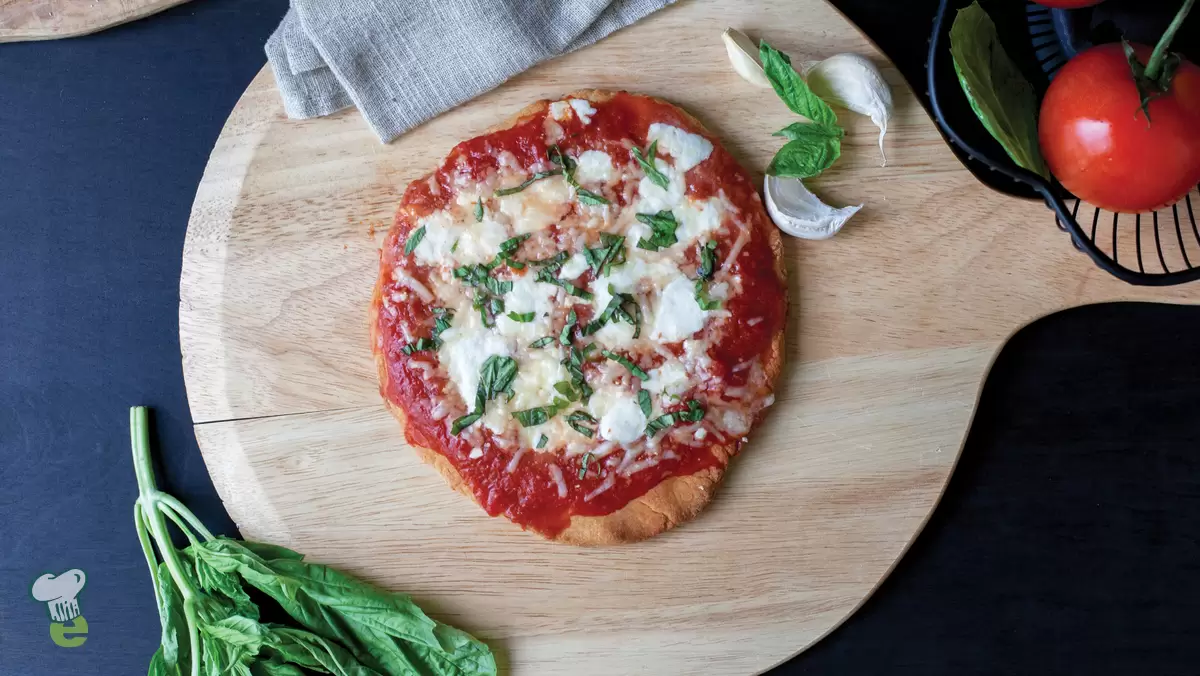
Serve up a deliciously saucy gluten-free pizza topped with creamy mozzarella and freshly torn basil. This homemade pizza delivers a satisfying crunch and classic Italian flavor every time. It’s a game-changer for anyone looking for that signature crispy texture in a healthy pizza. The no-fuss crust uses a blend of gluten-free flours, but don’t let that scare you: the dough is super simple to make. Just watch our quick step-by-step video to see how easy homemade pizza goodness can be!
Unlike traditional gluten-free pizzas that often rely on high-glycemic white rice flour and potato starch, this recipe uses a blend of whole-grain sorghum and high-protein chickpea flour. Combined with heart-healthy extra virgin olive oil, it provides a fiber-rich, nutrient-dense alternative that supports heart health and stable energy levels.
(Instant Download)
Sign Up for instant access to your free cookbook plus our most popular quick and healthy recipes!
Ensuring your oven and pizza stone (or baking sheet) are fully preheated is key. You can also lightly brush the edges of the crust with olive oil before the final broil.
Yes, gluten-free dough is typically much stickier and more like a thick batter than traditional wheat dough. Using oiled fingertips to pat it out is the best way to handle it.
You can, but the texture may vary. This specific blend of sorghum, chickpea, and rice flours is designed to provide the specific "crispy" thin-crust result this recipe is known for.
It is not recommended. Because the dough is thin and sticky, the parchment paper allows you to transfer it to the hot stone easily without it tearing or sticking.
Serve up any of these delicious pizzas for a home-baked meal that’s sure to please! Of course, you can use our gluten-free crust as a base for any of these toppings.
These flavorful favorites will enhance any meal with veggie-filled goodness.
Recipe yields 6 servings
In a 4-quart saucepan, stir together tomatoes and oil over very low heat. Bring to a simmer, cover partially, and continue simmering for 20 to 25 minutes, stirring occasionally, until sauce is reduced to 1 cup.
Add sugar, salt and oregano and stir. Keep warm or refrigerate, covered, for up to 5 days.
In a microwave-safe bowl, stir together milk and water and microwave until warm but not hot to the touch, about 30 seconds (the mixture should register between 105°F and 115°F on a candy thermometer). Stir in yeast and sugar. Set aside.
In a large bowl of an electric mixer with a paddle attachment, whisk together the tapioca flour, white rice flour, chickpea flour, sorghum flour, xanthan gum and salt.
Add milk-yeast mixture, egg whites, and 1 1/2 tablespoons olive oil to dry ingredients and, using paddle attachment, beat at medium speed, scraping bowl occasionally, until dough is very smooth and very thick, about 5 minutes.
Remove racks from oven, set pizza stone or heavy upturned baking sheet on bottom of oven, and preheat oven to 500°F. (Preheat at least 45 minutes if using pizza stone or 15 minutes if using baking sheet.) Cut two 12-inch squares of parchment paper and lightly coat each with nonstick cooking spray.
Scrape half of dough onto each parchment paper square and form each half into a ball. Coat each ball with 1/2 teaspoon of the remaining olive oil, then use oiled fingertips to pat and stretch each ball into a 9-inch-diameter round, 1/4 inch thick, with a 1/2-inch-thick border. Loosely cover rounds with plastic wrap and let rise in warm, draft-free place until each pizza is about 10 inches in diameter, about 20 minutes.
Using baker’s peel, transfer 1 crust with parchment to preheated pizza stone and bake until top is puffed and firm and underside is crisp, 10 to 15 minutes. Using baker’s peel, transfer baked crust (without parchment paper) to rack to cool. Bake second crust in same manner.
(Baked crusts can be made ahead. Cool completely, wrap in plastic wrap, and freeze for up to 1 month. Thaw in a 350°F oven until hot, 4 to 5 minutes, before topping and broiling.)
Preheat broiler. Transfer baked crusts to 2 large baking sheets.
Spread each crust with sauce, leaving 1/2-inch border bare. Sprinkle each with mozzarella and Parmigiano-Reggiano.
Broil pizzas about 4 inches from heat, rotating as needed for even browning, until cheese is bubbling and browned in places and crust is golden brown, 4 to 8 minutes. Scatter with basil, slice, and serve immediately.
Finish this easy gluten-free pizza with any of these toppings to change things up:
Use your favorite vegan mozzarella shreds and omit the Parmesan or replace it with nutritional yeast.
Unsweetened almond milk or soy milk can be used in place of whole milk in the crust; just ensure it is warmed to the correct temperature for the yeast.
If you cannot find sorghum flour, oat flour (certified gluten-free) makes a good substitute with a similar texture.
The small amount of sugar is used to feed the yeast; you can substitute it with honey or maple syrup if preferred.