FREEHealthy 30-Minute Meals
(Instant Download)
Sign Up for instant access to your free cookbook plus our most popular quick and healthy recipes!
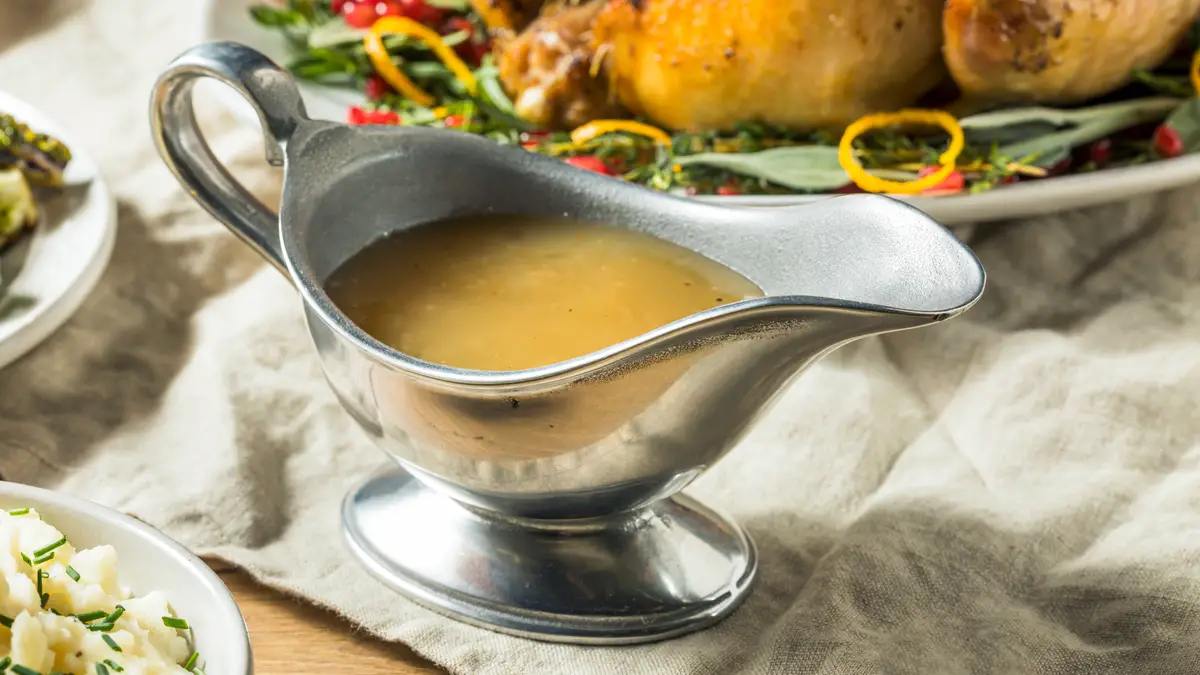
Gravy is one of the saltiest things on the Thanksgiving plate. A 1/4 cup serving from a jar can have 250 mg of sodium, and a packet mix can reach 370 mg before anyone reaches for the salt shaker. This Low Sodium Turkey Gravy with Giblets has just 93 mg in the same serving, and it still tastes like the rich, savory gravy you look forward to all year.
The secret is the little bag tucked inside the turkey. While the bird roasts, the neck, gizzard, and heart simmer with onion, carrot, celery, and fresh thyme in unsalted stock, building the deep, meaty flavor most gravies get from salt. The pan drippings go in next, fresh sage and a splash of apple cider vinegar brighten the finish, and the chopped giblets are stirred back in for a classic homestyle texture and 7 grams of protein per serving.
For more ways to cut the salt without losing flavor, browse our collection of low sodium recipes.
Most of the sodium in traditional gravy comes from salty broth, bouillon, or a seasoning packet. This low sodium gravy recipe starts with unsalted chicken stock and uses no added salt, so the flavor comes from browned giblets, aromatic vegetables, pan drippings, and fresh herbs. Skimming the fat from the drippings and using just ½ tablespoon of butter keeps saturated fat at 1 gram per serving, and the giblets add protein you won’t find in a jar.
(Instant Download)
Sign Up for instant access to your free cookbook plus our most popular quick and healthy recipes!
Start with unsalted stock and skip the salt, bouillon, and seasoning packets. Then build flavor in other ways. In this recipe, browned giblets, aromatic vegetables, fresh herbs, and a splash of vinegar do the work, and skimming the fat from the pan drippings keeps the gravy rich without making it heavy.
If your gravy turns out too salty, whisk in more unsalted stock to dilute it, then thicken it again with a little cornstarch mixed into cold stock. A small splash of vinegar or lemon juice also helps balance the flavor. The best fix is prevention, though. Drippings from a brined, kosher, or self-basting turkey (any bird labeled as containing a solution) are very salty, so if your turkey was brined, skip the drippings and the pan scraping, use 2½ cups of giblet stock on its own, and add the wine straight to the stock.
Homemade gravy made with unsalted stock and no added salt is almost always the lowest in sodium. This recipe has 93mg per ¼ cup, compared with about 250mg in a leading jarred turkey gravy and 370mg in a popular packet mix. Some classic giblet gravy recipes list more than 700mg per serving.
Brown the neck, gizzard, and heart in a little oil, then simmer them with vegetables and herbs in unsalted stock for about an hour while the turkey roasts. Strain the stock and use it as the base of your gravy. Finely chop the giblets and the meat from the neck and stir them in at the end.
Not in this recipe. Many cooks leave the liver out because it can give gravy a bitter flavor and a grainy texture. You can save it for another use or discard it.
Most gravy mixes are high in sodium. A popular turkey gravy mix has 370mg per serving, which is about four times the amount in this homemade version. If you’re shopping for a low salt gravy mix, compare labels and look for 140mg or less per serving, which is the FDA’s definition of a low sodium food.
Chicken giblets and the drippings from a roast chicken work the same way and make a lighter-tasting low sodium chicken gravy. Chicken giblets are smaller, so they’ll become tender sooner, and you’ll have less chopped meat to stir in at the end.
Make the giblet stock up to 2 days ahead and refrigerate the stock and the chopped giblets in separate containers. On the holiday, add the pan drippings and finish the gravy as directed. Finished gravy also keeps in the refrigerator for 3 to 4 days.
A small splash of acid brightens the flavor and makes the gravy taste more seasoned, which helps a lot when you’re making gravy without salt. At 1 teaspoon, you won’t taste the vinegar itself.
Pour this gravy over any of these sides and the whole plate stays low in sodium. Each one has less than 100mg of sodium per serving.
If gravy is your favorite part of the meal, these recipes give it a starring role. The Caramelized Onion Gravy is also a gluten-free option made with slowly cooked sweet onions.
Jarred gravy and packet mixes depend on salt, modified corn starch, and yeast extract for their flavor and thickness. Here is how a ¼ cup serving of our homemade gravy compares with a leading jarred turkey gravy and a popular packet mix:

Recipe yields 12 servings
Make the giblet stock while the turkey roasts. Heat the olive oil in a medium saucepan over medium-high heat. Add the neck, gizzard, and heart and cook for 5 to 6 minutes, turning occasionally, until browned on all sides.
Add the unsalted stock, water, onion, carrot, celery, bay leaf, and thyme sprigs. Bring to a boil, then reduce the heat to low, partially cover, and simmer for 1 hour, until the gizzard is tender.
Strain the stock into a bowl and discard the vegetables, bay leaf, and thyme sprigs. You should have about 3 cups; add more unsalted stock if you are short. Pull the meat from the neck, finely chop it along with the gizzard and heart, and set aside. Discard the neck bones.
When the turkey comes out of the oven, pour the pan drippings into a fat separator or a large glass measuring cup and let stand for 5 minutes, until the fat rises to the top. Discard the fat. Add enough giblet stock to the defatted juices to make 2½ cups. Keep the remaining giblet stock for thinning the gravy.
Set the roasting pan over two burners on medium heat. Add the wine and scrape up the browned bits with a wooden spoon for 1 to 2 minutes. Pour the pan liquid into the measuring cup with the stock mixture.
In a medium saucepan, heat the olive oil and butter over medium heat until butter is melted. Add the shallot and cook for 2 to 3 minutes, until softened. Add the garlic and cook for 30 seconds. Whisk in the flour and cook for 2 minutes, whisking constantly, until the mixture turns light golden.
Gradually whisk in the stock mixture until smooth. Add the chopped thyme, sage, and pepper. Bring to a simmer and cook for 5 to 8 minutes, whisking often, until the gravy is thick enough to coat a spoon. Thin with reserved giblet stock if needed.
Stir in the chopped giblets and neck meat and cook for 1 minute to heat through. Remove from the heat and stir in the vinegar. Taste before adding any salt; most people will find it doesn’t need any. Serve warm.
Spoon it over slices of herb roasted turkey, a scoop of low sodium mashed potatoes, or a helping of healthy turkey stuffing. Leftovers are delicious over open-faced turkey sandwiches the next day, or over mashed cauliflower for a lower-carb plate.
If your turkey didn’t come with giblets, or you’d like more meat in the gravy, brown 1 pound of turkey necks the same way and pull the meat from the bones after simmering.
Replace the wine with ¼ cup of giblet stock when you scrape up the browned bits in the roasting pan.
For a gluten-free gravy, skip the flour. Whisk 2 tablespoons of cornstarch into ¼ cup of cold giblet stock and stir it into the simmering liquid, then check that your stock is labeled gluten free.
Use 1 tablespoon of olive oil in total for a dairy-free gravy.
Unsalted turkey stock works just as well as chicken stock. Reduced sodium stock will raise the sodium noticeably, so stick with unsalted if you can.
Fresh lemon juice or white wine vinegar adds the same bright finish.
Planning the whole holiday meal? These recipes round out a lighter Thanksgiving table, and you’ll find even more ideas in our collection of healthy Thanksgiving side recipes.


