FREEHealthy 30-Minute Meals
(Instant Download)
Sign Up for instant access to your free cookbook plus our most popular quick and healthy recipes!
If you have diabetes, or you're cooking for someone who does, you've probably been told potatoes are off the table. But you don't have to give them up. Potatoes are filling, affordable and full of potassium, fiber and vitamin C, and they can fit into a diabetes-friendly eating plan. What matters is which potato you pick, how you cook it, how much you eat and what you put on the plate next to it.
This guide walks through all four. For everything about cooking technique, timing and temperature, our complete guide to cooking potatoes has the charts and the step-by-steps.
Potatoes are starchy, and starch is a carbohydrate that raises blood sugar. That much is true. But most of the research that made potatoes look bad wasn't really measuring potatoes. It was measuring French fries.
A large 2025 study in The BMJ followed more than 205,000 adults for close to 40 years. Eating three servings of French fries a week was linked to a 20% higher rate of developing type 2 diabetes. Baked, boiled and mashed potatoes showed no meaningful increase at all (Mousavi et al., 2025).
That study looked at people who didn't have diabetes yet, so it's about lowering risk rather than managing blood sugar day to day. Still, the message carries over. The potato isn't the problem. The deep fryer is.
Not every potato behaves the same way in your body, and the difference starts in the produce aisle.
Waxy potatoes hold their shape when they're cooked and tend to have a gentler effect on blood sugar than starchy ones. Look for red potatoes, new potatoes, fingerlings and most yellow varieties. Starchy potatoes like russets turn fluffy and dry when cooked, which is great for a baked potato but harder on blood glucose.
Waxy potatoes are also the ones that work best in the cooled potato dishes covered a couple of sections down, so they're doing double duty.
Leave the skin on whenever the recipe allows. That's where a good share of the fiber lives, and fiber slows how quickly the starch underneath gets digested.
Boiling, baking, roasting and air frying all work well. Each one changes the structure of potato starch a little differently, so no single method wins every time (Henry et al., 2005; Soh & Brand-Miller, 1999).
What they have in common is more useful than what separates them. None of them soak the potato in oil.
Try roasting potatoes with a spoonful of avocado oil, garlic and fresh herbs. Or boil them and toss them warm with olive oil, vinegar, chopped scallions and whatever vegetables are in the crisper. An air fryer gets you a crisp edge with a fraction of the oil a deep fryer uses.
Blood sugar responses are personal. Two people can eat the same roasted potato and see two different numbers. If you check your glucose at home, test after a few different preparations and learn what your own body does.
This one costs you nothing but a little planning. Cook your potatoes, then chill them.
When cooked starch cools down, some of it reorganizes into resistant starch. Your small intestine can't break resistant starch down the way it breaks down regular starch, so less of it turns into blood glucose. It behaves more like fiber.
Potato salad made with cooked, cooled potatoes is the easiest way to use this. You can also roast a tray of potatoes on Sunday, refrigerate them and pull from them during the week.
Two honest caveats. Reheating keeps most of the resistant starch but not all of it, so a cold potato salad has a small edge over a reheated one. And the size of the effect depends on the variety of potato you started with (Kinnear et al., 2010). Cooling helps. It doesn't turn a potato into a free food.
A potato eaten by itself hits your bloodstream faster than the same potato eaten as part of a meal. Protein, fiber and fat all slow digestion, which smooths out the rise in blood sugar.
A few pairings that work:
Building the plate this way has a second benefit. When there's real food surrounding the potato, a reasonable portion of potato feels like plenty.
Even a perfectly prepared potato is still a carbohydrate. A medium potato, about the size of a computer mouse, has roughly 26 grams of carbohydrate.
The simplest approach is to make potatoes one part of the meal instead of the whole meal. Fill about half your plate with non-starchy vegetables, a quarter with lean protein and the last quarter with a carbohydrate like potatoes. Our guide to diabetes-friendly food swaps walks through this plate method with real meals.
Your own carbohydrate target may be higher or lower than the standard advice, especially if you take insulin. Follow the plan your healthcare team gave you. For more on daily carbohydrate goals and meal planning, see our diabetic diet guidelines.
Sweet potatoes come up in almost every conversation about potatoes and diabetes, so let's clear this up. Botanically they aren't potatoes at all. They're a different root vegetable entirely.
Nutritionally they're close cousins. A sweet potato has a similar carbohydrate count to a white potato of the same size, so you can't eat a larger portion just because it's orange. What sweet potatoes do offer is more fiber and a lot of beta carotene, and they tend to have a gentler effect on blood sugar than a baked russet.
The advice doesn't change. Bake, roast or boil them, keep the skin on, watch the portion and put protein next to them.
Every recipe below puts one of the ideas from this article on a plate. All of them come from our Health eCooks Test Kitchen and are developed with our registered dietitians and chefs.

Proof that mashed potatoes don't need a stick of butter. These are boiled and mashed with just 124 calories, 22 grams of carbohydrate and 80 milligrams of sodium per serving. Serve them next to roast chicken or turkey and you've got your balanced plate.
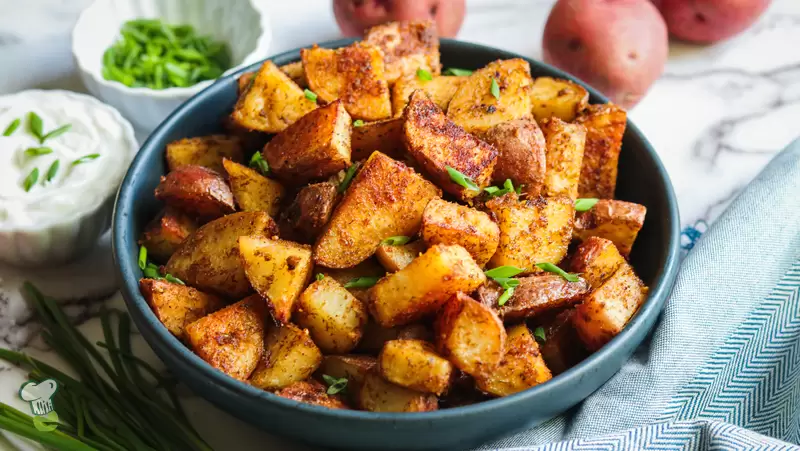
Roasting at its simplest, with a homemade ranch seasoning doing the work instead of a packet. Each serving has 4 grams of fiber and only 64 milligrams of sodium. At 34 grams of carbohydrate it's one of the heavier servings here, so treat it as the carbohydrate quarter of your plate and build the rest around it.

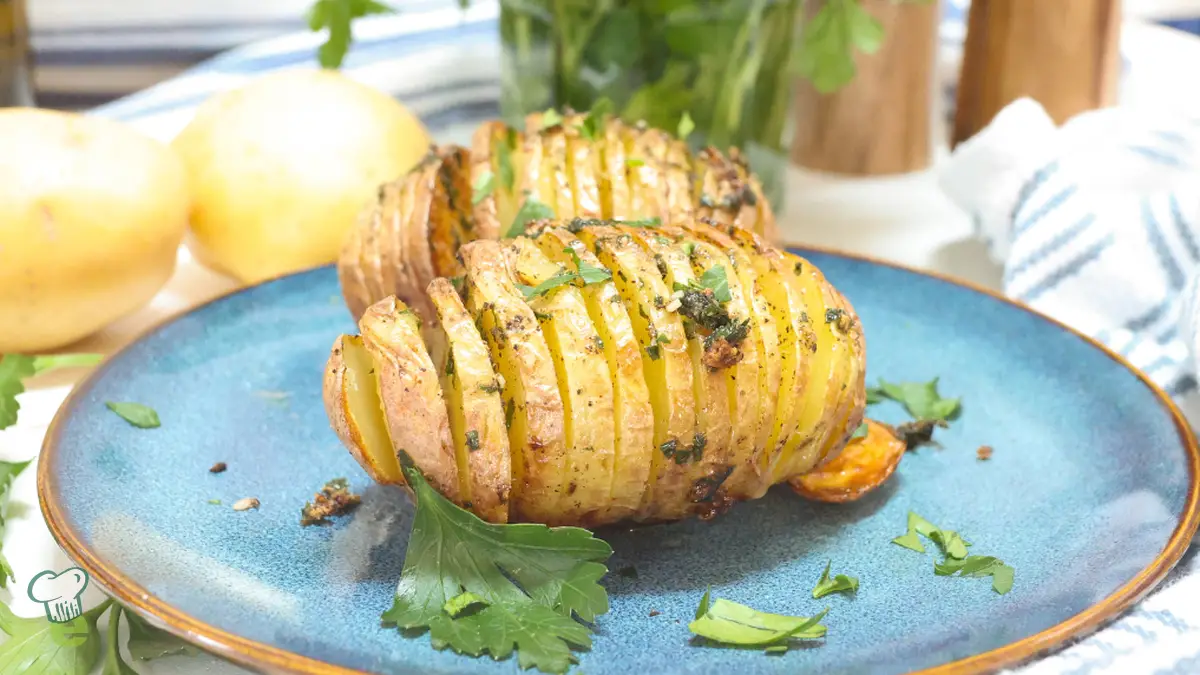
The skin-on advice made visible. Yukon golds are scored and roasted with the skin left on, which is where the 4 grams of fiber per serving come from. At 20 milligrams of sodium this is the lowest-sodium recipe here by a wide margin, seasoned with garlic, olive oil, pepper, and parsley instead of salt. It's the largest carbohydrate serving on the list at 38 grams, so plan it as the carbohydrate quarter of the plate. (For a quicker version, you can cook them in the air fryer.)

Comfort food that still works. Sliced potatoes baked with olive oil, a little butter and fresh thyme come to 158 calories, 24 grams of carbohydrate and 65 milligrams of sodium per serving, which is a long way from the canned-soup version. This is the dish to reach for when you want something rich next to a lean protein.

Crispy edges, no deep fryer. If fries are the thing you miss, start here. Each serving has 30 grams of carbohydrate, 3 grams of fiber and 86 milligrams of sodium, and the air fryer does the crisping with a fraction of the oil.

This one does three things at once. It's built on red potatoes, which are the waxy variety recommended above. It's cooked, cooled and served cold, so the resistant starch is working for you. And the eggs bring the protein right into the bowl. Each serving has 122 calories, 23 grams of carbohydrate, 6 grams of protein and 102 milligrams of sodium.

Cook, cool, then dress. This one is the resistant starch section in recipe form, and it's meant to be eaten cold, which is exactly when that starch does the most good. Each serving has 22 grams of carbohydrate and 139 milligrams of sodium, with olive oil and herbs doing the heavy lifting on flavor.

The protein-pairing idea built into a single dish. Each serving has 10 grams of carbohydrate and 9 grams of protein, which makes it the lightest-carb recipe on this list by a wide margin. It works for breakfast, and it reheats well for the mornings you don't want to think.
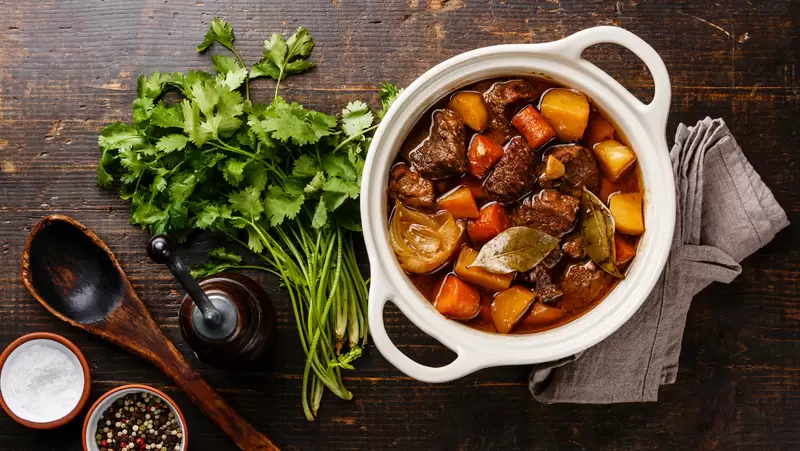
A full meal where the potato is a supporting player. Each serving has 21 grams of protein against 24 grams of carbohydrate, which is the ratio this whole article is pointing toward. Sodium runs higher here at 650 milligrams, so it pairs best with a low-sodium day.
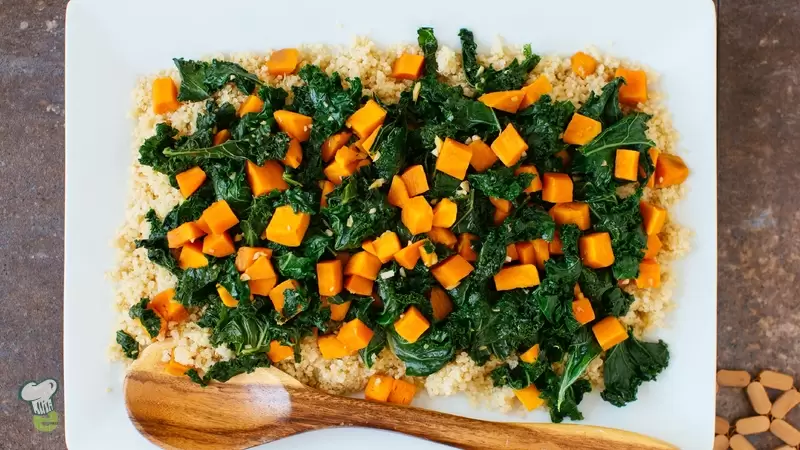
Fiber from three directions at once. Sweet potato, kale and quinoa together give you 3 grams of fiber for 24 grams of carbohydrate, and the quinoa adds plant protein so the dish holds up as a light lunch on its own.
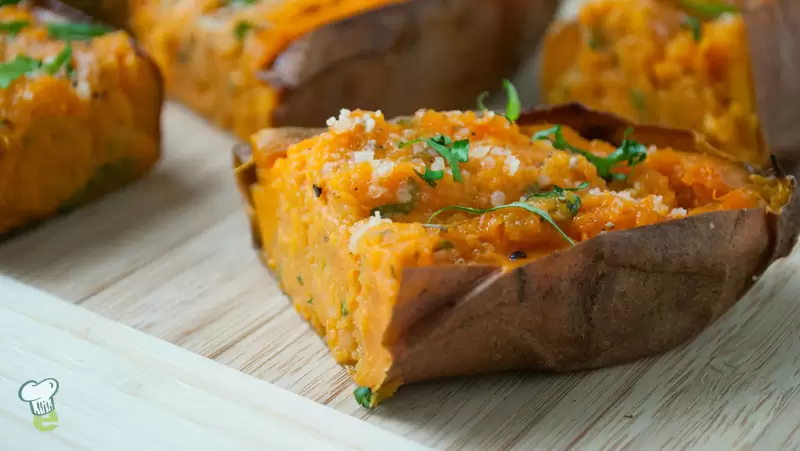
A straightforward sweet potato side in a sensible portion. Each one has 128 calories, 23 grams of carbohydrate, 3 grams of fiber and 5 grams of protein from the Parmesan, with garlic and herbs instead of the brown sugar and marshmallows that usually show up on sweet potatoes.
No. Potatoes contain carbohydrates that raise blood sugar, but they don't need to be cut out. The 2025 BMJ research found the risk was concentrated in French fries, not in baked, boiled or mashed potatoes. Preparation, portion and what you eat alongside them matter more than the potato itself.
Waxy varieties like red potatoes, new potatoes and fingerlings tend to have a gentler effect on blood sugar than starchy russets. They also hold their shape better in cooled dishes like potato salad, which gives you a second small advantage.
Cooling cooked potatoes does increase their resistant starch, and resistant starch is digested more slowly than regular starch. The effect is real but modest, and it varies by potato variety. Think of it as a helpful adjustment rather than a way to eat a larger portion.
Mostly, yes. Reheating keeps much of the resistant starch that formed during cooling, though not quite all of it. Eating them cold gives you a slight edge, which is one reason potato salad is such a useful dish here.
Sweet potatoes have more fiber and tend to raise blood sugar a little more gently, but they have a similar carbohydrate count. Both can fit. Neither is a free food, and the portion size stays the same.
A common starting point is about a quarter of your plate, which works out to roughly a medium potato or a cup of cooked potato. Your own target depends on your carbohydrate plan, your medications and your blood sugar readings, so check with your healthcare team.
No, and leaving the skin on is usually the better choice. The skin holds fiber that slows how quickly the starch is digested. Just scrub them well before cooking.
Everything here is general guidance, and diabetes care is personal. Reach out to your doctor, diabetes educator or registered dietitian:
If you're checking your glucose at home and seeing patterns you can't explain, bring the numbers with you. That record is often the most useful thing you can hand your care team.
Kristin Schaefer, MS CNS LDN, is a licensed functional sports nutritionist who focuses on practical, evidence-based nutrition and helping clients build sustainable relationships with food. Find Kristin at:
(Instant Download)
Sign Up for instant access to your free cookbook plus our most popular quick and healthy recipes!