FREEHealthy 30-Minute Meals
(Instant Download)
Sign Up for instant access to your free cookbook plus our most popular quick and healthy recipes!
A few small additions turn your favorite soup recipe into something that keeps you full long after you leave the table.
A warm bowl of soup is one of the best things about cooler weather. It's easy to make, stretches whatever is left in the fridge, and fills the kitchen with a smell that makes people wander in to ask what's cooking.
The one issue is that as delicious as soup is, not every bowl is filling enough to count as a meal. Plenty of soups are mostly broth and vegetables, which may taste great at lunchtime only to send you hunting through the pantry an hour later. But a few additions can turn your favorite soup into a bowl with enough protein, fiber, and staying power to carry you through to your next meal.
These seven tips can turn soup into the main event rather than a starter or side dish, whether you're simmering a pot from scratch or doctoring up a can from the pantry.
A soup that works as a meal usually has four things in it: a flavorful base, a pile of vegetables, a good source of protein, and something starchy with fiber, like beans or a whole grain. Miss one and the bowl may not be satisfying enough. That's why we’ve included the tips below.
Cream-based soups are delicious, but many are high in saturated fat and calories. Starting with broth keeps the bowl lighter and leaves more room for the ingredients that fill you up. Chicken, vegetable, and tomato bases all work well. Bone broth is worth a look, too. It adds a little protein and supplies collagen-derived amino acids, which your body uses as building blocks for connective tissue like skin and bone.
Try this recipe:

A leftover chicken carcass simmers with onion, carrot, celery, ginger, and a splash of apple cider vinegar into a broth with deep flavor and only 68 mg of sodium a cup. Make a batch and you've got the base for every other soup on this list.
Still want something creamy? Skip the heavy cream and use low-fat milk, blended beans, or pureed vegetables instead. Our Creamy Cauliflower Soup gets its velvety texture from two heads of blended cauliflower and 1% milk, and it comes in at just 79 calories a serving.
Vegetables add vitamins, minerals, fiber, and flavor to soup without adding many calories, and they give the bowl some bulk so it eats like a meal.
Toss in whatever you have on hand:
Mixing colors is a simple way to get a wider range of nutrients into one pot.
Try this recipe:
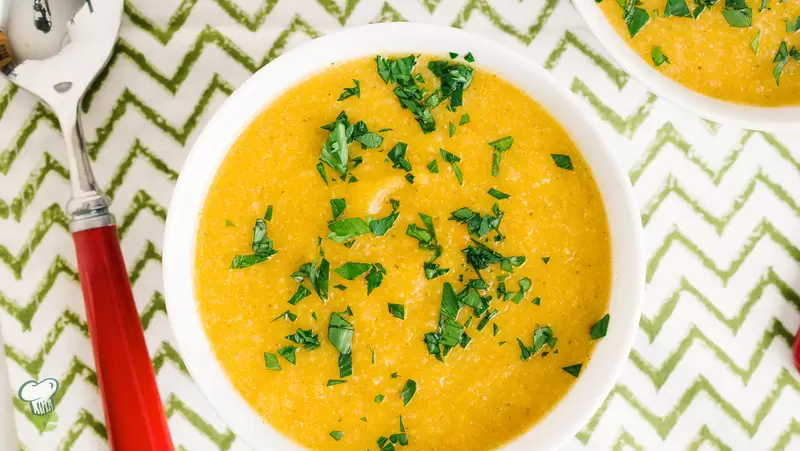
Cauliflower, broccoli, carrots, potato, and celery get blended into something so rich you'd swear there was cheese in it, though the savory flavor actually comes from nutritional yeast. It's 73 calories a serving and proof of how far vegetables alone can carry a soup.
Protein is what makes soup stick with you. Without it, you'll be looking for something else to eat before the bowl is even in the dishwasher.
Good options include:
Rotisserie chicken, canned beans, and cubed tofu all go in at the end, so this takes about a minute.
Try this recipe:
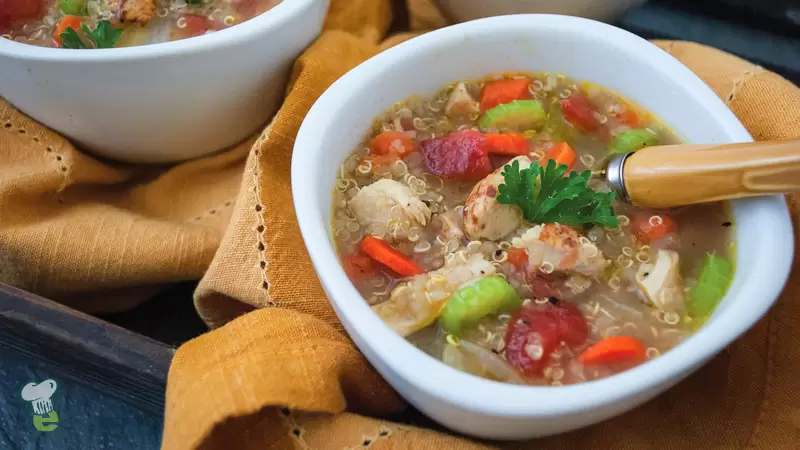
Shredded chicken and cooked quinoa simmer with tomatoes, carrots, celery, and cumin for a soup with 20 grams of protein and 240 mg of sodium per serving. That's as much protein as you'd get from a chicken breast at dinner.
Beans, lentils, and chickpeas deserve their own mention because they provide protein and fiber in the same scoop. Fiber slows digestion, which is a big part of why a bean-based soup keeps you full so much longer than a brothy one. They also thicken a soup as they cook, so you get a heartier texture without any cream.
Try this recipe:
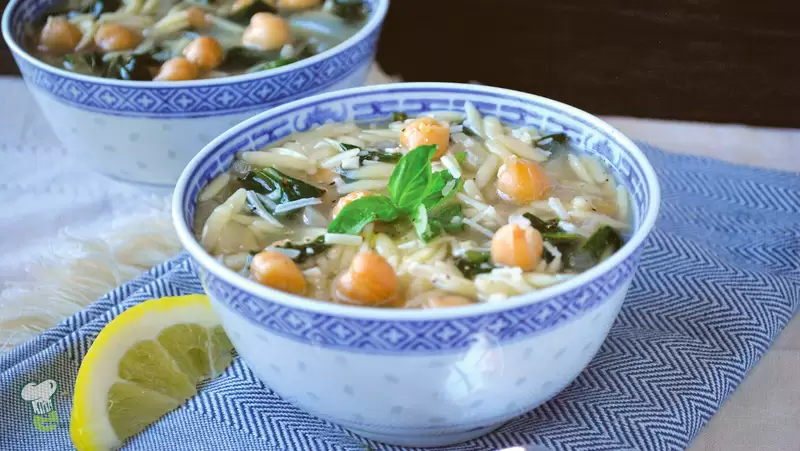
Chickpeas, multigrain orzo, and a big handful of baby spinach come together with garlic, lemon zest, and basil for 13 grams of protein and 7 grams of fiber a bowl.
Whole grains add chew, fiber, and lasting energy. A half cup stirred into the pot is often the difference between a starter and a supper. Try:
Cook grains separately and add them at serving time if you plan to freeze leftovers, since they soften as they sit.
Try this recipe:
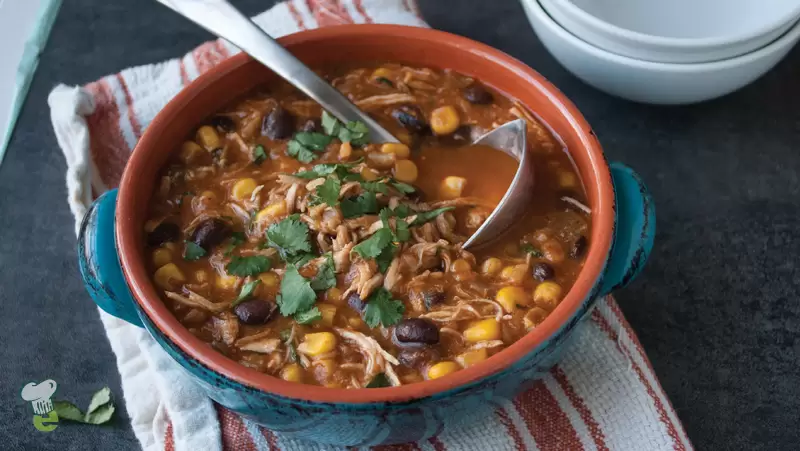
Brown rice and black beans go into the pot with chicken, corn, bell pepper, and chili powder, so one bowl covers your grain, protein, and vegetables at 185 calories and 16 grams of protein.
Canned and packaged soups are one of the biggest sources of sodium in the American diet, and too much sodium can raise blood pressure. Look for cans labeled "low sodium" or "no salt added."
When you cook at home, you have more control over how much salt is in your soup. Use low-sodium broth and build flavor with garlic, onions, black pepper, citrus, and fresh herbs instead of reaching for the salt shaker. If you want more ideas or need to know how to figure out what foods are actually low in sodium, our low sodium diet guidelines explain what the label terms actually mean.
Try this recipe:
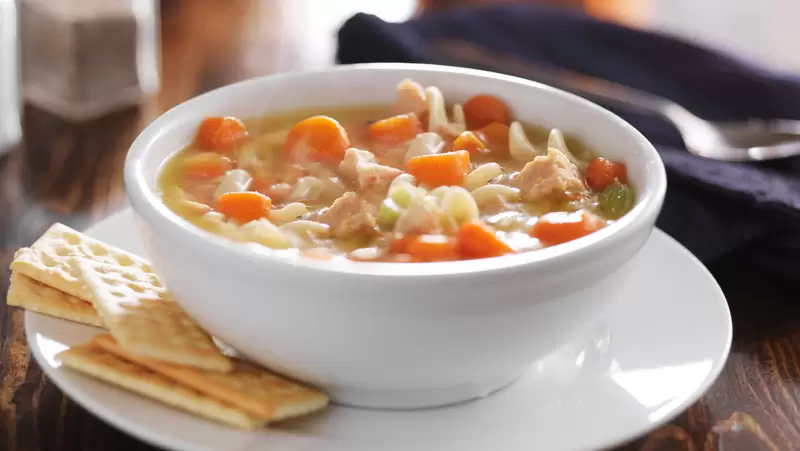
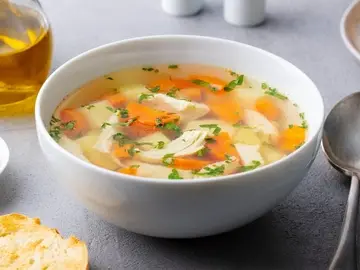
Shredded chicken, whole grain egg noodles, carrots, celery, and corn simmer with thyme, sage, and bay leaves for 20 grams of protein and just 79 mg of sodium a serving. Most canned chicken noodle soups have ten times that.
Sometimes a bowl of soup, although filling, is not quite enough to make into a meal on its own. A small side, like one of these, finishes the job so you leave the table feeling satisfied:
Our healthy salad recipes and low sodium side dishes offer plenty of options that pair well with a bowl of soup.
Soup is one of the few dinners that tastes better the next day, and it holds up beautifully in the freezer. Cook a big pot, cool it, and freeze it in single portions so a tasty and nutritious meal is always just a few minutes away. That's usually what keeps takeout off the table on the nights nobody feels like cooking.
Try this recipe:

Lean beef, barley, mushrooms, carrots, turnips, and peas combine to make eight servings with 30 grams of protein and 153 mg of sodium each, and it reheats like it was made that morning. For more on what freezes well and what doesn't, see our guide to meal prep foods that freeze well.
Yes, as long as it has protein, fiber, and vegetables in it. A brothy vegetable soup on its own is more of a starter. Add chicken, beans, lentils, or a whole grain and you have a full meal.
Aim for at least 15 to 20 grams if the soup is your whole meal. A cup of beans, three ounces of chicken, or a block of tofu will get you there. For soups that already do the math, try these high protein soup recipes.
It can be, and it's a reasonable shortcut on a busy night. Check the sodium on the label, then add your own vegetables and a scoop of beans or shredded chicken to make it more filling.
Blend some of the soup and stir it back in, or puree cooked beans, potato, or cauliflower into the base. All three add body, and the bean version adds fiber and protein at the same time.
Three to four days in the refrigerator, or about three months in the freezer. Cool it quickly and store it in portion-sized containers so it chills faster and reheats easier.
A few small changes turn a simple pot of soup into a meal that's comforting, filling, and good for you. With cooler weather coming, this is a good time to experiment with ways to turn your soup favorites into hearty meals that satisfy.
Every healthy soup recipe on our site is developed by the chefs and registered dietitians at Health eCooks, so you can feel good knowing they are as nutritious as they are delicious. If you’re looking for a place to begin your search for the perfect meal-worthy soup, check out these low sodium soups, high protein soups, GLP-1 friendly soups, or our most popular heart healthy soups.
(Instant Download)
Sign Up for instant access to your free cookbook plus our most popular quick and healthy recipes!