FREEHealthy 30-Minute Meals
(Instant Download)
Sign Up for instant access to your free cookbook plus our most popular quick and healthy recipes!
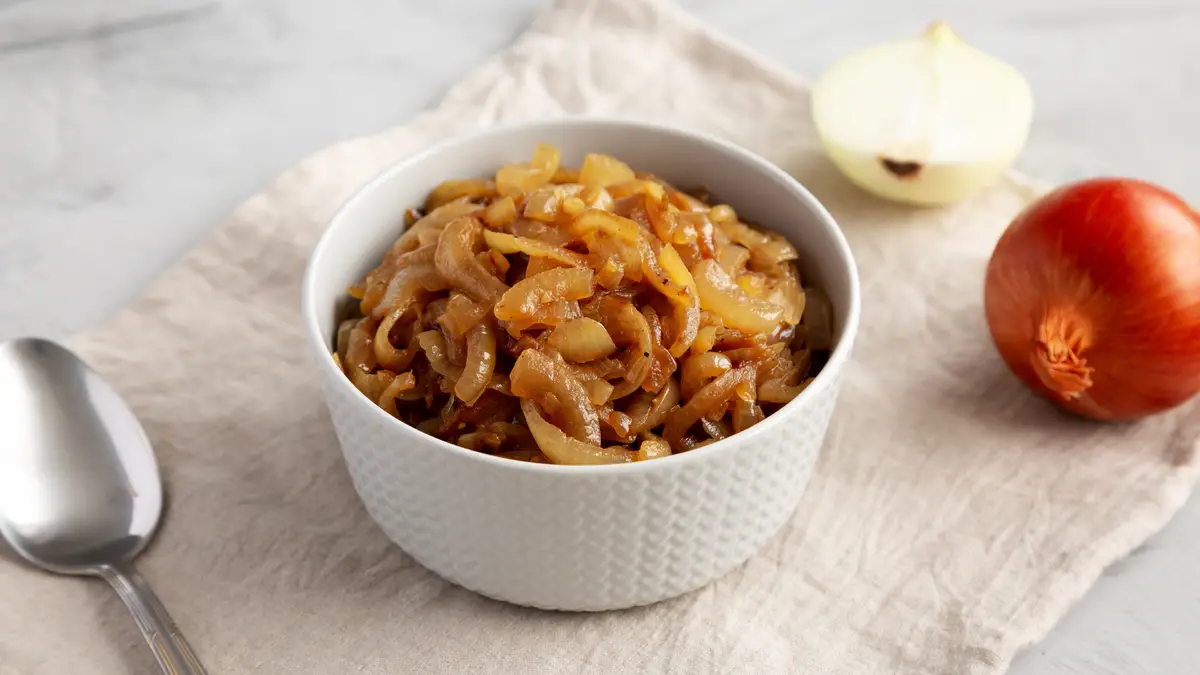
If you're looking for the healthiest way to caramelize onions, you've found it! This recipe yields perfectly sweet, rich, and flavorful red caramelized onions using a conservative mix of butter and olive oil. By controlling the fat, we achieve that deep mahogany color and melt-in-your-mouth texture without loading up on unnecessary calories or saturated fat.
These healthy caramelized onions are an incredibly versatile topping that fits beautifully into a low-sodium, bariatric, or diabetic-friendly diet. The slow cooking process draws out the natural sweetness of the onion, meaning there is absolutely zero added sugar required.
Whether you use them to elevate a simple turkey burger, fold them into a grain bowl, or serve them alongside your favorite lean proteins, this simple stovetop side dish proves that comfort food can easily align with your heart-healthy goals.
By using just half a tablespoon of butter and half a tablespoon of olive oil, this recipe achieves the classic, rich flavor of traditional caramelized onions with a fraction of the saturated fat. The slow cooking technique relies on the onion's natural moisture and sugars, creating a deeply savory, low-calorie topping that will not derail your dietary goals.
(Instant Download)
Sign Up for instant access to your free cookbook plus our most popular quick and healthy recipes!
Yes, when prepared with minimal amounts of healthy fats like olive oil, caramelized onions can be a flavorful, heart-friendly addition to your meals without excess sodium or saturated fat.
The healthiest way is to use a low-and-slow stovetop method with a very small amount of a heart-healthy fat, relying on a splash of water to deglaze the pan instead of adding extra oil.
Because the caramelization process simply draws out the onion's natural sugars without requiring any added sugar, they can be a great, flavor-packed option for a diabetic-friendly diet when consumed in standard portions.
This recipe contains just 43 calories per 2-tablespoon serving, making it a very light topping.
Yes, caramelized onions can be a very healthy addition to your diet. They are naturally low in calories and sodium, and cooking them with a modest amount of heart-healthy oil keeps the saturated fat in check while maximizing flavor.
Absolutely. Freezing caramelized onions in an ice cube tray or small airtight containers is a great way to portion them out for future meals. They will keep well in the freezer for up to three months and can be thawed overnight in the fridge or gently heated directly from frozen.
Elevate your favorite lean proteins by adding a generous scoop of these low-calorie, healthy caramelized onions to bring a rich, sweet-and-savory depth to your meals.
If you love the robust flavor of this vibrant ingredient, explore these other delicious, heart-healthy side dishes that are perfect for featuring red onions!
Red onions are packed with natural flavor and bring a vibrant color to your dishes. They contain beneficial compounds, antioxidants, and a natural sweetness that intensifies beautifully when cooked low and slow. Using red onions for caramelizing gives you a robust, slightly sharper flavor profile that mellows into a deep, savory-sweet finish, making them a fantastic choice for health-conscious cooking.
Healthy Variations
Recipe yields 4 servings
Heat the fats: In a large, heavy-bottomed skillet (stainless steel or cast iron works best), melt the unsalted butter with the olive oil over medium heat.
Add the onions: Once the butter starts bubbling, add the sliced Spanish onion to the pan. Toss the onions thoroughly so they are evenly coated in the fat.
Soften the onions: Let the onions cook for about 5 to 10 minutes, stirring occasionally, until they begin to soften and become translucent.
Season and lower the heat: Reduce the burner heat to medium-low. Sprinkle in the Kosher salt and nestle the fresh thyme sprigs into the onions. Note: Adding the salt now helps draw out the onions' natural moisture, which aids in the caramelization process.
Caramelize slowly: Continue cooking the onions for another 40 to 45 minutes. You will need to stir them every 5 to 10 minutes. As they cook, scrape up any browned bits (the fond) from the bottom of the pan. Pro Tip: If the onions look like they are starting to burn or dry out before they are fully caramelized, add a small splash of water (about a tablespoon) to deglaze the pan, stir well, and lower your heat down a notch.
Finish and serve: Once the onions have cooked down significantly and reached a deep, rich mahogany color, remove the skillet from the heat. Pick out and discard the woody thyme sprigs. Serve warm.
Store any leftover caramelized onions in an airtight container in the refrigerator for up to one week. For longer storage, you can freeze them in an ice cube tray for easy, portion-controlled blocks that last up to 3 months. When you are ready to use them, gently reheat in a microwave or warm them in a skillet over low heat.
These onions are incredibly versatile. Try them with these delicious pairings:
You can easily substitute sweet onions, yellow onions, or white onions using the exact same method.
To make this recipe completely dairy-free and vegan, simply omit the butter and use a full tablespoon of olive oil instead.
Fresh rosemary or a pinch of dried thyme makes a wonderful flavor swap if you don't have fresh sprigs on hand.