FREEHealthy 30-Minute Meals
(Instant Download)
Sign Up for instant access to your free cookbook plus our most popular quick and healthy recipes!
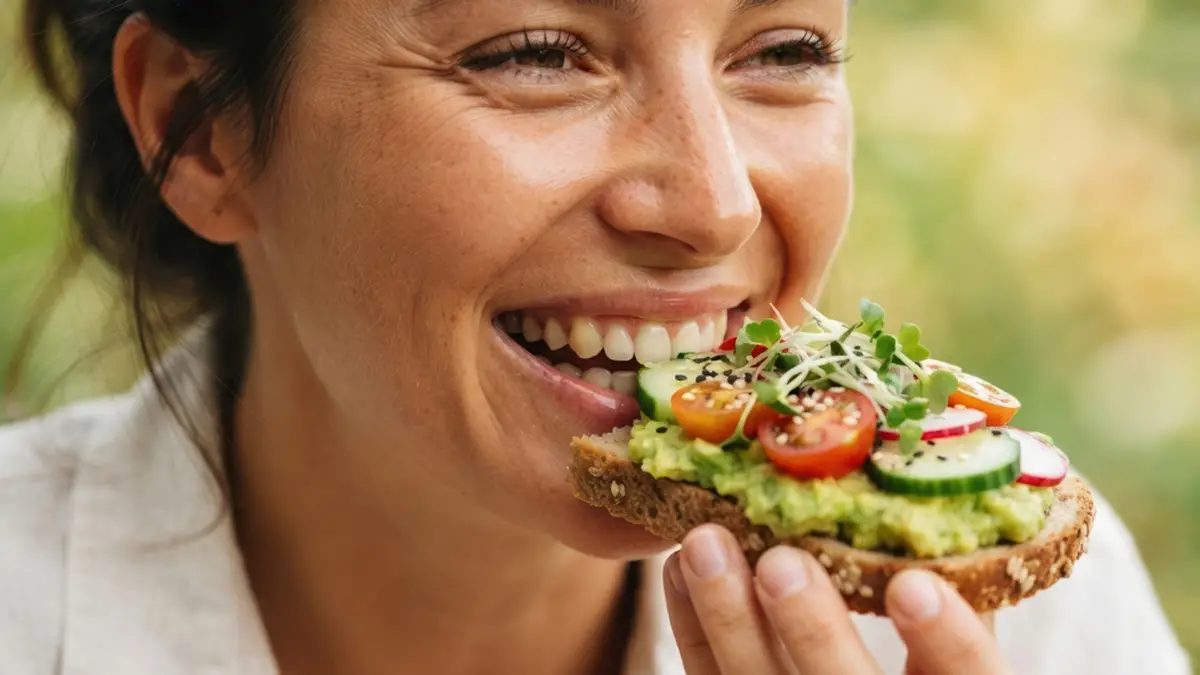
Healthy skin is one of the things Americans want most. Who doesn't want to look and feel their best? But there may be more to that natural glow than your skincare products and a standing facial appointment. Your plate has a lot to say about how you're supporting your skin from the inside, and the healthy foods for your skin are mostly ones you already know.
A balanced diet is the place to start. That means eating from all five food groups: fruits, vegetables, grains, protein foods, and dairy. No single food is going to transform your skin, but the overall pattern of what you eat really does show up.
It's worth paying attention to how your body reacts to what you eat and drink. Do you deal with constant bloating? A rash that won't clear up no matter what you try? Trouble with digestion? These can be signs of a food allergy or intolerance, and your gut and your skin are more connected than most people realize.
Bring these symptoms to a doctor or a specialist, like an allergist, a gastroenterologist, or a registered dietitian. If you want to read more about eating for gut health, we have a whole guide on the best gut-healthy foods.
Once your gut is in a good place, there are three things worth focusing on.
Elasticity is your skin's ability to stretch and bounce back when you move or make an expression. Collagen and elastin are the two proteins that make that happen.
Collagen production starts to slow down in early adulthood, and it keeps slowing as you age. You can't stop that. What you can do is give your body the raw materials it uses to build collagen in the first place, which means protein, vitamin C, and zinc.
Skin that's low on water looks dull and feels tight. Drinking enough water helps, and so does going easy on very salty foods. A salty meal leaves your body holding onto extra fluid and makes you thirstier, which is why puffiness around the eyes tends to show up the morning after takeout.
Water-rich foods count too. Cucumber, melon, citrus, tomatoes, and soups all add to your daily total. If hydration is your sticking point, take a look at our list of hydrating foods and drinks.
You can watch this one happen. Nick your finger chopping onions and your body immediately gets to work closing the wound and keeping infection out. Protein supplies the building blocks for the repair. Vitamin C helps your body make new collagen at the site. Zinc supports the immune response that keeps the area clean while it heals.
The same nutrients that patch up a cut are the ones maintaining your skin every other day of the year.
Here are six healthy foods for your skin that give it something useful, plus what the research actually shows about each one.
Avocados are mostly known for their healthy fats, and that's the part that matters here. Those fats do something useful for everything else on this list. Vitamin E and the carotenoids in leafy greens and orange vegetables are fat-soluble, meaning your body can only absorb them when there's some fat in the same meal. Eat a salad with no fat in it and much of what's in the vegetables goes right past you.
Avocados also supply vitamin E themselves, an antioxidant that helps protect skin cells from everyday damage. Add them to a salad, a sandwich, or a smoothie.
Your body can't make collagen without vitamin C, which makes this the most direct food-to-skin connection on the list.
One medium orange has about 70 mg of vitamin C, roughly 78% of what you need in a day. Grapefruit, limes, and lemons all contribute. So do strawberries, kiwi, broccoli, Brussels sprouts, and red bell peppers, which actually have more vitamin C per bite than an orange does.
Eat them whole or work them into recipes. Either way they're a great source of natural sweetness.
Almonds are the best vitamin E source on this list by a wide margin. One ounce, about 23 almonds, has 7 mg of vitamin E. That's nearly half of what you need for the whole day. That same ounce has 6 grams of protein and covers about a third of your daily copper, which your body uses to help collagen fibers hold together.
Two randomized trials out of UC Davis had postmenopausal women eat almonds daily in place of their usual snack. Both found a measurable drop in wrinkle severity, about 15% at 16 weeks in the longer study. (Both were funded by the Almond Board of California, which is worth knowing, though the studies themselves were peer reviewed and controlled.)
Almonds are easy to grab on their own and easy to work into a meal.
Salmon has protein, but the main reason it belongs on a skin list is omega-3 fats. A 3-ounce serving has roughly 1 to 2 grams of EPA and DHA, depending on whether it's farmed or wild. These are the fats that help your skin hold onto moisture and keep inflammation in check.
Salmon also delivers vitamin D and selenium, and it's one of the leanest ways to get a big serving of protein. It pairs well with salad, vegetables, and grains.
Zinc shows up in both of the jobs I mentioned: it helps build collagen and it supports the immune response behind wound healing. Getting enough of it takes a little intention, because the foods highest in zinc aren't always the ones people think of.
Lean beef, oysters, crab, shrimp, pumpkin seeds, chickpeas, lentils, and black beans are your strongest sources. Pairing them with something high in vitamin C is a smart move, since vitamin C helps your body absorb the zinc from plant foods like beans and lentils.
Good news for anyone who was hoping chocolate would make this list! Dark chocolate is loaded with flavanols, the same plant antioxidants that give cocoa its reputation for supporting healthy blood flow. One ounce also covers about half your daily copper.
A handful of trials have looked at cocoa flavanols and skin, and a couple of them found improvements in elasticity and fine lines. Choose dark chocolate with at least 70% cacao and treat it as a genuinely enjoyable addition to your diet, not a supplement.
Each of these recipes puts one of the nutrients I mentioned on your plate. All were developed and tested by the Health eCooks Test Kitchen and reviewed by our registered dietitians.
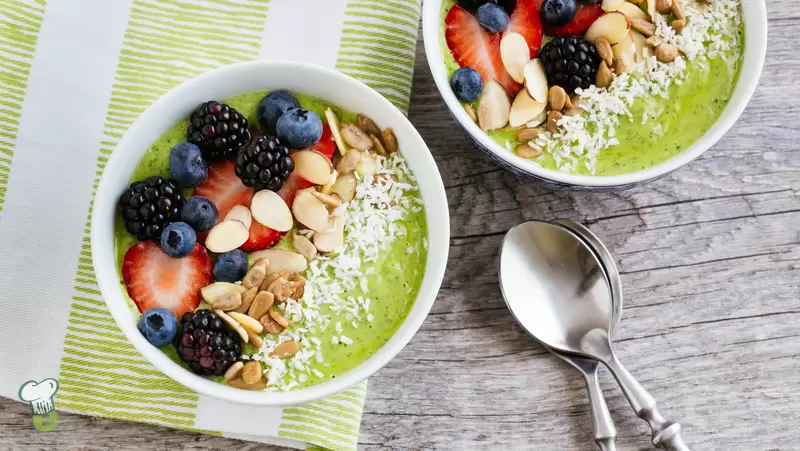
Avocado is what makes this bowl so thick and creamy, and the mango adds vitamin C on top of the healthy fats. A serving has 200 calories, 8 grams of protein and 8 grams of fiber, with just 68 mg of sodium.

Whole grapefruit for vitamin C and shrimp for zinc and protein, in the same bowl. It's bright, a little tart, and surprisingly filling at 27 grams of protein and 6 grams of fiber per serving.

Lime, orange, and grapefruit juice blended with ice, and that's about it. It's festive enough for a party and it covers two bases at once, since you're getting vitamin C and a good amount of fluid in the same glass. Thirty calories a serving. Go with a sugar rim instead of the salt rim if you’re watching your sodium, or skip the rim altogether.

Almond butter carries the vitamin E here, and the oats bring it up to 14 grams of protein per serving. You stir everything together the night before and it's ready when you are.
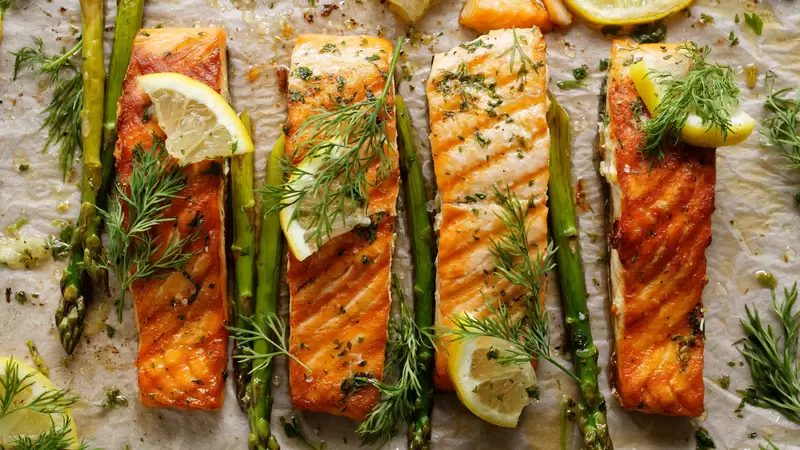
This is the omega-3 recipe on the list, and it's a strong one. Each serving has 31 grams of protein for 292 calories and only 108 mg of sodium. The asparagus adds a little vitamin C alongside it.

Lean beef is one of the best zinc sources you can put on a fork, and broccoli is loaded with vitamin C, so this one covers the collagen-building pair in a single skillet. It has 37 grams of protein per serving.
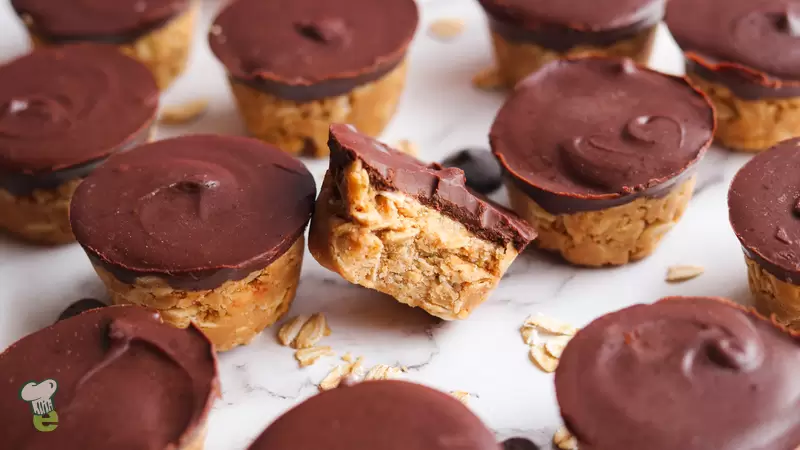
Homemade, five ingredients, and 119 calories apiece. Use dark chocolate at 70% cacao or higher and you get the flavanols along with the treat.
Food is one piece of skin health. Limiting sun exposure, getting enough sleep, avoiding smoking and managing stress all matter too.
Give it at least two months. The research on diet and skin generally measures results at 8 to 24 weeks, because that's how long skin takes to turn over and rebuild.
Some studies on collagen peptides have shown small improvements in skin elasticity, but the research is mixed and much of it is industry funded. Your body breaks collagen down into amino acids either way, so a diet with enough protein, vitamin C, and zinc gives it what it needs to build its own. Talk to your doctor before adding any supplement.
Staying hydrated helps, especially if you're currently falling short. But drinking extra water beyond what you need won't add moisture to skin that's already well hydrated. Water-rich foods do more for dryness than volume alone.
Cocoa flavanols have been studied for skin elasticity with some encouraging results, though those trials used measured flavanol drinks rather than candy bars. Dark chocolate at 70% cacao or higher is a reasonable treat with real antioxidants in it. It just isn't a treatment.
It can, and this one is worth taking seriously. Grapefruit blocks an enzyme in your gut that helps break down certain drugs, which can leave more of the medication in your bloodstream than intended. It affects some cholesterol medications, including simvastatin, lovastatin, and atorvastatin, and several blood pressure medications, along with a number of other drugs.
Not every medication in those groups is affected, and some cholesterol medications have no interaction at all. Both the fruit and the juice count, and the effect can last a day or longer, so taking your pill at a different time of day doesn't get around it.
If you take a daily medication, ask your pharmacist before making grapefruit a regular habit. They can check your specific prescriptions in about a minute. Oranges, lemons, and limes don't cause this interaction, so they're an easy swap in any of the recipes above.
Yes. Every recipe on Health eCooks is developed in our test kitchen and reviewed by one of our Health eCooks registered dietitians.
Most skin changes related to food are nothing to worry about. Some are worth a call.
A registered dietitian can help you work out whether something in your diet is contributing, and can make sure a restrictive eating pattern isn't leaving gaps.
Shannon A. Burke, MS, RDN, LDN, is a registered dietitian nutritionist with the City of Philadelphia Department of Public Health, where she provides nutrition counseling and education to patients of all ages. She holds bachelor's and master's degrees from West Chester University of Pennsylvania and previously worked as a clinical dietitian in long-term care and rehabilitation.
(Instant Download)
Sign Up for instant access to your free cookbook plus our most popular quick and healthy recipes!