FREEHealthy 30-Minute Meals
(Instant Download)
Sign Up for instant access to your free cookbook plus our most popular quick and healthy recipes!
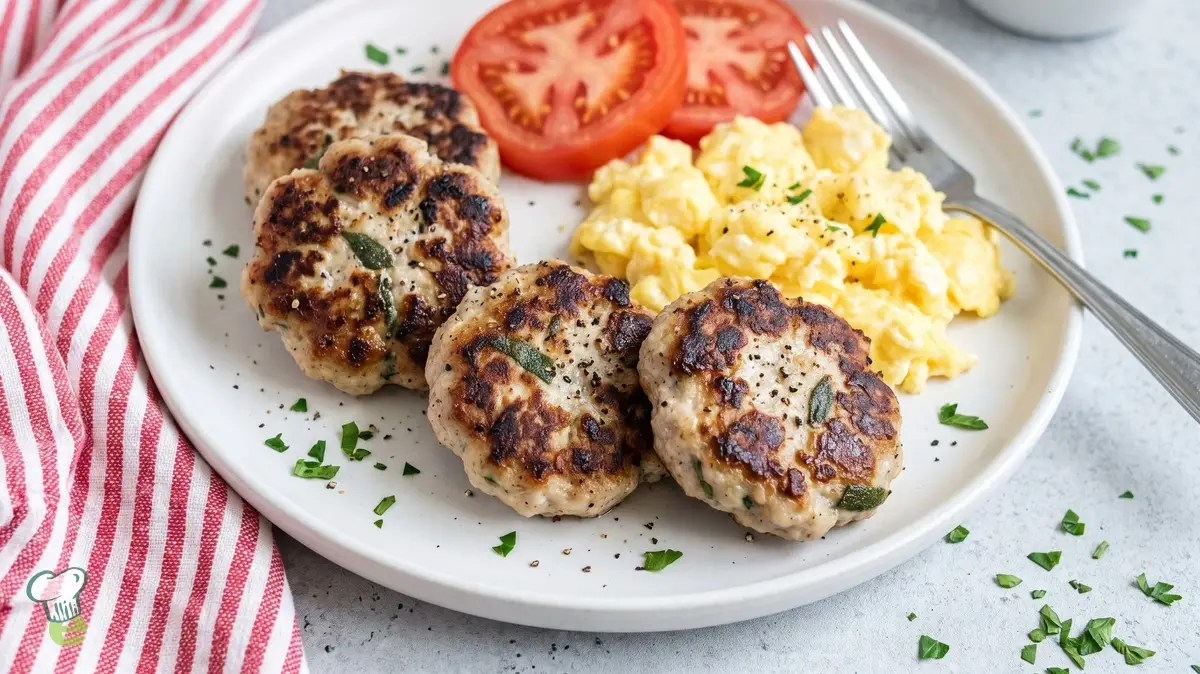
If you are trying to cut back on salt in your diet, finding low sodium breakfast ideas can be a challenge. Bacon, sausage, ham, and Canadian bacon are breakfast staples for many people, but since they’re cured meat, they’re filled with salt and aren’t the ideal sides for breakfast when trying to limit sodium.
The numbers are worse than most people expect. Two slices of pan-fried bacon and two sausage links add up to about 760 milligrams of sodium, and that’s before the bread, cheese, eggs, or potatoes. The American Heart Association recommends staying under 2,300 mg of sodium a day and moving towards just 1,500 mg for most adults, so just the bacon and sausage alone can use up about half the sodium you should consume in a day, all before nine in the morning.
Because the sodium in breakfast meat comes almost entirely from the processing rather than from the meat itself, there are ways to still enjoy your breakfast favorites without consuming too much salt. Fresh ground pork has 48 mg of sodium in three ounces. Cure pork into bacon and the same amount is closer to 1,400 mg.
Below is what the numbers actually look like, which store-bought options are worth buying, how to make your own bacon and sausage at home, and one widely believed piece of advice that turns out to be backwards.
Two slices of cured pork bacon contain about 386 mg of sodium and two pork sausage links about 374 mg. Ham runs higher at roughly 456 mg for two slices, and canned meats are higher still.
On the other hand, fresh, unprocessed ground pork and turkey have much lower sodium totals by a wide margin, at under 50 mg per three ounces. So by starting with this meat and seasoning and cooking it yourself, you can still enjoy the breakfast meat taste you love with far less salt.
Here’s a comparison of the sodium in popular breakfast meats. All figures come from USDA FoodData Central, calculated using the USDA's own portion weights*.
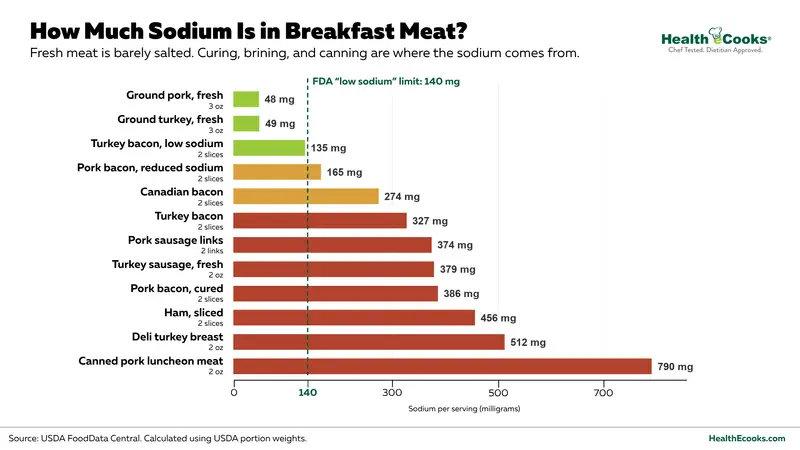
Notice on this chart that nothing at the top of the list has been cured, brined, smoked, or canned. Everything at the bottom has. Sodium isn't really a property of the meat; it’s a property of what was done to the meat before it reached you.
*Figures are USDA reference portions. Individual package labels use their own serving sizes and will differ.
Compared gram for gram, regular turkey bacon is higher in sodium, at about 2,020 mg per 100 grams compared to 1,680 mg for cured pork bacon. That’s roughly 20% more, which is the opposite of what most people assume.
However, low sodium turkey bacon comes in at 900 mg per 100 grams compared to 1,030 mg for reduced-sodium pork bacon, so in this case turkey bacon is the lower sodium option.
So why does turkey bacon look like it’s lower in sodium on the package? It all comes down to slice size. A turkey bacon slice is about 8 grams compared to 11.5 grams for pork, so per slice turkey bacon is lower in sodium, but it’s higher in sodium per gram of meat. If you eat three smaller turkey slices instead of two larger pork ones, you end up consuming more sodium overall.
Turkey bacon does have a genuine advantage, and that is its fat content. It has considerably less, which matters if your doctor has recommended that you limit saturated fat to lower cholesterol and keep your heart healthier, but it doesn’t offer a sodium advantage.
The rule to take away from this is that you should compare products by weight, not by slice. And if you decide that you want to try bacon made from turkey, we have a guide for how to cook turkey bacon that gets it crisp without extra fat.
This is a separate question from sodium and worth separating out. "Uncured" bacon is cured, just with celery powder or celery juice instead of added sodium nitrite. It’s a nitrate question, not a sodium question, and uncured products are not reliably lower in salt. If you’re avoiding nitrates, read the ingredient list. If you’re watching sodium, pay attention to how many milligrams the product actually has.
If you’re interested in how much sodium any product has, turn the package over and read the milligrams per serving on the nutrition label rather than trusting the words on the front of the package. Also check the serving size, so you know how much sodium is in the amount you’re actually eating.
You can get very close to the taste of bacon without the sodium that comes from buying bacon, and it’s easier than it sounds.
Ask at the butcher counter for pork belly and have them slice it thin, or slice it yourself half-frozen, which is much easier than slicing it soft. Then marinate the slices in liquid smoke with a little maple syrup, and either bake them on a rack or fry them until crisp.
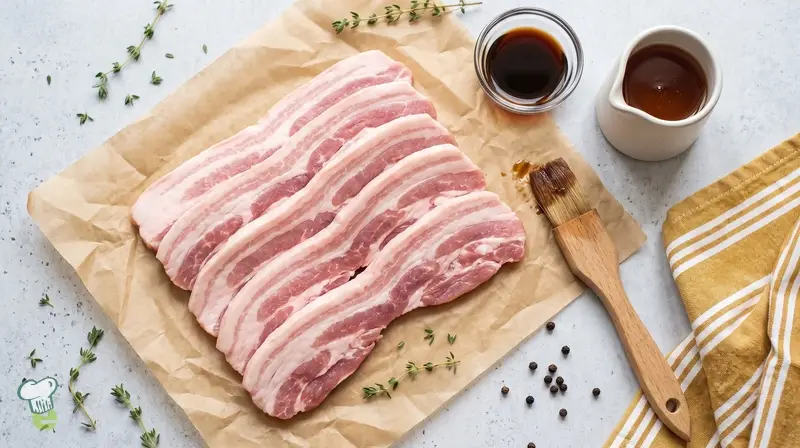
What you get is the smoke, the fat, the crispy edges, and the sweetness, which between them are most of what your palate reads as bacon. What you leave out is the curing salt, which is where most of the sodium comes from. Fresh pork belly has roughly the same sodium content as any other fresh pork, so the amount of sodium you end up eating depends almost entirely on what you add.
Two notes to keep in mind:
If you’re watching your sodium and want to eat bacon, reduced-sodium bacon is the way to go. It's about 39 percent lower in sodium compared to regular bacon while keeping the flavor you crave. But keep in mind that all brands aren’t the same, so read labels carefully.
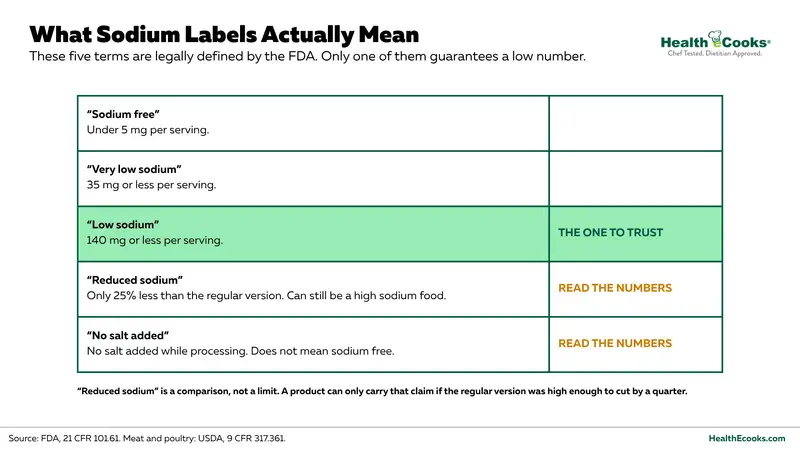
It’s also important to understand what claims mean on the packaging, because the terms are legally defined and they don’t mean what most people assume.
"Low sodium" means 140 mg or less per serving. That’s a hard number set by the FDA, and it’s the only sodium claim on the front of a package that guarantees you a low figure.
"Reduced sodium" means that the product contains at least 25% less sodium than the regular version. It’s a comparison, not a threshold, so a reduced-sodium product can still be a high sodium product. Keep in mind that a "reduced sodium" claim can’t legally be used if the regular version already qualifies as low sodium, so the presence of the claim tells you that the original was high enough that a 25% cut was worth advertising.
"No salt added" and "unsalted" mean no salt was added during processing. It doesn’t mean the food is sodium free, and the FDA describes these terms as potentially misleading for exactly that reason. If the product is not sodium free, the label is required to carry a line reading "not a sodium free food" or "not for control of sodium in the diet." Look for it.
When it comes to sausage options, pork sausage links run about 374 mg for two and fresh turkey sausage about 379 mg for a two-ounce serving. The lower-sodium chicken and turkey Italian sausages that do exist aren’t widely stocked so they may be hard to find.
Meanwhile, fresh ground pork is 48 mg for three ounces, and fresh ground turkey is 49 mg. The entire difference between those numbers and the sausage numbers is seasoning, and seasoning is the one part you control when you make your own sausage.
But there’s a catch that almost nobody mentions, and it undoes the advice to make your own sausage if you don’t know about it.
Roughly 90% of pork sold in the United States is injected with a solution before it reaches the case, according to the USDA. Retail pork typically carries 7 to 12% of an injection solution made from water, sodium lactate, sodium phosphates, potassium lactate, or sodium diacetate. And at injection levels up to 10%, the label is permitted to say "deep basted" or "marinated" rather than declaring the solution prominently.
So, buying ground pork to make your own low sodium sausage only works if the pork hasn’t already been salted. Read the package for the words “solution”, “basted”, or “marinated”, or any ingredient containing "phosphate." If you see them, look for a plain unenhanced pack or ask the butcher counter to grind a shoulder fresh for you.
Once you have unenhanced ground pork or ground turkey, the seasoning is the easy part. For one pound of meat, start with:
- 2 teaspoons dried sage, the flavor that makes sausage taste like sausage
- 1 teaspoon black pepper
- 1 teaspoon dried thyme
- 1 teaspoon smoked paprika
- ½ teaspoon onion powder
- ½ teaspoon garlic powder
- 1 tablespoon maple syrup
- A pinch of crushed red pepper, if you want heat
That works out to roughly one to two tablespoons of dry blend per pound, which is the ratio home sausage makers tend to land on. Mix it through the meat with your hands, then let it rest covered in the fridge for a few hours or overnight. Form into patties and cook.
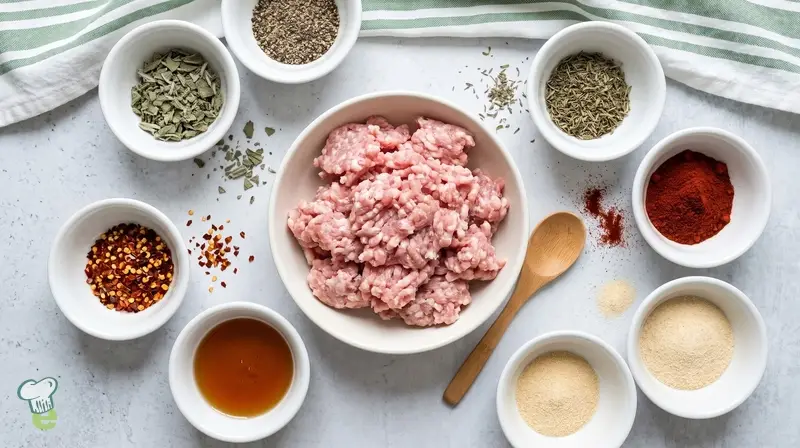
For a chorizo-style sausage, drop the sage and maple and lean on cumin, smoked paprika, garlic, and a little vinegar instead. Our low sodium taco seasoning is 22 mg per tablespoon and is also a great way to season your sausage.
A few food safety notes from USDA FSIS to keep in mind:
Canadian bacon is the middle ground when it comes to sodium, clocking in at about 274 mg for two slices. It comes from the loin rather than the belly, so it’s much leaner than bacon, but it’s still cured so it has a decent amount of sodium. We take a fuller look at where it lands in our guide to whether Canadian bacon is healthy.
Ham is higher in sodium, hitting around 456 mg or more for two slices. And although not necessarily a breakfast meat, deli turkey breast has a surprisingly high amount of sodium, with roughly 512 mg in two ounces. Low-salt deli turkey drops the sodium content to around 432 mg for the same portion, about a 16 percent reduction. Canned luncheon meat sits at the top of the sodium list at about 790 mg for two ounces, and there’s no version that fits comfortably into a 1,500 mg sodium day.
If deli meat is what you want to eat, start with a thicker slice of low-sodium ham or turkey and brown it in a dry hot pan. You’ll get a crisp savory edge that reads a little bit like bacon, and by doing this, a smaller portion satisfies.
If you still want to enjoy breakfast meat, but prefer less sodium, keep these tips in mind:

This is one place where low sodium advice can cause real harm, and it comes up constantly in low sodium communities without anyone flagging it.
Most salt substitutes replace sodium chloride with potassium chloride. For a lot of people, that’s a reasonable trade. For anyone with kidney disease, it isn’t.
Healthy kidneys clear excess potassium. Kidneys that aren’t working properly can’t, so potassium builds up in the blood. This condition, called hyperkalemia, can cause dangerous heart rhythm problems.
The National Kidney Foundation's guidance is direct: if you have been told to limit potassium, avoid salt substitutes such as potassium chloride, and avoid specialty low-sodium foods made with them, because they’re high in potassium. Check with your doctor or kidney dietitian before using any salt substitute.
This isn’t a fringe concern. When the FDA proposed a rule that would permit wider use of potassium-based salt substitutes in foods, the National Kidney Foundation, the American Association of Kidney Patients, and the Academy of Nutrition and Dietetics filed a joint objection, warning about hidden potassium entering the food supply.
The safe alternative is a salt-free seasoning blend, which consists of herbs and spices with no sodium and no potassium chloride. Our homemade Mrs. Dash seasoning blend has 1 mg of sodium per serving and is great mixed into eggs, potatoes, and homemade sausage.
If you’re cooking with kidney health in mind, our renal diet recipes list potassium and phosphorus alongside sodium on every recipe.
When you’re looking for alternatives to a plate filled with breakfast meat, these recipes from our collection are a good place to start. They help keep your breakfast high in protein and delicious, without loading up on salt.
When you want protein without meat at all: Honey Yogurt Berry Parfaits have just 36 mg of sodium with 15 grams of protein. Greek yogurt is a great way to add protein to your breakfast, and this is the version worth making.
When you want meat, but not cured meat: Slow Cooker Shredded Chicken isn’t just for lunch or dinner. With only 100 mg of sodium and 17 grams of protein, it’s one of the most underrated breakfast proteins there is. Make a batch, keep it in the fridge, and add a little to eggs or breakfast burritos through the week.
When you want a vegetarian breakfast: Our Tofu Breakfast Burrito is a protein-rich breakfast with only 242 mg of sodium. Instead of the punch you get from breakfast meat, this grab-and-go breakfast is filled with savory spices that satisfy.
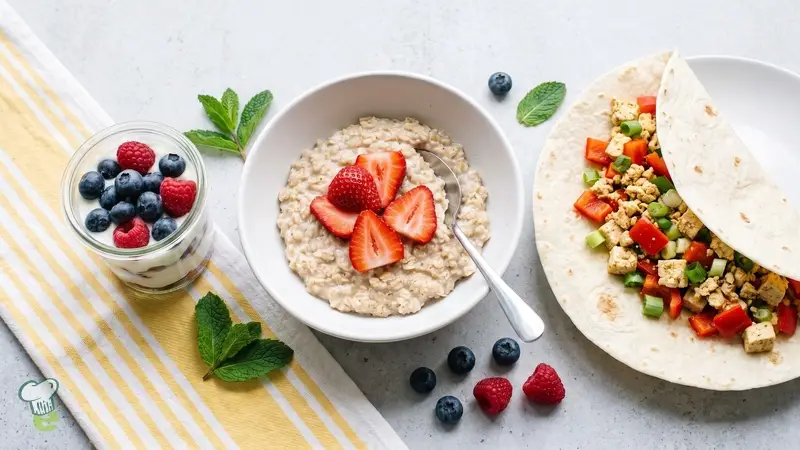
Here are some more breakfast options with their corresponding sodium and protein totals:
Asparagus Frittata with Cottage Cheese | 88 mg | 14 g |
GLP-1 Berry Oatmeal | 100 mg | 17 g |
Fruity Oatmeal | 70 mg | 10 g |
Oatmeal Breakfast Bars | 81 mg | 8 g |
Pecan Muffins | 76 mg | 10 g |
Avocado Deviled Eggs | 97 mg | 6 g |
Hash Brown Patties | 62 mg | 4 g |
An omelette is the most forgiving option of all, because the vegetables do the flavoring. Peppers, onions, mushrooms, and fresh herbs carry an egg perfectly well, and a small amount of chopped low-sodium meat folded through goes a long way.
For more ways to fill the plate, here are 16 low sodium breakfast recipes, from egg bakes to overnight oats.
For more morning meal inspiration, see our 19 heart healthy breakfast ideas and 8 easy high protein breakfast recipes.
Fresh, unprocessed meat is by far the lowest. Ground pork and ground turkey both come in under 50 mg per three ounces, compared with 386 mg for two slices of cured bacon. Among processed options, reduced-sodium bacon at about 165 mg for two slices and Canadian bacon at 274 mg are the more manageable choices.
Fresh ground turkey or pork seasoned at home, because you control both the sodium and the fat. Among ready-made options, Canadian bacon is leaner than bacon and lower in sodium than ham. Whatever you choose, portion size also affects the total so pay attention to how much you eat.
It depends what you’re concerned about. Turkey bacon is meaningfully lower in fat, which is a genuine benefit, but it’s not lower in sodium. At about 2,020 mg per 100 grams, it has roughly 20% more sodium than cured pork bacon by weight. If sodium is the reason you’re switching, this is not the switch to make.
If you’re looking to add some cold cuts to your breakfast plate, low-salt deli turkey breast is among the lowest widely available options at roughly 432 mg per two ounces, compared to about 512 mg for two ounces of regular deli turkey. Fresh roasted chicken or turkey that you slice yourself is even lower, since deli meat is brined and plain roasted meat isn’t.
Simmering cured meat leaches sodium into the water, and a study in the Journal of Renal Nutrition measured a 39% reduction in a hot dog boiled for three minutes. The effect has not been measured specifically on bacon, so the amount of sodium that can be reduced using this technique is unknown, however.
Not necessarily. "Uncured" means the product was cured with celery powder or celery juice rather than added sodium nitrite, so it’s a nitrate distinction rather than a sodium one. Uncured bacon can have just as much salt so read the nutrition label rather than just going with claims on the front of the package.
Plain fresh pork is naturally low in sodium, at around 50 to 60 mg per three ounces. The problem is that most retail pork in the U.S. is injected with a sodium solution, so it’s best to check the information on the package. Look for words like solution, basted, or marinated, which can mean there’s more sodium than you would expect.
Sautéed peppers, onions, and mushrooms, a low-sodium cheese, or a small amount of chopped lower-sodium meat used as a seasoning rather than as the filling can enhance your egg sandwich. If you’re concerned about sodium, it’s worth checking the bread too, since some bread and English muffins can have more sodium than the meat.
Greek yogurt with fruit is a common no-meat breakfast and is very low in sodium but high in protein. Eggs with vegetables, oatmeal, and tofu-based breakfasts are other good options. Many people find that once they find tasty alternatives to bacon, they don’t even miss it much.
When it comes to breakfast meat, there are ways to still enjoy the taste you love without loading your plate with salt. Opt for low-sodium products (read the actual mg of sodium on the nutrition label and the serving size rather than relying on the labels on the front of the package), make your own bacon or sausage using fresh pork that you season and cook yourself, or enjoy the “real stuff” but use it sparingly, as a seasoning rather than the main event.
For more information about adopting a low sodium lifestyle, read our low sodium diet guidelines and tips and browse our extensive collection of low sodium recipes.
(Instant Download)
Sign Up for instant access to your free cookbook plus our most popular quick and healthy recipes!