FREEHealthy 30-Minute Meals
(Instant Download)
Sign Up for instant access to your free cookbook plus our most popular quick and healthy recipes!
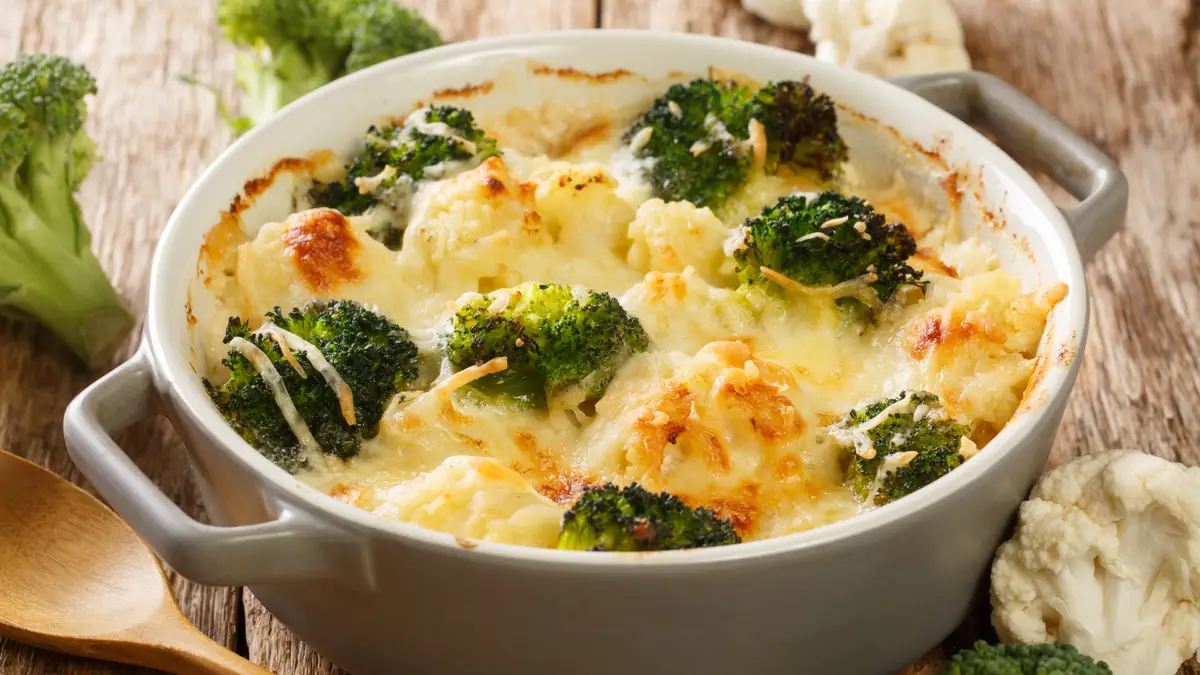
Many broccoli casseroles start by opening a can of condensed soup, and that’s where the sodium piles up. This Healthy Broccoli Cauliflower Casserole skips the can entirely. Tender broccoli and cauliflower bake in a creamy, cheesy cottage cheese sauce, and each ¾ cup serving has just 71 calories, 91 mg of sodium, and 8 grams of protein.
The trick is a blender. No-salt-added cottage cheese, an egg, and a couple of egg whites whirl into a silky sauce that sets up like a light custard in the oven, with dry mustard, garlic, and a pinch of nutmeg giving it that classic cheese-sauce flavor. A little sharp cheddar goes into the sauce, the rest melts on top with Parmesan and smoked paprika, and you end up with an easy, golden cauliflower and broccoli casserole that’s as welcome on a weeknight as it is on the Thanksgiving table.
For more lighter takes on the classics, browse our collection of heart healthy side dish recipes.
Canned cream soups, full-fat cheese, and buttery cracker toppings are what turn a pan of vegetables into a salty, heavy side. This recipe replaces all three. Blended low-fat cottage cheese and eggs make the creamy sauce, a modest 1/2 cup of reduced-fat cheddar and a tablespoon of Parmesan provide the cheesy flavor, and there’s no added salt anywhere in the dish. Cooking from scratch with whole ingredients is one of the simplest ways to follow a low sodium diet, and this casserole is a tasty example.
(Instant Download)
Sign Up for instant access to your free cookbook plus our most popular quick and healthy recipes!
Steam the broccoli and cauliflower until crisp-tender and dry them well. Blend cottage cheese with eggs, milk, and seasonings until smooth, stir in some shredded cheddar, and pour the sauce over the vegetables. Top with more cheese and bake at 375°F until the center is set and golden.
This version can be a smart choice. A 3/4 cup serving has 71 calories, 8g of protein, and 2g of fiber, so it’s filling for very few calories. Classic recipes made with canned soup, extra cheese, and a buttery topping are much richer. For more ideas, try our low calorie casserole recipes for weight loss.
With 6g of total carbohydrates and 2g of fiber per serving, it works well as a keto broccoli casserole and fits most low carb eating plans. It doesn’t use flour, breadcrumbs, or crackers, which is where most broccoli casseroles get their carbs, so this low carb broccoli casserole keeps the comfort without them. You can learn more about building a lower carb plate in our low carb diet guidelines.
Blend cottage cheese with eggs and a splash of milk. The mixture is creamy and thick enough to coat the vegetables, and it bakes into a tender custard that holds the casserole together. Swapping canned soup for a homemade sauce is one of the easiest ways to cut back on salt at holiday meals.
Frozen vegetables work well, and you can use frozen cauliflower, too. Use 2 pounds of frozen broccoli and cauliflower florets, thaw them, skip the steaming step, and pat them very dry with a towel before adding the sauce. Frozen vegetables release more water, so drying them well keeps the casserole from turning soggy.
Steaming and roasting are two of the best methods because they use little or no added fat and help the vegetables keep more of their vitamins than boiling does. Try our garlic roasted broccoli, air fryer garlic broccoli, roasted cauliflower and Brussels sprouts, or creamy mashed cauliflower.
This broccoli cauliflower casserole recipe can be assembled up to 1 day ahead. Cover it and refrigerate it unbaked, then add 5 to 10 minutes to the baking time. We don’t recommend freezing it, since the cottage cheese and egg sauce can turn watery and grainy after thawing.
If a creamy, comforting casserole is your favorite part of the holiday table, these recipes take the same lighter approach. Each one has less than 200mg of sodium per serving.
Broccoli and cauliflower are two of the most versatile vegetables in the kitchen. If you’re looking for more healthy broccoli and cauliflower recipes, these sides show them off in very different ways, from cheesy and warm to crisp and crunchy.
Classic broccoli casseroles are built on a can of condensed cream soup, which adds most of the sodium before any cheese or topping goes on. Here is how a ¾ cup serving of our casserole compares with the condensed cream of mushroom soup most recipes call for:

Recipe yields 12 servings
Preheat the oven to 375°F. Coat a 2½-quart (or 11x7-inch) baking dish with nonstick cooking spray.
Steam the broccoli and cauliflower for 4 to 5 minutes, until crisp-tender. Drain well and spread on a clean kitchen towel to dry. Removing the extra moisture keeps the casserole from turning watery.
In a blender or food processor, blend the cottage cheese, egg, egg whites, milk, dry mustard, garlic powder, onion powder, pepper, and nutmeg until completely smooth. Stir in ¼ cup of the cheddar.
Spread the vegetables in the baking dish. Pour the sauce over them and stir gently to coat.
Sprinkle the remaining ¼ cup of cheddar, the Parmesan, and the smoked paprika over the top.
Bake for 25 to 30 minutes, until the center is set and the top is golden. Let stand for 5 minutes before serving.
This cheesy broccoli and cauliflower bake pairs well with just about any lean main dish. Serve it alongside low sodium roasted chicken with oranges and herbs, a slice of turkey meatloaf, or herb roasted turkey for a holiday dinner. Planning a bigger spread? Our healthy Thanksgiving side dishes will help you fill out the rest of the table.
Regular low-fat cottage cheese works, but it will raise the sodium noticeably. Part-skim ricotta is another option, though the sauce will be a little less smooth and higher in calories and saturated fat.
Use 4 egg whites in place of the whole egg and egg whites, or 1/2 cup of liquid egg substitute.
Reduced-fat Swiss or part-skim mozzarella melts just as well. Keep the total to 1/2 cup to hold the sodium where it is.
Use all broccoli or all cauliflower, as long as the total is about 8 cups of florets. Frozen florets also work when thawed and patted dry.
Unsweetened plain almond or soy milk works in place of skim milk.
Building a lighter holiday menu? These favorites sit right beside this casserole on the Thanksgiving table, and you’ll find plenty more in our collection of healthy Thanksgiving side recipes.


