FREEHealthy 30-Minute Meals
(Instant Download)
Sign Up for instant access to your free cookbook plus our most popular quick and healthy recipes!
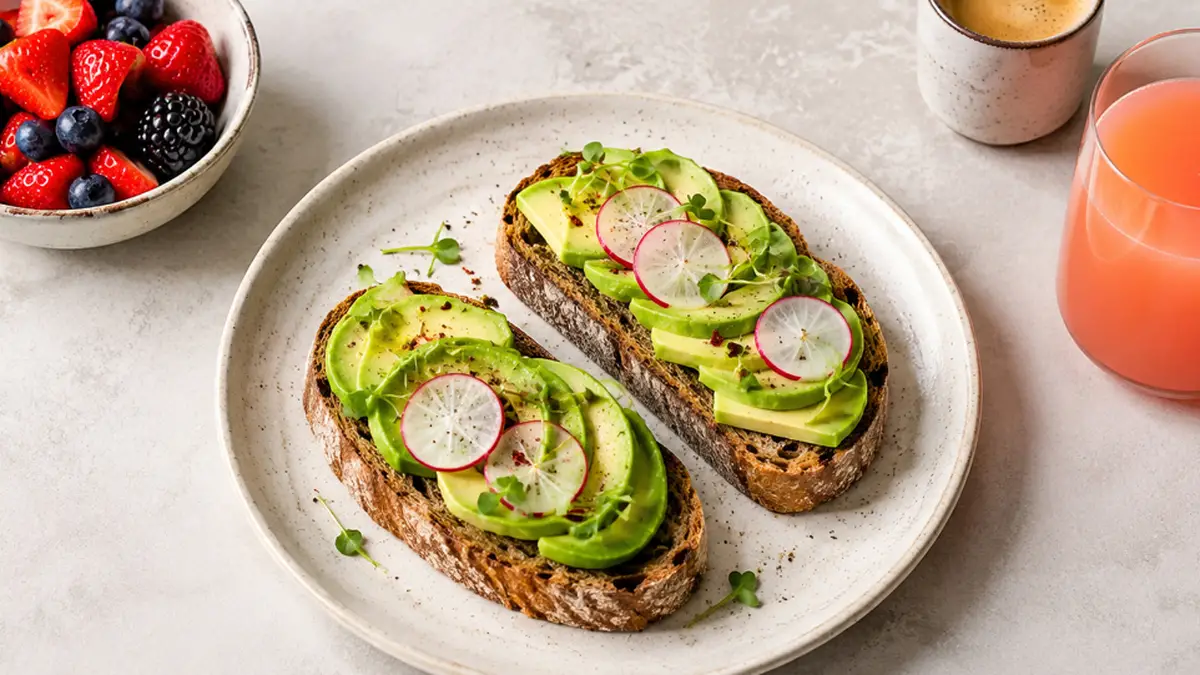
When you picture breakfast, you probably picture eggs. They're the default for good reason. Eggs are quick, cheap, and they cover protein and healthy fats in one shot. They’re also often included in common foods like muffins, waffles, casseroles, and even some pasta.
But plenty of people can't eat them. Eggs are one of the top nine food allergens in the United States and the second most common food allergy in young children, after cow's milk.<sup>1,2</sup> Others skip eggs because they eat plant-based, because of cholesterol, or because they're just tired of them.
A good breakfast doesn't depend on eggs. It depends on getting some protein, some fiber, and some healthy fat on the plate so you're not hungry an hour later. Our Health eCooks registered dietitians put together the recipes here to do exactly that, and every one of them has been made and tasted in the Health eCooks Test Kitchen.
One important note. Every recipe here is free of eggs, but these aren't free of all allergens. Several use dairy, wheat, soy, or tree nuts. If you're cooking for someone with more than one food allergy, read the full ingredient list on each recipe page before you start.
The most common worry about dropping eggs is protein. It's a fair worry, though an egg only has about 6 grams, so it's a smaller gap than most people expect. These foods close it easily:
Dairy sources
Plant-based sources
Mix one of these into whatever you're already making. A scoop of protein powder in oats, a spoonful of Greek yogurt on the side, or a handful of beans in a burrito all do the job.
Sweet breakfasts get most of the attention, so we'll start on the savory side. These five are filling, most of them hold up well as leftovers, and none of them need a single egg.
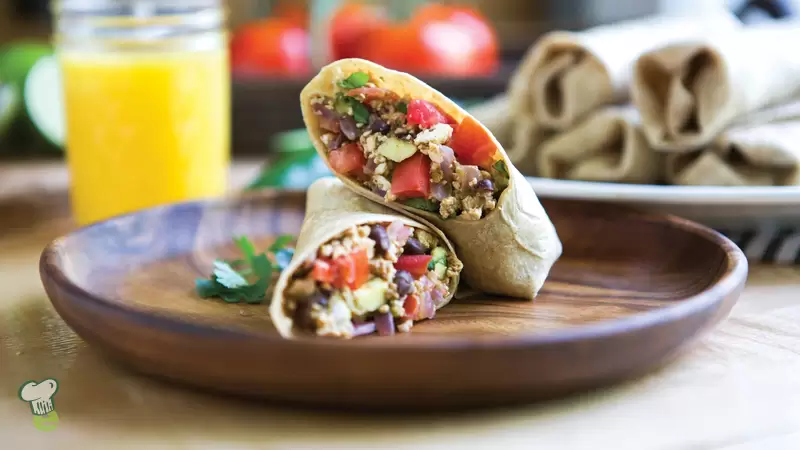
15 minutes | 6 servings
Crumbled extra-firm tofu picks up chili powder, cumin, garlic, and paprika until it tastes and looks a lot like a scramble, then it gets rolled up with black beans, tomato, cilantro, lime, and diced avocado. Each burrito has 10 grams of protein, 5 grams of fiber, and 242 mg of sodium, and they freeze beautifully, so a batch on Sunday covers most of the week.
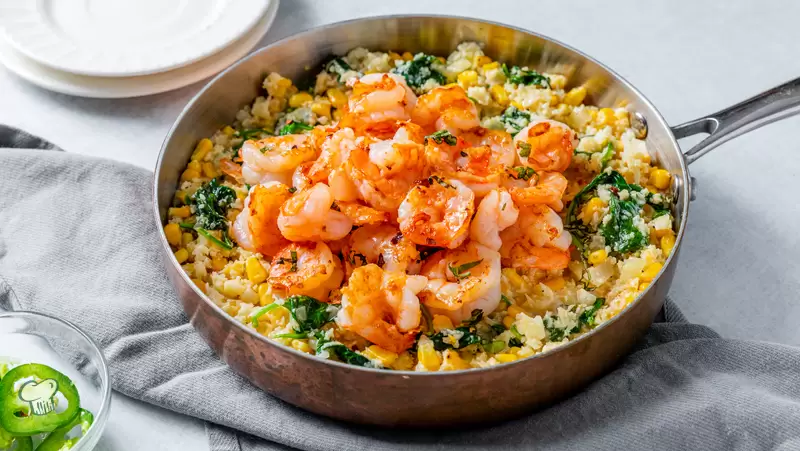
35 minutes | 6 servings
Cauliflower rice simmered with coconut milk and a little sharp cheddar stands in for stone-ground grits, and the shrimp on top cook in about four minutes with garlic, smoked paprika, sweet corn, and jalapeño. It has 20 grams of protein per serving for 246 calories, which makes it the most protein-dense recipe here. It’s something new for a weekend breakfast, or a fast dinner when you flip it around.
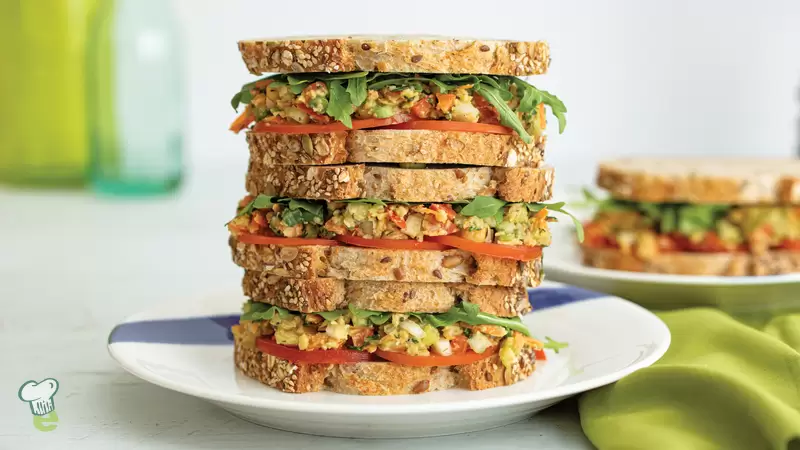
30 minutes | 6 servings
Mashed chickpeas, avocado, dill pickle, celery, carrot, and red pepper make a creamy sandwich filling with the texture of egg salad and none of the egg. It's 9 grams of protein and 8 grams of fiber per sandwich, it keeps in the fridge for a few days, and it works on toast or a bagel just as well as between two slices of bread.

30 minutes | 4 servings
Sweet potatoes for breakfast sounds unusual until you try it. A baked sweet potato has slow-burning carbohydrate and 8 grams of fiber per serving here, and the turkey bacon, shiitake mushrooms, kale, and sharp cheddar stuffed inside make it read as breakfast rather than dinner. Each one has 9 grams of protein and 294 calories.
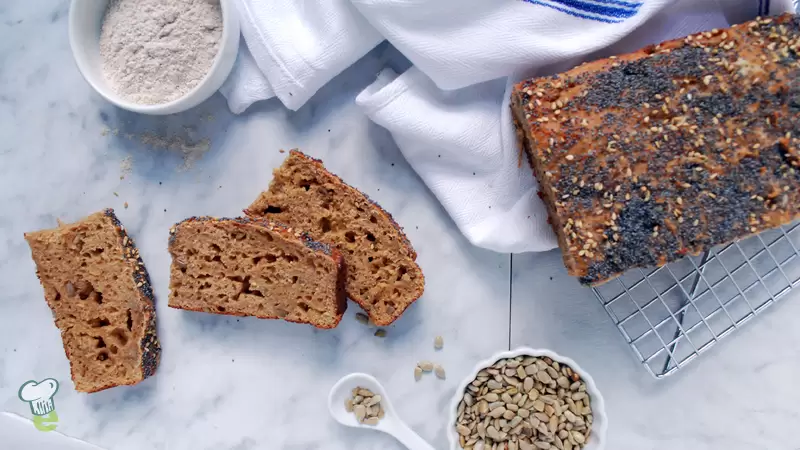
75 minutes
This is a dense, nutty whole wheat loaf made with yogurt instead of eggs, studded with sunflower seeds and finished with sesame or poppy seeds on top. Slice it thick, toast it, and spread it with cottage cheese or nut butter for a breakfast that takes about two minutes once the bread is baked.
If mornings at your house lean sweet, these eleven need no substitutions at all. Most of them can be made the night before.
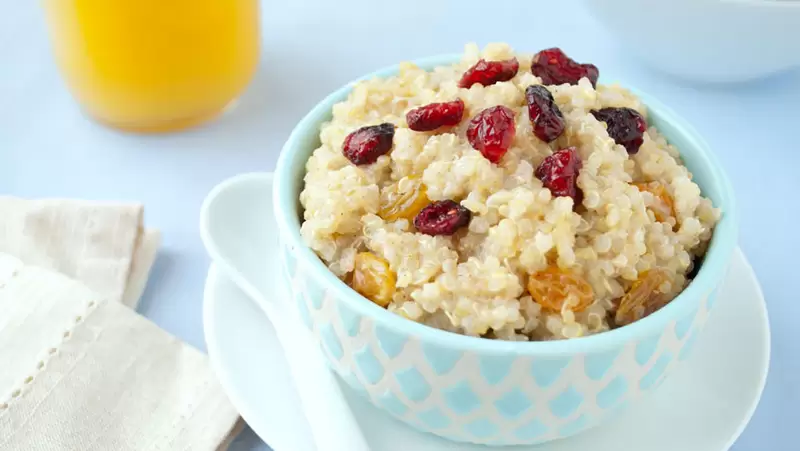
45 minutes | 6 servings
Quinoa simmered in coconut milk turns creamy and a little rich, and cinnamon, nutmeg, maple syrup, and golden raisins take it the rest of the way to breakfast. It's a nice change when you've had oatmeal five days running, and at 171 calories a serving there's plenty of room to add nuts or fruit on top.
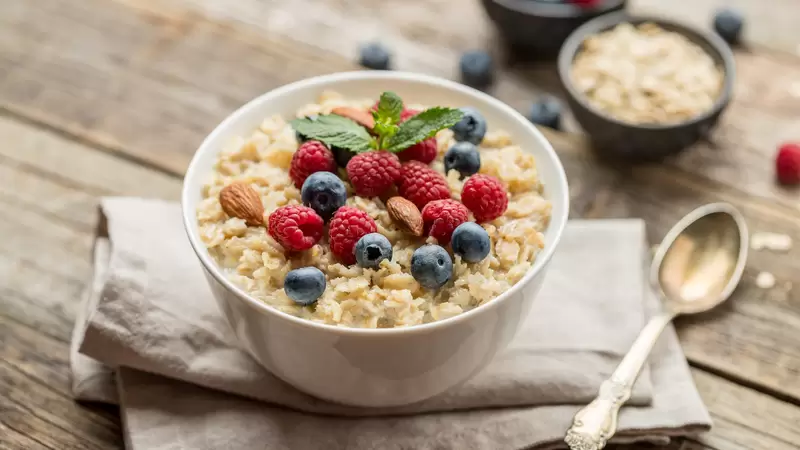
15 minutes | 2 servings
Hot oatmeal cooked in skim milk instead of water, with wheat germ, almonds, golden raisins, and a pile of fresh raspberries and blueberries on top. The milk is what pushes it to 17 grams of protein, more than most egg breakfasts, and it takes about as long as waiting for a kettle.
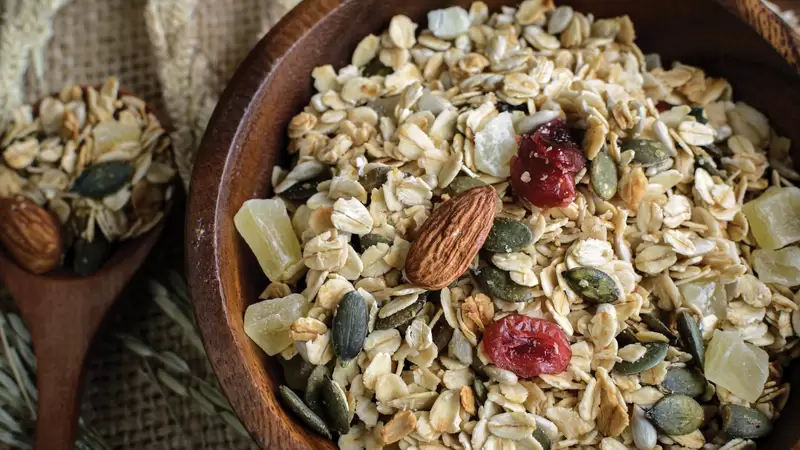
15 minutes | 6 servings
Muesli is a low-effort cousin of overnight oats. Rolled oats, chopped raw almonds, dried cranberries, and grated Granny Smith apple soak in water and lemon juice until soft. At 1 mg of sodium per serving this is the lowest-sodium recipe on the list, and it has 6 grams of fiber. Add Greek yogurt or milk if you want more protein in the bowl.
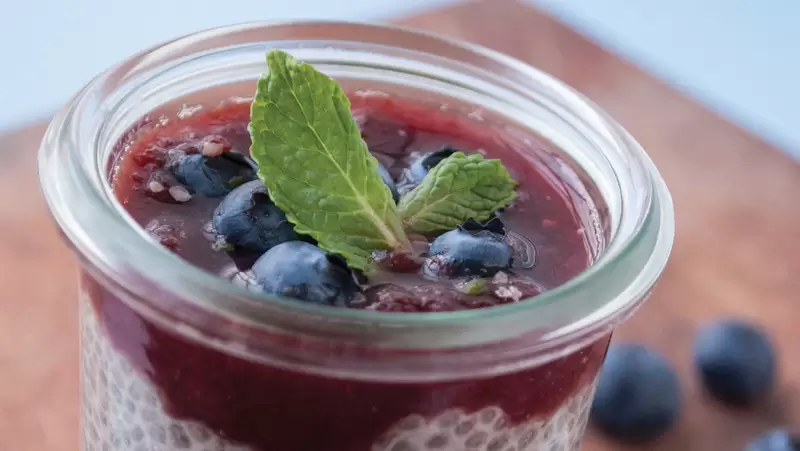
20 minutes | 4 servings
Chia seeds do the same thickening job in this pudding that they do in a flax or chia egg, which makes it a fitting recipe for this list. Almond milk, cinnamon, vanilla, hemp seeds, and fresh blueberries set overnight into something spoonable. It has 12 grams of fiber per serving, the most of any recipe here, and 10 grams of protein.
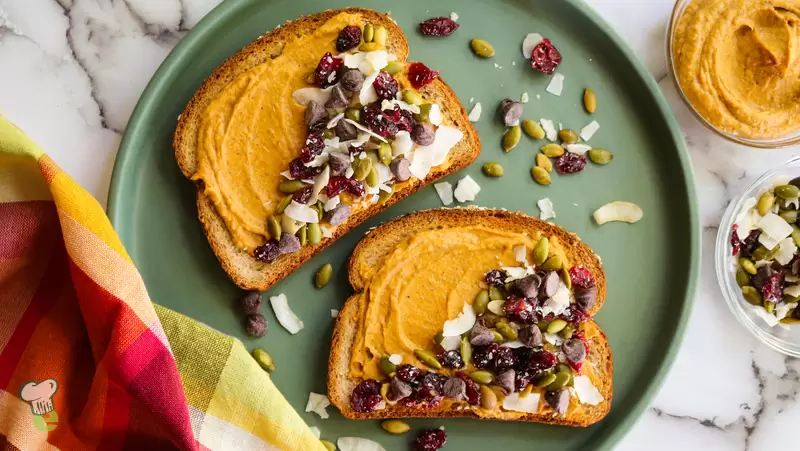
15 minutes | 2 servings
Peanut butter and canned pumpkin on toasted multigrain bread, spiked with pumpkin pie spice, cinnamon, and a crack of black pepper, then topped with pumpkin seeds, dried cranberries, coconut flakes, and a few dark chocolate chips. It has 10 grams of protein and 7 grams of fiber, and it's the recipe most likely to convert someone who thinks they need a hot breakfast.
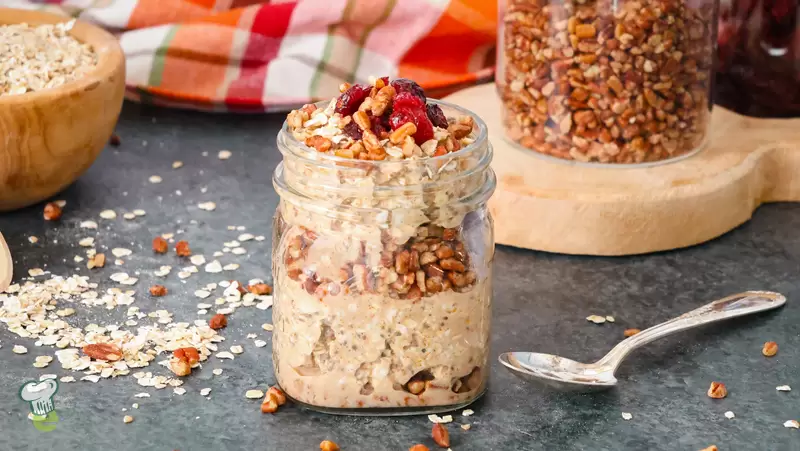
10 minutes | 2 servings
Rolled oats, Greek yogurt, chia seeds, and a little vanilla protein powder soak overnight into something that tastes like a maple oatmeal cookie. Each serving has 11 grams of protein and 7 grams of fiber, and toasted pecans and dried cranberries on top add crunch.
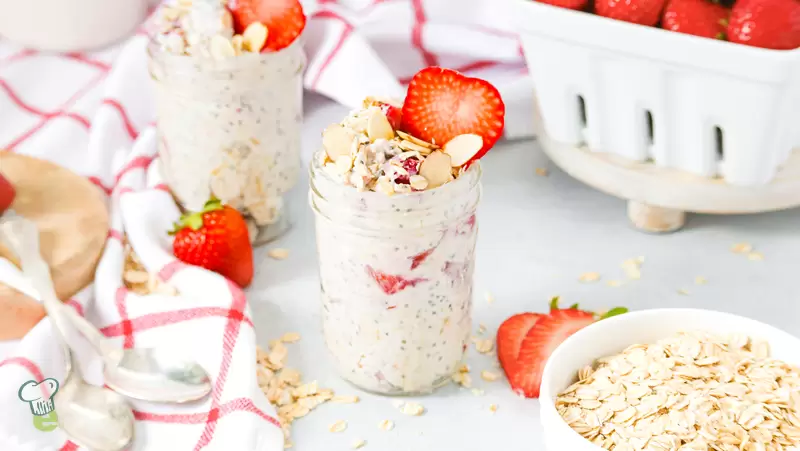
5 minutes | 1 serving
At 24 grams of protein, this is the highest-protein recipe on the list, and it takes five minutes to stir together the night before. Greek yogurt and vanilla protein powder do the heavy lifting while fresh strawberries and a touch of agave keep it tasting like dessert. Swap in any fruit you have on hand.
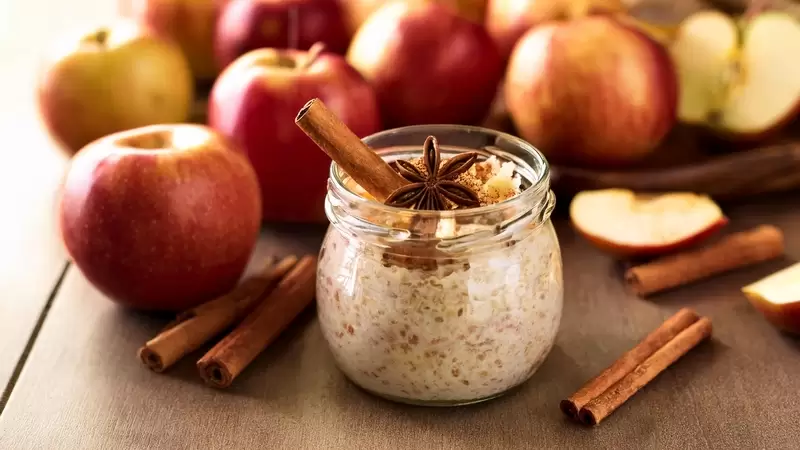
10 minutes | 2 servings
Diced apple, two full teaspoons of cinnamon, nutmeg, and a pinch of cloves make this taste like apple pie filling by morning. Greek yogurt and plant-based protein powder bring it to 11 grams of protein, and at 10 grams of fiber it ties for the highest-fiber breakfast here.
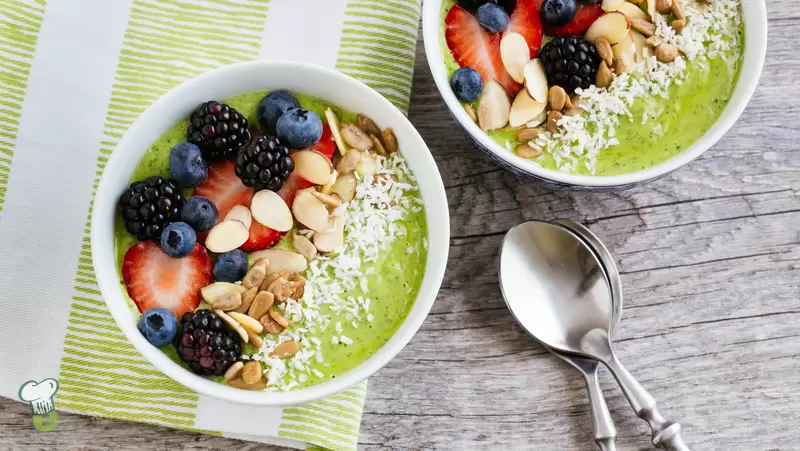
15 minutes | 2 servings
Frozen mango and banana blend with avocado and spinach into something thick enough to eat with a spoon, and the color is a bright, unapologetic green. Sunflower seeds, sliced almonds, coconut, and berries go on top. It has 8 grams of protein and 8 grams of fiber for 200 calories.
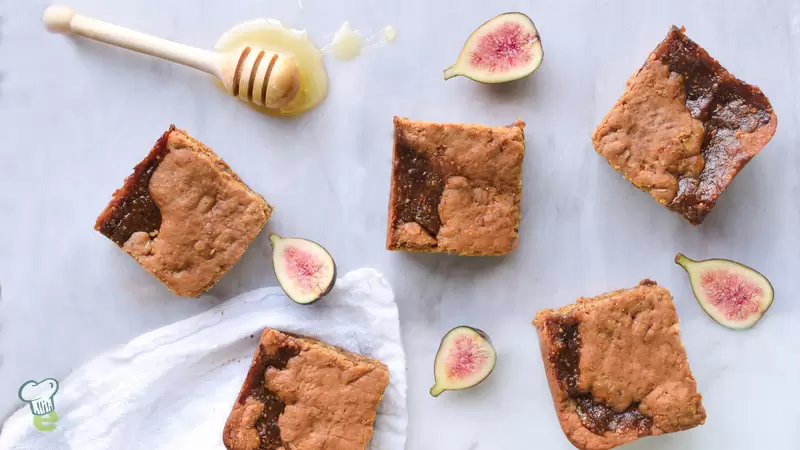
45 minutes | 16 bars
Dried Calimyrna figs simmered in orange juice make the filling, and the crust uses oats, whole wheat flour, almond meal, and soy milk with no egg anywhere. They're 138 calories a bar. Have one alongside Greek yogurt or a glass of milk and you've got a balanced breakfast you can eat with one hand.
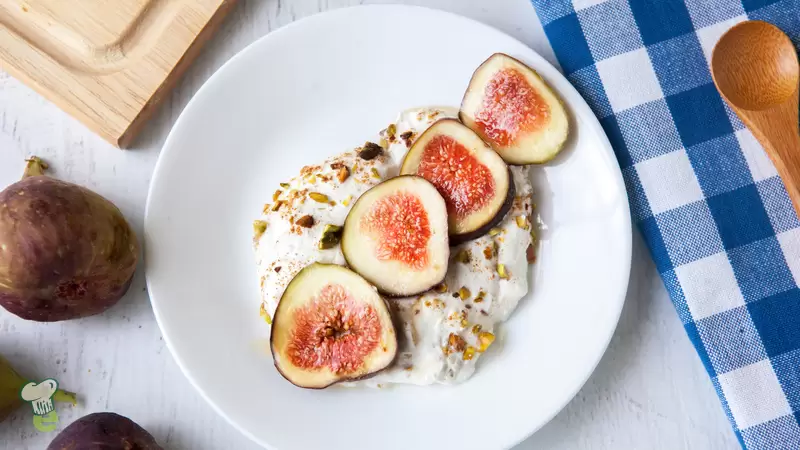
10 minutes | 2 servings
Barely a recipe, which is the point on a weekday. Plain low fat yogurt, sliced fresh figs, a half teaspoon of honey, cinnamon, and chopped raw pistachios. It has 12 grams of protein for 157 calories and 37 mg of sodium, and it's the fastest way to put a real dairy protein source in front of yourself when there's no time to cook.
Have you ever stumbled upon a recipe that looks delicious but contains one or two eggs? Don’t lose hope! Some baked goods recipes can tolerate a simple swap and taste equally delicious. Eggs in baked goods mostly add moisture and hold everything together, so anything wet and a little sticky can stand in.
Each of these replaces one egg:
Banana and pumpkin carry their own flavor, so match them to the recipe. Applesauce and a flax egg are the most neutral. Swapping more than two eggs in one recipe gets unpredictable, so stick to recipes that call for one or two.
These four are worth the extra step. Each one calls for egg as written, and each one takes a substitution well.

60 minutes | 16 bars
Pureed silken tofu already does most of the binding here, which is why the single egg in the recipe can be left out entirely or replaced with 1/4 cup of banana, applesauce, or pumpkin. Oats, almonds, puffed cereal, dried cranberries, honey, and orange zest give you 8 grams of protein per bar and something sturdy enough to eat in the car.
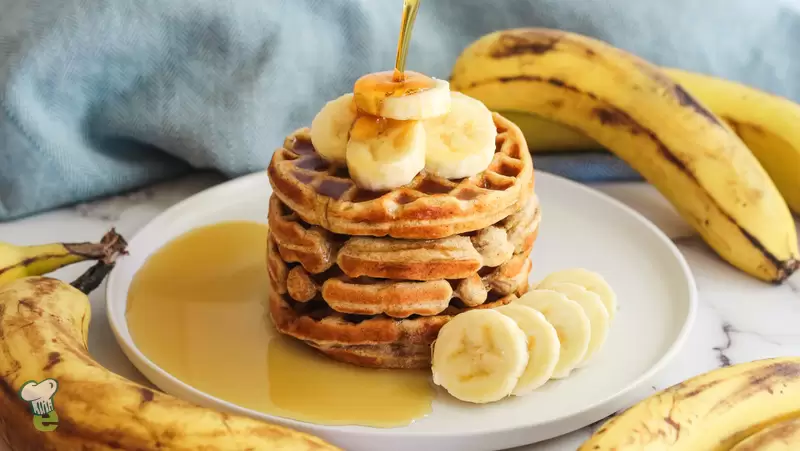
30 minutes | 12 waffles
Three very ripe bananas and a little applesauce are already in the batter, so replacing the two eggs with two flax eggs works well here. They're gluten free as written, cinnamon and cardamom make the whole kitchen smell good, and at 153 calories each you can afford a second one.
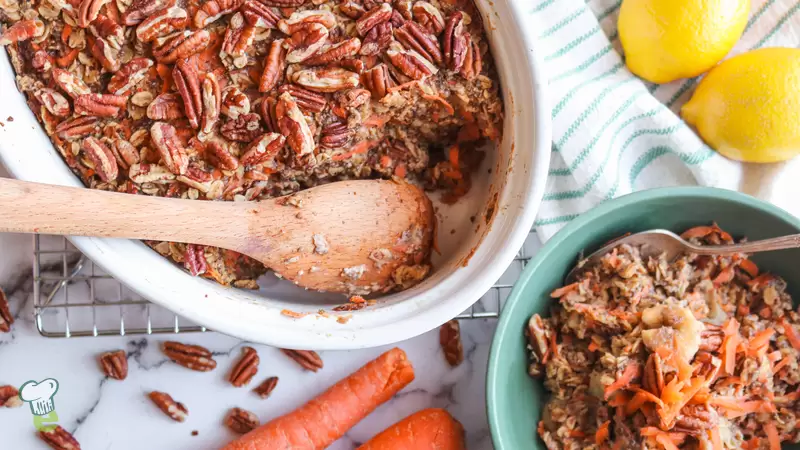
45 minutes | 12 servings
Grated carrot, banana, pecans, cinnamon, ginger, and cardamom taste like carrot cake and hold together like breakfast. Pumpkin puree or applesauce replaces the two eggs neatly, since both match the warm spices. Each serving has 10 grams of protein and 5 grams of fiber. (Note that it also uses whey protein powder, so it isn't dairy free.)
40 minutes | 12 servings
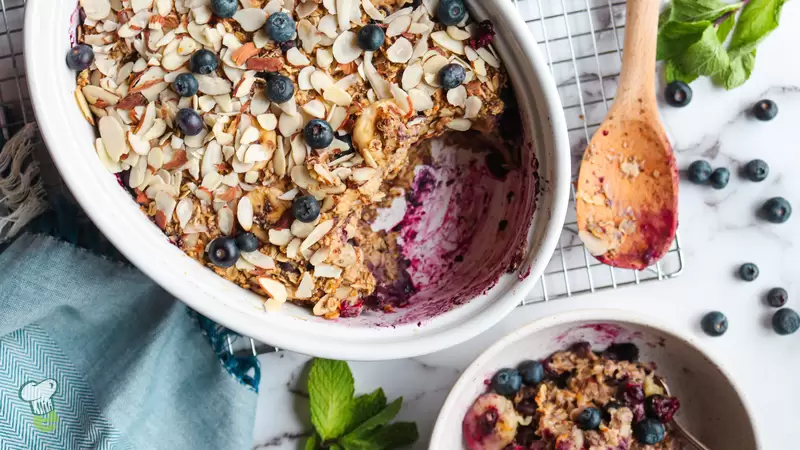
The recipe page spells the swap out for you: replace the two eggs with 2 tablespoons of ground flaxseed mixed with 6 tablespoons of water, and keep the almond milk. Blueberries, banana, chia, flax, almonds, and orange zest bake into a pan that reheats all week, with 6 grams of protein and 6 grams of fiber per serving.
It depends on what the egg is doing. For muffins, quick breads, waffles, and baked oatmeal, a flax egg or 1/4 cup of applesauce works in almost every case. Mashed banana and pumpkin puree work just as well but add flavor, so save those for recipes with warm spices. None of these will replace eggs in a recipe where the egg provides structure on its own, like a soufflé or an angel food cake.
There's no single number that fits everyone, but many dietitians suggest somewhere around 15 to 25 grams at breakfast to help you stay full through the morning. Greek yogurt, cottage cheese, tofu, beans, milk, and protein powder all get you there without eggs. If you have a health condition that affects your protein needs, ask your own dietitian or doctor what's right for you.
It's common. Research suggests a majority of children with egg allergy can tolerate egg that's been baked into a food, because heat changes the egg proteins.<sup>3</sup> That's a finding for an allergist to confirm, not something to test at home. Baked egg tolerance is normally established through a supervised food challenge, so talk to your child's doctor before you change anything.
No. Every recipe here is egg free, but the list includes recipes with dairy, wheat, soy, tree nuts, shellfish, and coconut. Check the full ingredient list on each recipe page, and read labels on packaged ingredients like tortillas, protein powder, and non-dairy milk, since formulas change.
Yes. Every recipe on Health eCooks is developed and reviewed by one of our registered dietitians and tested in our test kitchen before it's published.
We've got even more egg free mornings than the twenty recipes here! Try the vegan breakfast recipes collection, or browse high protein breakfast ideas without eggs for smoothies and parfaits.
References
______________________________
Jacqueline Weiss, MSPH, RD is a registered dietitian who provides nutrition counseling at Nourish. She earned her bachelor's degree in nutritional sciences from Cornell University and her master's degree in public health in human nutrition from the Johns Hopkins Bloomberg School of Public Health. Before joining Nourish, she spent several years as a campus dietitian at Johns Hopkins, where she helped students navigate food allergies and dietary restrictions in dining halls and worked with chefs to expand the plant-forward options on the menu. Outside of work she can usually be found hiking, running, or planning her next trip.
Work with Jacqueline: Nutrition Counseling with Jacqueline Weiss, MSPH, RD at Nourish
(Instant Download)
Sign Up for instant access to your free cookbook plus our most popular quick and healthy recipes!